

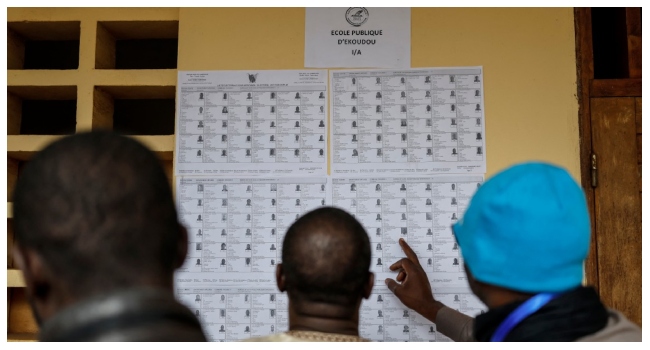
Voting commenced on Sunday across Cameroon in a presidential election widely expected to hand 92-year-old Paul Biya another victory, extending his 43-year rule as the world’s oldest serving head of state.
Biya faces 11 challengers, including 79-year-old former employment minister Issa Tchiroma Bakary, who has stirred unexpected enthusiasm among young voters in the central African nation, where nearly half the population is under 20.

Polling stations opened at 8:00 a.m. and will close at 6:00 p.m. local time, with eight million registered voters participating in the one-round contest. For most Cameroonians, Biya has been the only leader they have ever known — he has ruled since 1982 and consistently claimed more than 70 percent of the vote in every election over the past two decades.
“We shouldn’t be naïve,” political scientist Stéphane Akoa told AFP. “The ruling system has all the means to ensure results in its favour. Still, the campaign has been livelier than usual, which could bring surprises.”
Biya, who has maintained his typically low profile, appeared in public for the first time since May during a rally in Maroua, the capital of the Far North region. The area, once considered a Biya stronghold, has become more contested as several former allies now oppose him.
His leading rival, Bakary, who served in Biya’s government for 20 years before defecting in June, drew thousands of supporters in his home region, compared to the sparse crowds at Biya’s rally. Supporters waved placards reading “Tchiroma the Saviour”, hoping his candidacy might symbolise a new era.
Bakary’s emergence follows the controversial disqualification of Maurice Kamto, Biya’s strongest challenger in 2018, who was barred from contesting by the Constitutional Council. Human Rights Watch and other groups have condemned the decision, saying it undermines the integrity of the election.
Cameroon, independent from France since 1960, has one of Central Africa’s most diversified economies, rich in natural and agricultural resources. Yet, according to the World Bank, 40 percent of its citizens live below the poverty line, while unemployment in urban areas hovers around 35 percent.
Akoa noted that many young people are eager for change but not ready to risk mass protests as seen in countries like Tunisia and Madagascar. “There’s a sign of change,” he said, “but perhaps not strong enough to push youths into the streets.”
Public frustration over the rising cost of living, poor access to clean water, inadequate healthcare, and underfunded education remains largely confined to social media.
More than 55,000 local and international observers, including African Union representatives, have been accredited to monitor the election. The Constitutional Council is expected to announce official results by 26 October.
However, several independent digital platforms have pledged to release their own tallies, a move criticised by the government as an attempt to “manipulate public opinion.”
The election takes place amid ongoing conflict in Cameroon’s English-speaking regions, where separatist insurgencies have persisted since 2016. Voter turnout was notably low in these areas during the 2018 polls, and similar challenges are expected this time around.