

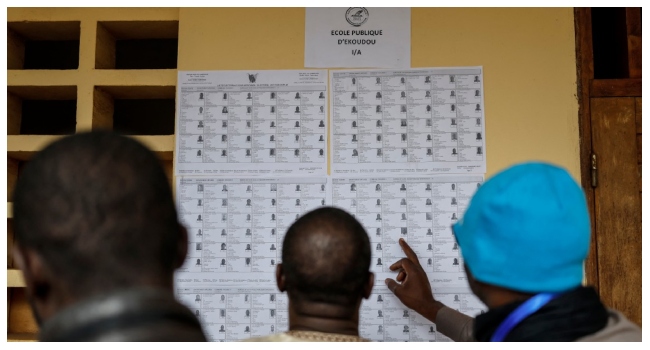
Cameroon’s opposition candidate Issa Tchiroma Bakary on Tuesday proclaimed victory over incumbent President Paul Biya, who has ruled the nation for 43 years, even though official results from the weekend election are not expected for another two weeks.
In a post on Facebook, Tchiroma asserted, “Our victory is clear. It must be respected.”

He called on the authorities to “accept the truth of the ballot box” or risk “plung[ing] the country into turmoil,” adding that he plans to release breakdowns of results by region.
“The people have chosen,” he stated.
Although tally sheets are permitted to be made public, the final official outcome can only be declared by the Constitutional Council — a boundary the government has described as a “red line that must not be crossed.”
In the 2018 election, opposition figure Maurice Kamto also declared himself the winner shortly after voting ended. He was later arrested, and his supporters’ protests were forcefully dispersed with tear gas and water cannon, leading to dozens of arrests.
Biya, the world’s oldest sitting head of state, is seeking an eighth term to prolong his decades-long grip on power.
Tchiroma, a former employment minister, stirred unexpected momentum among voters, creating a fierce contest with both camps now claiming victory.
Images of handwritten tally sheets and blackboard counts have flooded social media, intensifying claims of success from both Biya’s and Tchiroma’s supporters.
Biya faced 11 other candidates, including Tchiroma, who resigned from government in June after serving alongside Biya for 20 years to join the opposition.
He quickly rose to become the main challenger after Kamto was disqualified by the Constitutional Council.
Biya has remained in power since 1982 and has secured every election victory in the past two decades with more than 70 percent of the vote.
The majority of the eight million registered voters in Sunday’s one-round poll have never known another leader in their lifetime.
Cameroonian political analyst Stephane Akoa told AFP ahead of the vote, “We shouldn’t be naive. We know full well the ruling system has ample means at its disposal to get results in its favour.”
However, he noted that the campaign in its final days was “much livelier” than usual at that stage, suggesting the election was “therefore more likely to throw up surprises.”
When Biya first assumed office in 1982, Ronald Reagan was president of the United States and the Cold War was still nearly a decade from its end.
As Cameroon’s second president since gaining independence from France in 1960, Biya has maintained power with an iron grip, handpicking key officials and brutally suppressing political and armed opposition.
Despite years of social tension, economic inequality, and separatist conflict, he has managed to hold onto power through every wave of unrest.