

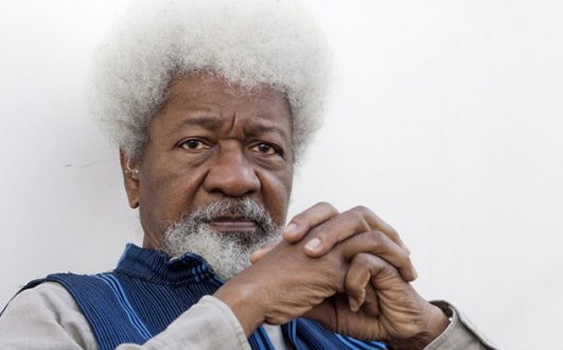
The United States Consulate in Lagos has defended its decision to revoke the visa of Nigerian Nobel Laureate, Prof. Wole Soyinka, stressing that visas issued to foreign nationals are a privilege and not a right.
According to The Punch, the Consulate’s Public Diplomacy Officer, Julia McKay, in an email response on Thursday, stated that while U.S. law prohibits the disclosure of individual visa cases, the government reserves the right to revoke visas whenever necessary.

“Under US law, visa records are generally confidential. We will not discuss the details of this individual visa case,” McKay said.
She added, “Visas are a privilege, not a right. Every country, including the United States, can determine who enters its borders. Visas may be revoked at any time, at the discretion of the US government, whenever circumstances warrant.”
The clarification followed Prof. Soyinka’s revelation on Tuesday during a media event in Lagos that his B1/B2 visa had been revoked.
Speaking at the event titled “Unending Saga: Idi Amin in Whiteface” at Kongi’s Harvest, Freedom Park, the 91-year-old playwright said the revocation was communicated to him in a letter dated October 23, 2025, from the U.S. Consulate General in Lagos.
“It is necessary for me to hold this press conference so that people in the United States who are expecting me for this event or that event do not waste their time. I have no visa; I am banned, obviously, from the United States. And if you want to see me, you know where to find me,” Soyinka stated.
He added that he was unaware of any wrongdoing that might have led to the decision and had begun reflecting on his past interactions with U.S. authorities.
“I’ve started looking back, have I ever misbehaved towards the United States of America? Do I have a history? Have I been convicted? Have I gone against the law anywhere?” he wondered.
Soyinka humorously recalled two minor incidents that might have appeared on U.S. records — one involving a $25 fine for failing to declare green chillies in Chicago and another being a clash with Atlanta police officers in the 1970s over alleged racist conduct by a hotel receptionist.
“These are the only two crimes I can consider myself guilty of in all the decades I’ve been going to the United States,” he said, expressing doubt that either incident was linked to the visa revocation.
According to the letter, Soyinka’s visa was withdrawn under U.S. Department of State Regulation 22 CFR 41.122, which cited that “additional information became available after the visa was issued.”
The correspondence, signed by the Non-Immigrant Visa Section, instructed Soyinka to return the visa for “physical cancellation.” Reacting with humor, the Nobel Laureate quipped, “They requested that I bring the visa for physical cancellation. I found that humorous and asked if anyone here would like to volunteer to deliver it on my behalf.”
The Consulate added that Soyinka could reapply for a visa if he wishes to travel to the U.S. again. His original visa had been issued on April 2, 2024, in Lagos.
Prof. Soyinka, who made history in 1986 as the first African to win the Nobel Prize in Literature, has enjoyed a long and distinguished academic and literary career in Nigeria and abroad, including teaching roles at several U.S. universities.
His visa revocation has since sparked conversations about tightening U.S. immigration policies and increased scrutiny of African visa holders amid Washington’s efforts to control migrant influx.