

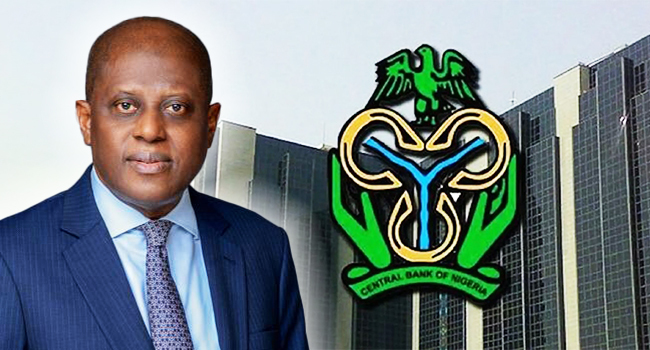
The governor of the Central Bank of Nigeria (CBN), Olayemi Cardoso, says the country’s foreign exchange (FX) market is now recording an average daily turnover of $500 million, often without the CBN needing to intervene.
Cardoso made the remarks during a press briefing following the 303rd monetary policy committee (MPC) meeting in Abuja on Tuesday.

He explained that Nigeria now operates a market driven by “willing buyers and willing sellers,” supported by transparent systems that allow participants to identify buyers and sellers in real time.
“What we have in the foreign exchange market in Nigeria today is something that has not happened before,” Cardoso said.
“In the sense that you have a market where there are willing buyers, willing sellers. They come in, they buy at will, they sell at will, and you have a process that is open and very transparent.”
According to the CBN governor, the electronic foreign exchange matching system (EFEMS) introduced by the apex bank has boosted confidence, resulting in increased activity and improved market stability.
“It is for that reason that, on average, on a daily basis, we have half a billion dollars in turnover, in market activity, with many times the CBN not being a participant in that market,” he said.
“For those of you who will remember how markets used to operate in those days, if the CBN does not intervene, nothing happens. That is now a thing of the past.
“We have a market that is open, that is transparent, and that plays in accordance with certain rules that everybody has signed up to.
“So these are all the things that have contributed to the way and manner in which our foreign exchange market operates, and which we have had stability in that market.”
‘FX MARKET MORE FUNCTIONAL DUE TO POLICY CONSISTENCY’
Cardoso noted that FX rate differentials — previously as high as 60 percent — have reduced to around 2 percent due to greater transparency.
“Everybody has equal access to a market that has become very open and very transparent,” he said.
He added that the FX market has become more disciplined, supported by consistent policies and the elimination of “flip-flops” that once disrupted operations.
According to Cardoso, the reforms have strengthened the FX market, making it “more functional” and rebuilding confidence among stakeholders.