

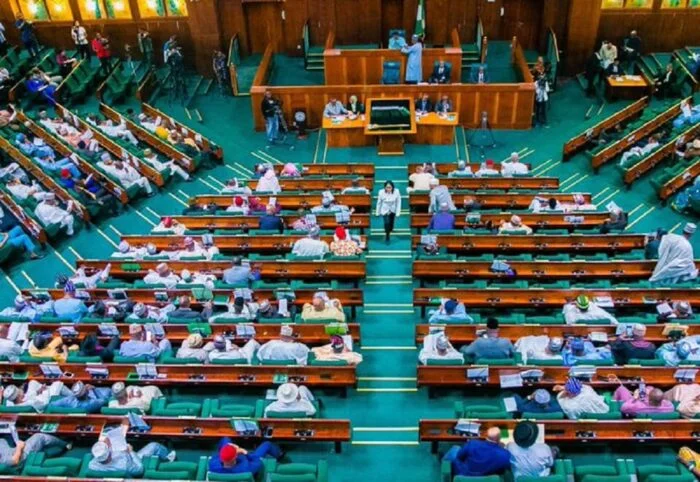
The House of Representatives has called on the Federal Government, through the Ministry of Education, to reconsider the removal of Civic Education, Computer Studies, and Electrical Installation, among others, from the West African Examination Council portal, emphasizing the importance of these subjects for national development.

This resolution followed the consideration and adoption of a motion of urgent public importance presented during Thursday’s plenary by Oboku Oforji, the representative for Yenagoa/Opokuma Federal Constituency, Bayelsa State.
Addressing the motion, Oforji acknowledged that periodic reviews of the national curriculum are necessary but stressed that the affected subjects remain crucial for modern economies worldwide.
He stated, “While acknowledging the efforts to enhance the national curriculum, the timing is just not right.
“Trade subjects like Data Processing are among the most popular and widely offered in many schools due to their market relevance and students’ interest.
“Computer Studies is almost universally offered and is fundamental to modern digital literacy, making its sudden removal counterproductive at a time when the world is going digital.
“Similarly, Civic Education, which was previously a compulsory subject in all secondary schools, is no longer so as students have been mandated to study it for two years.
“Why should we remove Civic Education from our curriculum when the bulk of what the National Orientation Agency does is to enlighten citizens about their civic duties as good citizens of Nigeria?”
Oforji criticized the decision to remove Computer Science as insensitive, noting that “most of our examination bodies are adopting the computer-based test model for the conduct of their examinations. How will such students learn the basics? Students in SS3 have been diligently studying these removed subjects (Data Processing, Computer Studies, Civic Education, etc.) from SS1.”
He added, “The House is worried that the removal of three or more foundational subjects from the mandatory eight subjects limits the students and violates the minimum requirement for the examination, which is eight. Such students will now be left with five subjects.
“We are also concerned that with the West African Senior School Certificate Examination barely four months away, it is academically impossible for students to select and adequately prepare for new, unstudied subjects to meet the required eight subjects.
“The House is worried that thousands of students across the federation preparing for the 2026 WASSCE to be conducted by WAEC are in distress and confusion as we speak. It is imperative that students in SS3, who are four months away from their examinations, be allowed to write the WASSCE in subjects they have been studying since SS1,” adding that “the implementation of this new curriculum should be rescinded.”
The motion was approved through a voice vote by Deputy Speaker Benjamin Kalu, who presided over the session.
After the adoption, the House urged the Federal Ministry of Education to urgently “rescind the implementation of the directive and give students a fair chance of success at the examinations.”
It also decided to form an ad hoc committee to investigate the issue and ensure compliance.
On September 3, 2025, the Federal Government announced a major overhaul of the national curriculum for primary and secondary schools. The new structure merged several existing subjects — including Civic Education, Nigerian History, and Social Studies — into a new subject called Citizenship and Heritage Studies for senior secondary school.
The reform also aimed to reduce the number of subjects students take at each level and streamline trade/vocational subjects (for non-technical schools) into a smaller, more focused list.
These changes caused confusion among students, parents, teachers, and other stakeholders regarding which subjects would appear on the 2026 WAEC examination registration portal. Reports began circulating that Civic Education and some other traditional subjects had been removed or renamed.
