

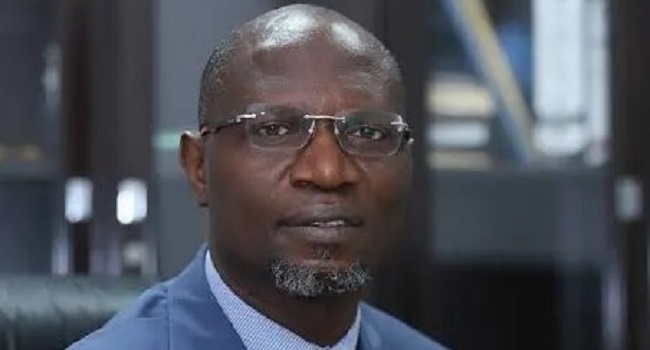
The director-general (DG) of the Securities and Exchange Commission (SEC), Emomotimi Agama, says Nigeria’s capital market mobilised more than N753 billion between April and October through commercial paper issuances, reflecting strong investor confidence.
Speaking in an interview on Sunday, Agama explained that the N753 billion raised through commercial papers helped meet short-term financing needs in key sectors, including manufacturing, energy and agriculture.

According to the SEC DG, the debt market also recorded major milestone deals, such as a N500 billion climate funding vehicle and a N200 billion Elektron Finance bond issuance, signalling increasing investor appetite for infrastructure and sustainable finance opportunities.
“These figures are not just numbers; they represent confidence in our regulatory framework and the resilience of our market architecture,” Agama said.
He noted that the robust performance of the commercial paper segment was part of wider capital-raising activities approved by the commission across debt, equity and short-term instruments during the period under review.
“Since our last meeting, the Nigerian capital market has demonstrated remarkable depth and adaptability,” he said.
“Between April and October 2025, the commission approved significant transactions across debt, equity, and commercial paper segments, underscoring the market’s capacity to mobilise capital for growth.
“These achievements are essential as we work to position the Nigerian capital market as a catalyst for sustainable economic growth.”
Agama added that Nigeria’s recent credit rating upgrade and removal from the Financial Action Task Force (FATF) grey list further strengthened investor confidence and signalled renewed trust in the economy.
He also urged market operators to convert opportunities created by easing inflation into innovative financial products, stressing that “innovation can’t remain on paper”.
“The time for passive observation is over. Our collective responsibility is to activate these opportunities and position the Nigerian capital market as a true engine of inclusive growth,” he said.
Agama further attributed November’s N6.54 trillion market dip to profit-taking ahead of the proposed 30 percent capital gains tax, noting that the market later rebounded following policy assurances and remains positive on a year-to-date basis.