

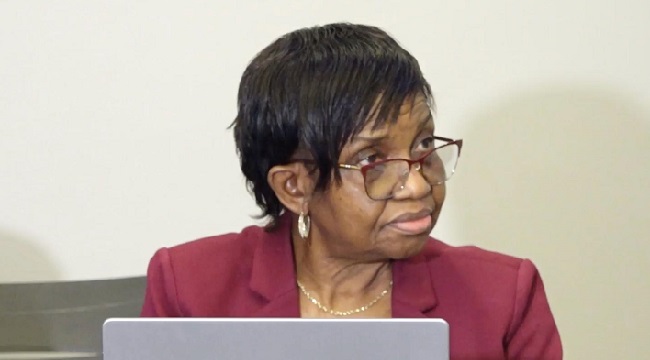
The National Agency for Food and Drug Administration and Control (NAFDAC) has stated that it has not been formally served with any court injunction halting the enforcement of the ban on sachet alcohol.

The Director General of NAFDAC, Prof Mojisola Adeyeye, made the statement on Friday during an interview, responding to claims that a court order had stopped the crackdown.
“NAFDAC has not been served. If we have been served, I have not been given that,” she said.
Adeyeye explained that enforcement resumed based on legislative authority. “The Senate gave us the order to resume enforcement.”
Defending the policy, she emphasized that the ban prioritizes children’s health and safety over commercial interests, insisting that the agency is not trying to harm businesses.
“So it is on their side that they are all about money, not about health. We are about health and good investments… But we cannot sacrifice our children on the altar of trade,” she said.
She clarified that alcohol remains under NAFDAC’s regulatory mandate as a food product and that the ban targets only small packages, not alcohol in general.
“We are not banning alcohol. We approve alcohol in different packages. It is only in small packages that we are banning.”
The policy traces back to 2018, when NAFDAC raised concerns about sachet alcohol with concentrations of 43–45%, which could easily be hidden and accessed by schoolchildren.
An agreement with manufacturers, supervised by the Federal Ministry of Health, gave them five years to reorganize production. “We all signed that by, after five years, they will not sell alcohol in sachets.”
The initial moratorium ended on January 31, 2024, but was extended for an additional year following interventions by lawmakers and industry groups. “The Minister called me and said there had been some discussion, we should give one year moratorium, an extra one year above the five years that we have given before. And that one year expired December 2025.”
Despite manufacturers’ push for further extensions, enforcement resumed after Senate intervention. Adeyeye dismissed the idea that warning labels could prevent underage drinking.
“Do not use under 18. Do not use in Nigeria, are we kidding ourselves? Are we really kidding ourselves? In Nigeria? Who is going to enforce?”
She also noted that the ban aligns with Nigeria’s international obligations under the World Health Assembly 2010 agreement, which sought to prevent alcohol from being easily accessible to vulnerable populations.
Regarding the continued registration of sachet alcohol products during the moratorium, she said the agency was following legislative directives but acknowledged it was a lesson learned.
“We were honouring the moratorium, the extended moratorium that was given by registering within a period… I think we are learning our lessons now that we shouldn’t have even listened or register products, a product at that particular period.”
Addressing suggestions to reduce alcohol concentration instead of banning sachets, Adeyeye said the issue is about accessibility and concealment. “Actually, it is scientifically possible. It is not just the volume. It is the pack size.”
She cited reports from schools to highlight the impact on children. “The principal said that in his school, a student said that he cannot study for exam without a sachet alcohol.”
Warning of long-term consequences, she added: “We are making our children addicts. Addicts… Because you are frying your liver slowly with alcohol over time.”
Adeyeye clarified that enforcement targets production lines, not entire companies. “Lines have been shut down… We are shutting down lines.”
She also defended engagement with manufacturers, saying consultations were held regularly. “We were having regular meetings, quarterly meetings with MAN.”
Reiterating her position, she accused industry groups of prioritizing profit over public health. “So it is on their side that they are all about money, not about health.”
