

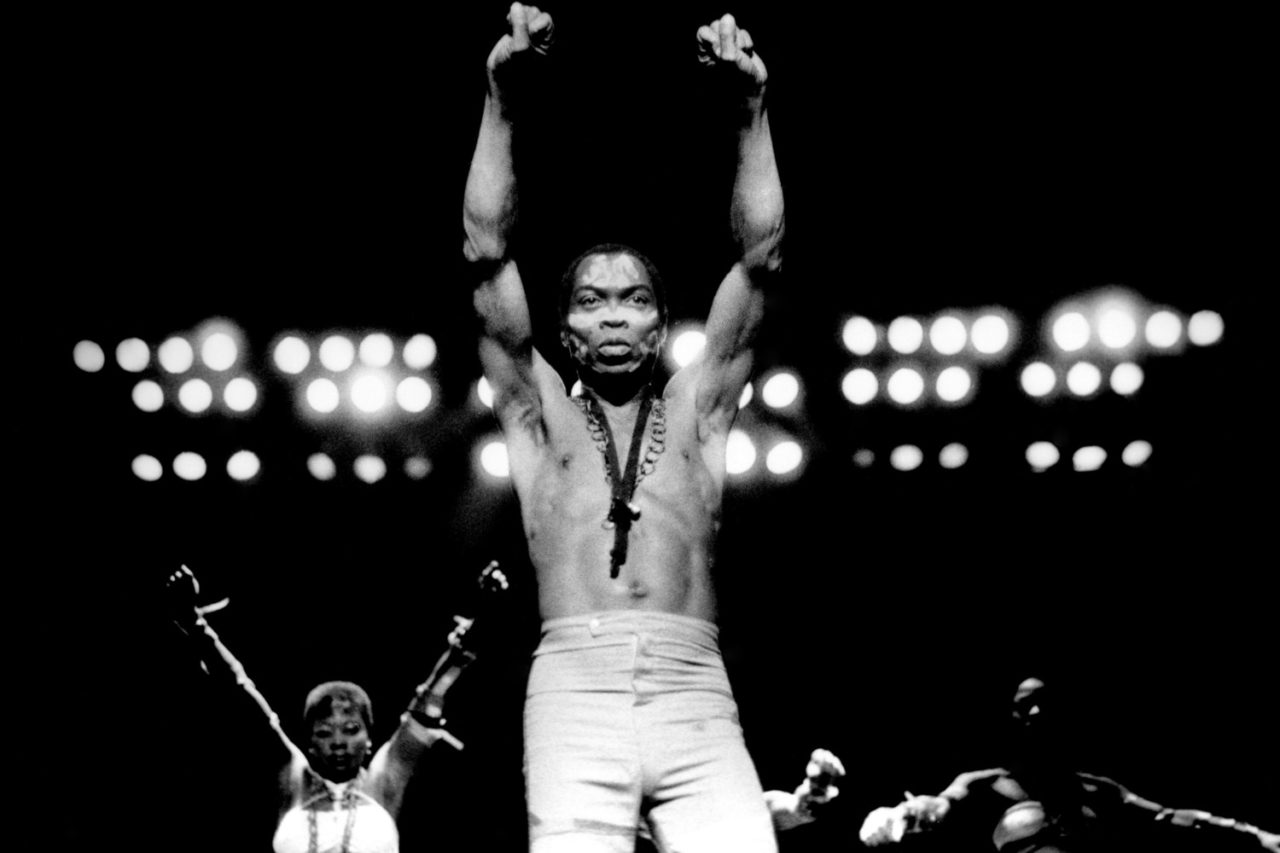
Renowned author and historian Majemite Jaboro has published a new book, The Ikoyi Prison Narratives, which provides uncommon insight into the personal life, spiritual worldview, and political ideology of Afrobeat icon Fela Anikulapo-Kuti.

The publication is based on discussions between Jaboro and Fela while both men were detained at Ikoyi Prison in Lagos between January and April 1993, as they awaited trial in connection with a murder allegation.
Speaking with the News Agency of Nigeria (NAN) in Lagos on Monday, Jaboro explained that the book was motivated by memory, historical responsibility, and a desire to preserve an important moment in Nigeria’s political and cultural history.
“Ikoyi Prison symbolises the state’s tradition of silencing dissent. Fela’s incarceration represented a clash between truth and power,” Jaboro said.
He noted that the book combines eyewitness testimony, oral history, political background, and cultural interpretation, describing it as “an archive in motion”.
“I was not interested in mythologising Fela. I wanted to show him as a human being caught inside the machinery of the state,” he added.
“The book explores themes of resistance, power, identity and citizenship, using Fela’s experiences to examine Nigeria’s history of governance, repression and public dissent.”
Jaboro also offers fresh interpretations of some of Fela’s music, including Zombie, Alagbon Close and Expensive Shit, portraying the songs as political records that reflect military oppression and social inequality.
“These songs are sonic records of what the government tried to erase,” he said.
According to the author, Fela’s activism and repeated clashes with authority were deeply shaped by his spiritual convictions, Afrocentric ideals, and communal way of life.
“Fela was not only a musician. He was a political philosopher and mystic rooted in African spirituality and self-determination,” Jaboro noted.
He added that Fela’s legacy continues to influence youth activism, protest movements, and modern African music.
“He proved that a microphone could be as powerful as a manifesto,” he said.
Jaboro stressed the need to portray Fela honestly, acknowledging both his achievements and his flaws.
“Heroes without flaws are propaganda. History must be honest,” he said.
He explained that the book also serves as a cautionary message to political leaders about the consequences of repression and intolerance.
“Jailing critics only amplifies their voices. When governments ignore pain, culture becomes rebellion,” he stated.
Jaboro expressed hope that the work would help position African perspectives at the centre of global discussions on music, resistance, and social transformation.
“Our stories belong at the heart of global political thought,” he added.
The News Agency of Nigeria reports that The Ikoyi Prison Narratives delivers a rare first-hand account of one of Africa’s most influential cultural figures, connecting music, spirituality, and political philosophy within the context of modern Nigerian history.
