
Before the Ribbon Is Cut: Why the Lagos–Ibadan Expressway Needs an Urgent Upgrade, By Sola Fanawopo

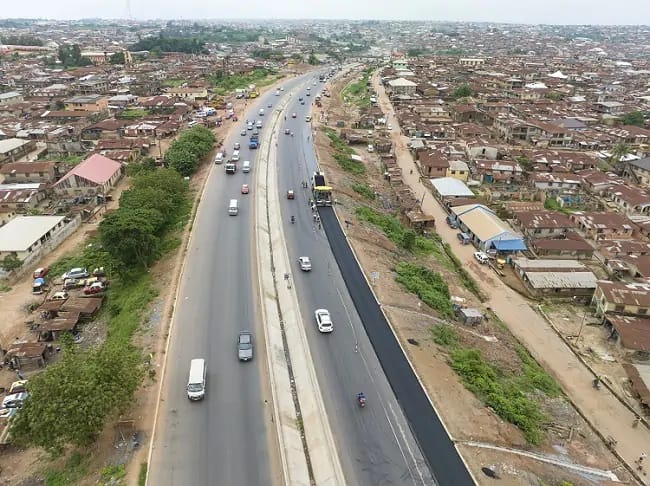
When a road reconstruction takes more than two decades to complete, it is only logical that it may require upgrading even before its official commissioning.
This is the unfortunate reality facing the Lagos–Ibadan Expressway today.

Despite the enormous public investment and prolonged construction period, critical sections of this vital corridor remain unfit for the realities of modern traffic. Nowhere is this more evident than on the Lagos–Shagamu stretch, where the absence of dual service lanes on both sides has become a major bottleneck.
Over the years, this section has transformed into a thriving urban and commercial corridor. Residential estates, markets, fuel stations, camps, schools, and small businesses now line the route. In effect, what was once a highway connecting two major cities has evolved into a metropolitan artery serving thousands of daily users.
Yet, the infrastructure has not kept pace with this growth.
Without dedicated service lanes, local traffic mixes dangerously with long-distance and heavy-duty vehicles. Motorists exiting communities, commercial buses stopping at informal bus stops, and pedestrians crossing the expressway all compete for limited space.
The result is predictable: persistent congestion, frequent accidents, and growing frustration.
The gridlock regularly experienced around bus stops and junctions is not accidental. It is the direct outcome of unchecked urban expansion along the corridor. This “connubation” of communities has turned the expressway into both a local road and a national highway, an unsustainable combination.
The uncomfortable truth is that the situation will only worsen.
As population increases, more estates are built, and commercial activities expand, traffic volume will rise sharply. Without structural intervention, today’s delays will become tomorrow’s paralysis.
What should be a symbol of national development risks becoming a monument to poor planning.
This is why the construction of dual service lanes on both sides of the Lagos–Shagamu section is no longer optional, it is urgent.
Service lanes would separate local traffic from through traffic, improve safety, reduce congestion, and restore the expressway’s primary function as a high-speed intercity route. They would also support orderly urban development and protect the massive investment already made on the highway.
Commissioning an expressway that is already overstretched sends the wrong message. It suggests that political timelines are being prioritized over practical solutions and long-term sustainability.
I therefore appeal to the Honourable Minister of Works and relevant authorities to act decisively. This project must not be declared “complete” while glaring deficiencies remain. An immediate upgrade, beginning with dual service lanes, will save lives, reduce economic losses, and ensure that this critical infrastructure truly serves the nation.
Nigeria deserves better than celebrating a road that is already failing.
Sola Fanawopo, a Public Affairs Analyst wrote from Lagos
