

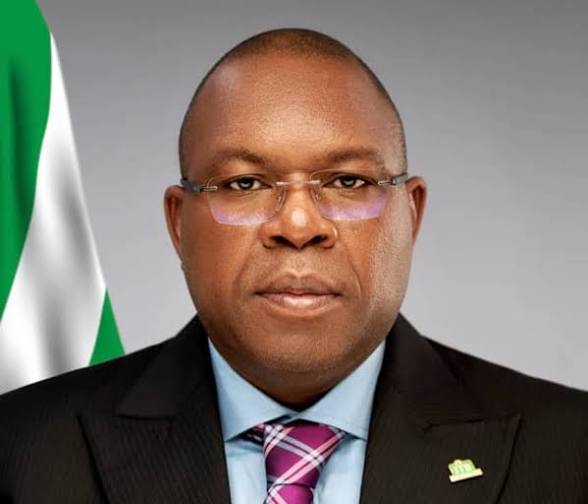
The Executive Secretary of the Joint Revenue Board, Mr Olusegun Adesokan, has called on state governments to harmonise their tax laws with the new national tax framework, describing cooperation at the subnational level as essential to the success of current fiscal reforms.
Adesokan said, “While national laws provide direction, true transformation requires alignment at state and local levels, where a significant portion of tax administration occurs,” noting that the full gains of the new tax structure would only be realised if states adopt and enforce its core provisions.

In a statement released on Wednesday, he said Nigeria is implementing one of the most far-reaching fiscal reform programmes in its history, built on four new tax laws enacted under the administration of President Bola Ahmed Tinubu.
The legislations are the Nigeria Tax Act, the Nigeria Tax Administration Act, the Nigeria Revenue Service (Establishment) Act, and the Joint Revenue Board of Nigeria (Establishment) Act.
He explained that the laws establish a unified legal and institutional structure aimed at modernising the nation’s tax system and bringing it in line with international standards.
According to him, the reforms are intended not only to boost revenue generation but also to drive national development.
“A sound tax system is not simply a revenue tool; it is a national development instrument,” Adesokan stated, adding that the changes are meant to simplify tax regulations, eliminate multiple taxation, strengthen administration, and promote fairness and transparency.
He outlined key targets of the reform to include easing the burden on poor and vulnerable Nigerians as well as small businesses, blocking revenue leakages, enhancing compliance through technology, and improving accountability in revenue collection.
He said the measures are expected to foster a more business-friendly climate while enhancing government capacity to finance infrastructure, social services, and other citizen-focused programmes.
Adesokan stressed that although federal laws provide the policy direction, effective execution largely rests with state and local governments, where much of tax administration takes place.
To support this, the Joint Revenue Board has developed a Model States Taxes and Levies Harmonisation Law to help states align their legislation with the national framework.
He revealed that 12 states have already passed versions of the harmonisation law, while others are progressing through consultations, policy evaluations, and legislative procedures.
The Executive Secretary explained that the initiative seeks to tackle persistent concerns over multiple taxes, overlapping levies, and informal revenue collection methods that have weighed heavily on businesses, particularly small and medium enterprises.
A major component of the model law, he said, is the merging of nearly 60 different taxes, levies, fees, and charges into nine clearly defined collection categories.
“This eliminates confusion as well as duplication and makes compliance easier for individuals and enterprises alike,” he said.
He further noted that the framework introduces steps to end unauthorised roadside collections, check the activities of illegal revenue agents, discourage cash payments in favour of electronic channels, standardise assessment and collection processes, and expand the use of digital technology in tax administration.
Adesokan described the reforms as a move toward a more structured and transparent revenue system capable of supporting legitimate economic activities.
He maintained that a simpler and more predictable tax structure would boost compliance, reinforce investor confidence, and lower the cost of doing business across states.
“When tax systems become simpler, fairer and more predictable, compliance improves naturally. Businesses can plan with confidence, investors feel more secure, and governments collect revenue more efficiently,” he said.
He added that the reforms are already inspiring greater public trust, as citizens observe efforts to replace fragmented and inconsistent tax practices with a more unified system.
According to him, trust is fundamental to any successful tax regime, stressing that taxpayers must be confident that regulations are transparent, collections are lawful, and revenues are responsibly utilised.
Adesokan concluded that the partnership among federal, state, and local authorities demonstrates a shared understanding that fiscal stability and national development require coordinated efforts, insisting that the goal of the reform goes beyond revenue generation to building a fair, transparent system that promotes economic growth and national progress.
