

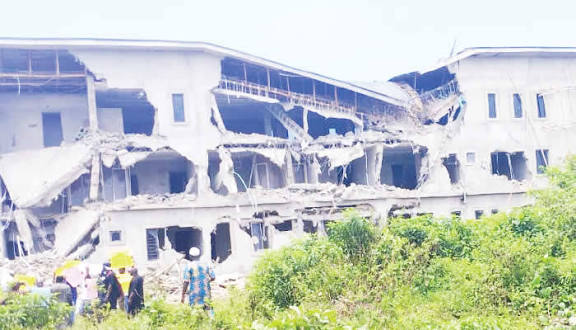
Stakeholders in the real estate sector have criticised the demolition of about 50 buildings in Surulere, Lagos, allegedly carried out by suspected land grabbers, commonly known as Omo Onile, calling for greater transparency and proper documentation within the property sector.
Homeowners in the Surulere community of Amikanle, near the Command area in Alimosho Local Government Area of Lagos State, are currently counting their losses after several houses in the area were pulled down.

Residents said the suspected thugs stormed the community on Tuesday, January 27, 2026, and demanded payments ranging from N15m to N25m from property owners.
According to some residents, houses belonging to individuals who were unable to meet the demands were subsequently demolished.
The founder and Chief Executive Officer of Oikus, Mr Israel Ihaza, condemned the incident and called for improved transparency, structure, and proper documentation in the real estate industry.
“It’s sad how some individuals continue to bastardise government authority and existing regulatory structures to carry out illegal activities. Incidents like this are deeply troubling and painful for everyone who believes in the rule of law and the future of real estate in Lagos,” Ihaza said.
He noted that disorder often thrives where transparency is lacking, explaining that unclear ownership records, weak enforcement, and fragmented property visibility create opportunities for exploitation by criminal elements.
Ihaza added that the government is working towards strengthening systems, improving digital monitoring, and enforcing regulations to tackle these longstanding challenges.
“Efforts are underway to professionalise the sector, digitise records, and improve accountability across the value chain. These reforms take time, but they are necessary. The so-called Omo Onile menace has been a structural challenge for years. I have personally experienced related pressures in the past, not in this exact scenario, but enough to understand the emotional and financial trauma involved,” he said.
He further emphasised that the destruction of homes affects more than just physical structures.
“It’s life savings; it’s retirement plans; it’s children’s school fees; and it’s stability. The broader implication is even more concerning. It creates fear among local investors, fear among diaspora Nigerians looking to return capital home, and fear among developers planning new projects. And fear slows economic growth. This is why enforcement and visible consequences matter. The faster such incidents are decisively addressed within the framework of the law, the stronger investor confidence becomes.”
Also speaking, the legal counsel to the Project Affected Persons within the 150-metre setback of the Lagos-Calabar Coastal Highway, Sola Enitan, said demolition has increasingly become a means of extortion in Nigeria, particularly in Lagos State, and urged victims to seek justice.
Speaking on the financial impact, he said, “That’s a N2 tn loss in the last two years. Fifty-two buildings, conservatively priced at N50m each, amount to N2.6bn. It’s an investment negotiation. For every single house you demolish, ten people will take their money elsewhere, and housing for at least 100 people will be removed from the sector.”
