

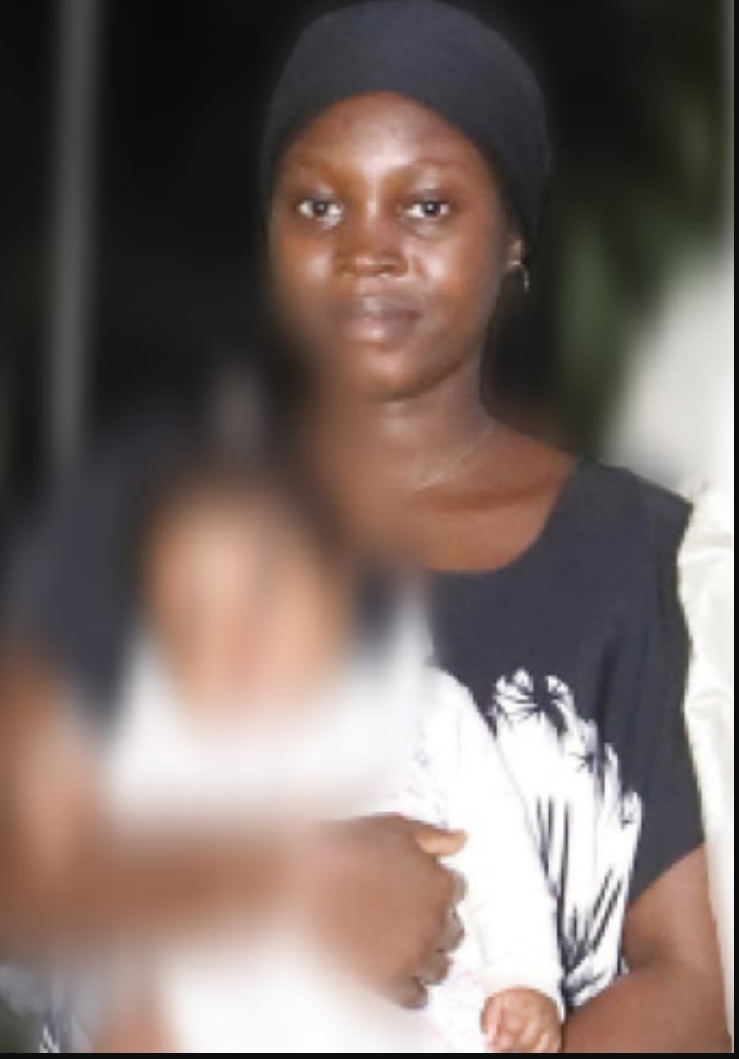
A Federal High Court sitting in Jigawa State has fixed March 26 for the hearing of an application seeking the unconditional release and reunification of Walida Abdulhadi, a teenager allegedly abducted and sexually abused by a Department of State Services operative, Ifeanyi Onyewuenyi.
Report stated that Walida Abdulhadi, a resident of Hadejia Local Government Area, was allegedly abducted and sexually abused by Onyewuenyi, a DSS operative, in 2023.

The court session held on Wednesday in Dutse, the state capital, was expected to proceed with the case. However, the defence counsel, Barrister Abdulmalik Sani, requested additional time to file a counter affidavit.
During his submission, Sani asked the court for time to respond to the prosecution’s application, explaining that more information was needed to properly prepare their response.
At the hearing, the prosecution counsel, Barrister Kabir Adamu, informed the court that he was ready to proceed, but the request by the defence counsel led to the adjournment of the matter.
The trial judge, Justice Hassan Dikko, subsequently adjourned the case until March 26, 2026, for the hearing of preliminary objections and all pending applications.
“The respondents, through their lawyers, applied for a little time to put their house in order as they claimed they’re preparing their counter affidavit and need some information to set their records straight,” Adamu told our correspondent after the court session.
Adamu explained that the prosecution is seeking the court’s intervention to compel the DSS to hand over the suspect, Ifeanyi Onyewuenyi, to the Commissioner of Police in Jigawa for discreet investigation.
“We are in court to move the court to grant an application seeking the unconditional release and reunification of the victim with her family,” Adamu said.
The prosecution counsel further stated that the involvement of the DSS in the case as an interested party could undermine a fair investigation, noting that allowing the agency to conduct the probe might compromise the hearing.
