

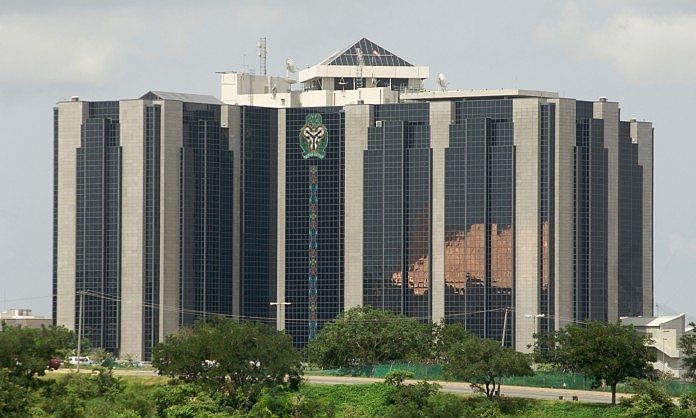
The Central Bank of Nigeria (CBN) has been named the Central Bank of the Year 2026 by the Central Banking Awards Committee in London, an accolade highlighting what organisers described as a major turnaround in Nigeria’s economic management within a short period.

The award, announced during the 13th annual Central Banking Awards, coincided with President Bola Ahmed Tinubu’s state visit to the United Kingdom, drawing global attention to Nigeria’s reform efforts and the apex bank’s role in stabilising the economy.
Members of the awards committee noted that the honour reflected the difficult conditions the CBN inherited and the reforms implemented since 2023. They observed that Nigeria’s economy had been in crisis, having fallen from Africa’s largest economy in 2014 to fourth place behind South Africa, Egypt, and Algeria. Inflation had surged from about 15.4 per cent in November 2021 to over 22 per cent, while foreign exchange reserves weakened despite strict currency controls.
The situation was further complicated by a backlog of roughly $7 billion in foreign exchange obligations and a widening gap of about 60 per cent between official and parallel market exchange rates. Heavy subsidies and direct monetary financing added pressure, making monetary policy difficult to sustain.
A former senior CBN official, quoted by the awards committee, said the circumstances raised fears that Nigeria could face crises similar to Venezuela and Zimbabwe if urgent action was not taken.
When President Tinubu assumed office in May 2023, the committee said he inherited an economy facing what they described as “hyperinflation” and “fiscal bankruptcy,” with the naira rapidly losing value and inflation rising steadily. The administration responded with key reforms, including the removal of fuel subsidies and liberalisation of the foreign exchange market.
However, the early impact of these measures was challenging for many Nigerians, with prices surging and inflation reaching 34.80 per cent by December 2024—the highest in nearly three decades.
Despite these difficulties, the committee noted that the CBN, under Governor Olayemi Cardoso, implemented reforms aimed at restoring stability, rebuilding confidence, and strengthening the financial system. Measures focused on disciplined monetary policy, institutional restructuring, and improved transparency.
Cardoso ended quasi-fiscal interventions in which the central bank had been lending directly to economic sectors, a practice that contributed to rising inflation. Internal restructuring reduced staff numbers, addressed misconduct, and redeployed employees where needed.
A senior CBN official said governance and transparency became central to operations. The bank improved policy communication, strengthened accountability, and adopted analytical tools to guide economic decisions.
Significant reforms were also introduced in the foreign exchange market. The CBN replaced multiple exchange rate windows with a willing-buyer, willing-seller system and launched an electronic foreign exchange matching platform to improve transparency and pricing.
Cardoso reported that these measures had reduced the gap between official and parallel market rates to less than two per cent from over 60 per cent previously and cleared the backlog of foreign exchange obligations, restoring confidence among investors and businesses.
External reserves rose to about $46.7 billion by November 2025, the highest in nearly seven years. The International Monetary Fund praised Nigeria’s efforts, noting that reforms improved liquidity and price discovery in the foreign exchange market.
The CBN also worked with the Securities and Exchange Commission and the National Pension Commission to strengthen financial markets, enhance transparency in fixed-income markets, and support long-term investment.
To tackle inflation, the apex bank raised interest rates from 18.75 per cent in 2023 to 27.5 per cent by late 2024. These measures have begun yielding results, with inflation dropping to about 15.10 per cent by January 2026, prompting modest interest rate reductions as pressures eased. Cardoso stressed that the bank remains determined to bring inflation down further and aims to adopt an inflation-targeting framework with support from the IMF and the Bank of England.
In the banking sector, the CBN introduced new capital requirements in 2024, prompting more than 30 banks to raise additional capital ahead of the March 2026 deadline. Supervision of fintech and digital finance was strengthened, while support for small business lending expanded, with digital credit reaching over 1.2 million small enterprises in 2025.
Cash management systems were reviewed, ATM operations regulated, and monitoring of payment agents improved. Investments in digital payments led to over 12 million contactless cards in use.
Efforts to strengthen financial regulation contributed to Nigeria’s removal from the Financial Action Task Force grey list in 2025, enhancing the country’s global financial reputation.
International rating agencies took note: Fitch Ratings upgraded Nigeria’s rating in April 2025, while Moody’s also improved its assessment, citing stronger economic fundamentals and reforms.
The awards committee acknowledged ongoing challenges, including elevated inflation, continued banking reforms, and the need for a stronger legal framework to ensure greater central bank independence.
Even so, the committee highlighted the progress achieved. A former top CBN official said, “What the CBN has achieved is nothing short of remarkable,” capturing why Nigeria’s apex bank was globally recognised as Central Bank of the Year 2026.
