

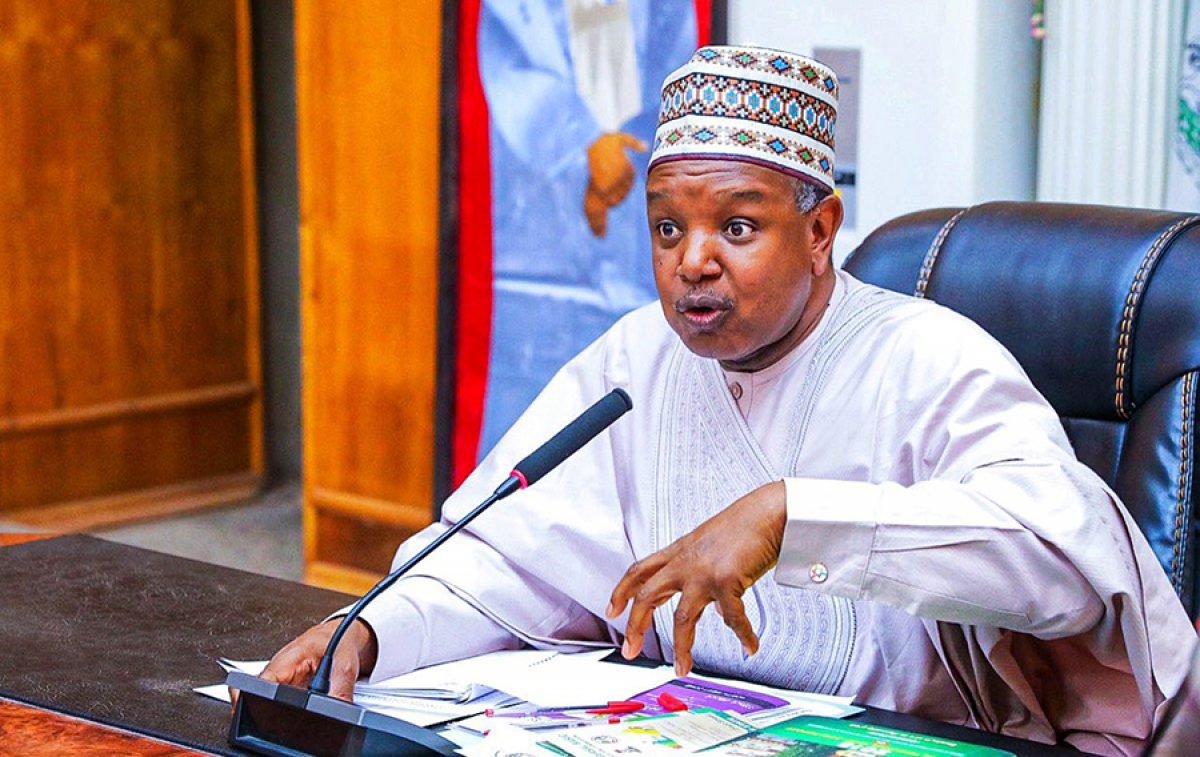
The Minister of Budget and Economic Planning, Atiku Bagudu, emphasized that youths’ awareness of the factors driving conflict is crucial to breaking cycles of violence and achieving sustainable development.
He noted that many young people struggle to articulate the root causes of conflicts in their communities, cautioning that this gap hinders their ability to contribute to lasting solutions.

Bagudu made the remarks at a Youth Peace and Security Planning Workshop organised by Search for Common Ground Nigeria, in partnership with the Federal Ministry of Youth Development, in Abuja on Wednesday.
He stated, “Peace and security are prerequisites for development. The first challenge is ensuring that our youth understand the drivers of conflict and the mechanisms available to address them.
“If they do not understand these drivers or make presumptions about them, they cannot effectively contribute to solutions. Workshops like this draw attention to these gaps and help build understanding.”
The minister identified historical grievances, land disputes, competition for resources, and social tensions as common conflict triggers, stressing the importance of understanding both historical and contemporary dynamics.
“Local conflicts often stem from historical, resource-based, or social tensions. Understanding the history of these relationships is essential. Our youth must understand these drivers, both historically and contemporarily, to promote peace,” he added.
Bagudu also highlighted the need for inclusive collaboration across religious and ethnic groups, pointing out that institutions and community leaders play a key role in shaping narratives that can either foster peace or escalate tensions.
“Our young people can be agents of change. Through education, social engagement, sports, and civic collaboration, they can build trust across religious and ethnic lines, creating communities where cooperation replaces conflict,” he said.
Speaking at the event, the Global Director of Children and Youth Programmes at Search for Common Ground, Saji Frelis, explained that the workshop brought together government, civil society, and donor partners to support Nigeria in developing a second National Action Plan on Youth, Peace and Security.
“One of the key reasons we have gathered here—bringing together government, civil society, and members of the donor community—is to work in partnership to support Nigeria, which was the first country in Africa to develop a National Action Plan on Youth, Peace and Security, to now produce a second, more forward-looking plan,” Frelis said.
He added that the new plan would be intergenerational and impact-focused, noting that the first action plan, though groundbreaking, was difficult to evaluate due to limited measurable outcomes.
“The first NAP was groundbreaking. However, it is difficult to fully assess its impact because it was largely based on a set of priorities rather than measurable long-term outcomes. We want to move beyond measuring short-term projects to tracking long-term impact,” he said.
Frelis added that the revised plan would focus on strengthening youth agency, building trust in institutions, and fostering intergenerational collaboration.
“We want to be able to show how investments are improving young people’s agency over time; how they are strengthening trust in institutions; and how they are fostering intergenerational trust,” he said.
On the organisation’s role, Frelis said Search for Common Ground would provide technical support to ensure inclusiveness and measurable impact.
The remarks came as stakeholders convened at a Youth Peace and Security Planning Workshop organised by Search for Common Ground Nigeria in partnership with the Federal Ministry of Youth Development Nigeria to develop a more impact-focused National Action Plan on Youth, Peace and Security aimed at enhancing youth participation in conflict prevention and peacebuilding.
