

The Germany government has cut its 2026 economic growth forecast in half, citing an energy shock linked to the Middle East conflict, while pledging to accelerate long-delayed reforms amid rising criticism over its slow response.
Officials now expect gross domestic product in Europe’s largest economy to grow by 0.5 per cent in 2026, down from the 1 per cent forecast made in January. They also reduced the 2027 projection to 0.9 per cent from 1.3 per cent.

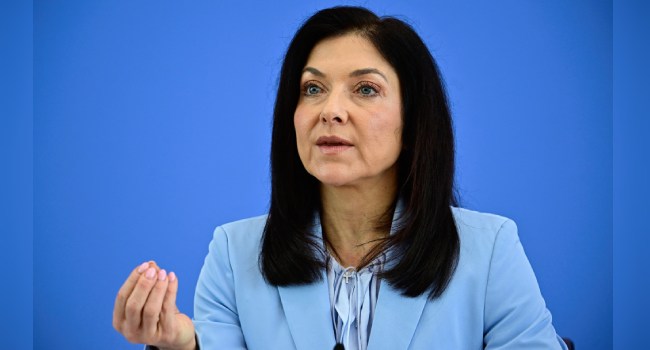
Economy Minister Katherina Reiche said early signs of recovery had emerged before the conflict escalated, but the renewed crisis in the Middle East had reversed progress and hit an already weakened economy.
She explained that higher oil and gas prices, driven by the conflict involving the United States and Israel, have increased inflation, raised manufacturing costs and strained public finances through higher borrowing costs.
Germany’s industrial base, particularly sectors such as steel and chemicals, has faced additional pressure from weak global demand and competition from China. Supply chain disruptions and higher consumer prices, especially fuel costs, have further weighed on the economy.
The government also raised inflation forecasts to 2.7 per cent in 2026 and 2.8 per cent in 2027, up from 2.2 per cent in 2025. Recent surveys show investor confidence has fallen to its lowest level since late 2022.
Chancellor Friedrich Merz has introduced limited relief measures, including a tax-free bonus scheme for workers, but economists and business groups have criticised the policies as insufficient and poorly targeted.
Reiche warned that without urgent reforms in areas such as pensions, healthcare and bureaucracy, Germany risks undermining its future growth and prosperity.
She added that the government must not allow the Middle East crisis to distract it from structural reforms, as the coalition continues to struggle to deliver its broader economic programme.