

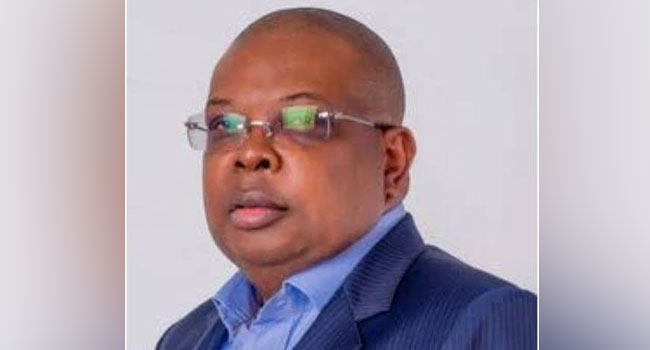
The newly appointed Minister of Power, Olasunkanmi Tegbe, on Wednesday reassured Nigerians that ongoing issues such as frequent national grid failures, inconsistent electricity supply, and continuous vandalism of power facilities would soon be addressed, promising swift reforms aimed at stabilising the nation’s struggling power sector.
He made this known during his screening at the Senate plenary in Abuja, where he was subsequently confirmed as Minister of Power after responding to lawmakers’ questions the condition of the electricity sector.

His confirmation came after an intensive screening session led by Senate President Godswill Akpabio, during which legislators demanded clear timelines, accountability, and a well-defined reform strategy to improve electricity supply and rebuild investor trust.
Lawmakers also charged him with what they termed a mandate to achieve quick and measurable progress in a sector that has long been weakened by recurring grid failures, fragile transmission systems, and a worsening liquidity crisis running into trillions of naira.
In a rare show of bipartisan concern, senators warned that Nigerians had grown tired of promises, insisting that Tegbe must demonstrate visible results within months or risk losing public trust.
Leading the charge, Senator Mohammed Tahir Monguno (Borno North) described the appointment as timely but stressed that the scale of the sector’s dysfunction required decisive and urgent intervention.
He decried the recurring collapse of the national grid, calling it a major setback to Nigeria’s industrial ambitions, and blamed transmission bottlenecks for the inability to evacuate generated power effectively.
“Grid collapse has become a recurring decimal, undermining development. Transmission has failed to match generation capacity,” he said, adding that insecurity in parts of the North-east had worsened infrastructure damage.
Responding, Tegbe acknowledged that the challenges facing the sector were systemic rather than isolated, citing weak coordination, poor enforcement of technical standards and inadequate gas supply as major causes of instability.
“Grid collapse is not accidental; it reflects deeper structural problems,” he said.
He pledged a 100-day reform window aimed at stabilising the grid and introducing a public performance dashboard to allow Nigerians to track progress and hold the ministry accountable.
“If there are no results in three months, there will be none in six. Nigerians should hold us accountable,” he declared.
Tegbe also raised concerns about entrenched interests benefiting from inefficiencies in the sector, vowing to confront sabotage head-on.
“There are elements that do not want the system to work because they benefit from its failure. We will take them on,” he said.
On vandalism of power infrastructure, the minister-designate described the trend as a national security threat and pledged closer collaboration with security agencies, including the Office of the National Security Adviser and the military, to protect critical assets.
He also acknowledged the sector’s worsening liquidity crisis, put at about N6 trillion, which lawmakers said had stifled investment and weakened the entire electricity value chain.
In response, Tegbe admitted that the current financial model was unsustainable and promised reforms, including market-reflective tariffs, while balancing affordability for vulnerable Nigerians.
“Electricity pricing must reflect market realities, but affordability remains essential. We will ensure a fair balance,” he said.
Lawmakers, including Senator Tokunbo Abiru (Lagos East), demanded clear timelines for achieving a stable electricity supply, stressing that reliable power remained critical to economic growth and job creation.
Senator Orji Uzor Kalu (Abia North) criticised the fragmentation of the power sector into generation, transmission and distribution companies, arguing that the lack of synergy had worsened inefficiency.
Tegbe assured the Senate that his reform plan would prioritise stronger coordination across the electricity value chain, improved gas supply to generation companies, and accelerated nationwide metering to reduce estimated billing and improve revenue collection.
On rural electrification, he said the government would expand mini-grid and renewable energy solutions, particularly solar, to reach underserved communities.
“Decentralised energy will be key to reaching underserved communities and ensuring inclusive access,” he said.
Deputy Senate President Barau Jibrin underscored the urgency of reform, describing the power sector as Nigeria’s biggest obstacle to economic competitiveness.
“Our industries cannot thrive without reliable electricity. What we need now are results, not assurances,” he said.
Despite the tough scrutiny, lawmakers expressed cautious confidence in Tegbe’s capacity, citing his professional background and the clarity of his reform proposals.
In his closing remarks, the new minister reiterated his commitment to measurable progress, acknowledging the enormity of the task but insisting that disciplined implementation would deliver results.
“This is a difficult assignment, but progress is achievable with transparency, discipline and collaboration. Nigerians will see change,” he said.
The Senate’s unanimous confirmation now sets the stage for what lawmakers described as a critical test of the administration’s resolve to finally break the cycle of grid collapses and stabilise Nigeria’s electricity supply.
