
Beyond the Noise: Why Kunle Rasheed Adegoke’s Emergence Should Unite, Not Divide, Osun APC, By Olawale Adeosun

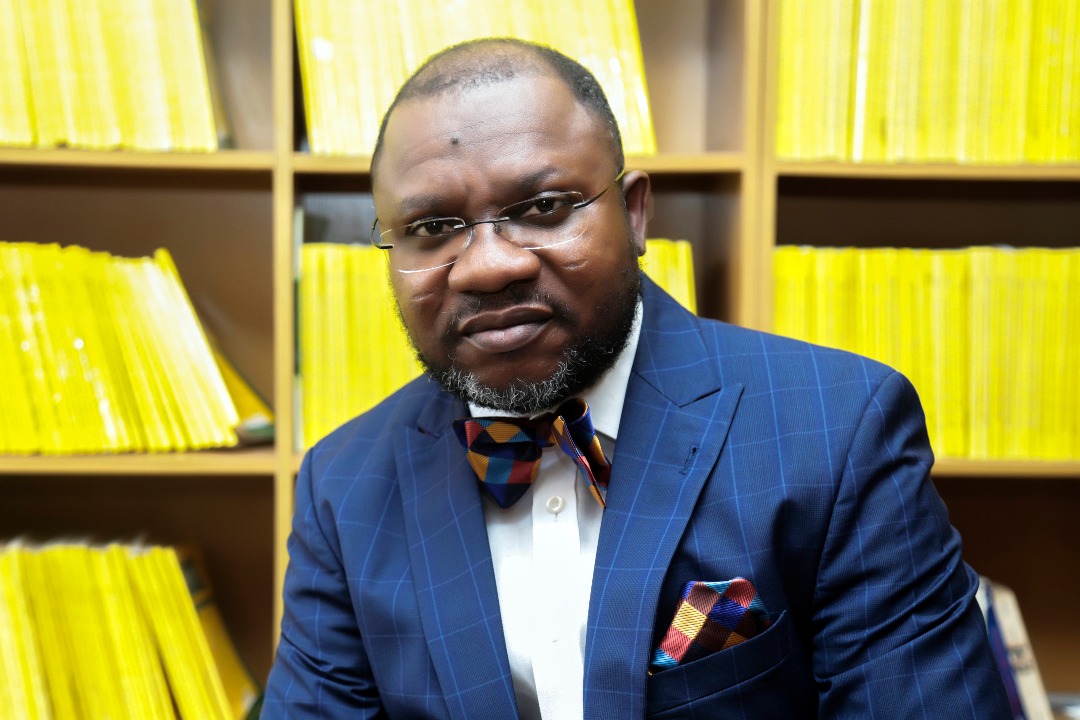
The aftermath of political primaries is often emotional, particularly in a party with strong grassroots structures and deeply committed loyalists such as the APC in Osun State. Understandably, the recent debates surrounding the emergence of Kunle Rasheed Adegoke (K-Rad) as the party’s candidate for the Osun Central Senatorial District have generated disappointment in some quarters, especially among supporters who had hoped for a different outcome. However, while emotions are natural in politics, they must not obscure fairness, political reality, and the broader imperative of party unity.
As someone who has closely followed the internal dynamics of the APC in Osun over the years, without belonging to any faction within the party, I consider it important to state clearly that the emergence of Kunle Rasheed Adegoke should not be framed as a betrayal of any zone or interest group. Rather, it represents the outcome of democratic contestation within a political party where competing interests, aspirations, and calculations inevitably intersect.

What many appear to overlook in the current emotionally charged atmosphere is that Kunle Rasheed Adegoke is not a political outsider who suddenly emerged from obscurity. He is a longstanding progressive who has consistently invested his energy, intellect, resources, and time in sustaining the party, even during periods when many others distanced themselves from its struggles. Across Osun State, particularly among politically conscious observers, K-Rad has earned a reputation as one of the few figures whose interventions have consistently prioritised party stability, internal reconciliation, and ideological commitment over needless political theatrics.
Even outside electoral contests, he has remained visibly engaged in party affairs, defending the progressive fold intellectually, legally, and politically. During difficult periods, especially moments marked by internal tensions and uncertainty, he was among those who continued to engage stakeholders and encourage cohesion rather than division. That history matters.
One critical aspect often overlooked in the current debate is the significant sacrifice Kunle Rasheed Adegoke personally made for the stability and survival of the APC during the last gubernatorial primaries in Osun State. At a time when tensions within the party could easily have escalated into a destructive crisis, he chose the path of compromise, loyalty, and collective interest over personal ambition. Beyond stepping down in the interest of party unity, he publicly endorsed and supported the consensus arrangement that eventually produced Asiwaju Munirudeen Bola Oyebamiji (AMBO) as the preferred progressive candidate at that crucial moment. That singular act contributed significantly to calming internal tensions and preserving the cohesion of the progressive fold at a time when many anticipated fragmentation.
In politics, moments of sacrifice often reveal the true character and long-term commitment of leaders. Kunle Rasheed Adegoke demonstrated then that his commitment to the APC project extended beyond personal political calculations. While many politicians speak of loyalty only when it suits them, he subordinated his own aspiration to the broader stability of the party. It is therefore difficult to argue fairly today that someone who repeatedly invested in party unity, even at personal political cost, does not deserve consideration when opportunities arise within the same political family.
The argument advanced in some quarters appears to suggest that because certain political assurances may have been discussed informally at different times, the democratic process should automatically become secondary. Yet politics does not function permanently on assumptions, emotions, or expectations. Aspirations are legitimate, disappointment is understandable, but no political office can become an inherited entitlement within a democratic system.
Ultimately, what should matter is competence, acceptability, credibility, loyalty, and the capacity to strengthen the party ahead of larger electoral contests. On these grounds, Kunle Rasheed Adegoke cannot be dismissed lightly. Equally important is his political strength and grassroots acceptability in Osogbo, the political heartbeat of Osun Central and historically one of the most decisive voting blocs for progressive politics in the state.
Electoral realities matter in politics, and Osogbo has consistently delivered substantial votes that often shape wider outcomes for the APC in Osun Central. Kunle Rasheed Adegoke’s popularity, visibility, and longstanding relationship with grassroots supporters within that axis make him not merely a symbolic candidate, but a strategically valuable one for the party as it heads into a major electoral contest.
To many neutral observers, his emergence appears less an act of political imposition and more the placement of a round peg in a round hole. He is a candidate whose political experience, party loyalty, intellectual depth, grassroots appeal, and stabilising influence align naturally with the demands of the moment. Whether one agrees with every internal decision or not, there is little doubt that his profile reflects years of consistent investment in the progressive movement and the political future of Osun State.
One of the strongest qualities associated with him over the years has been his ability to maintain relationships across divides. Unlike many politicians who thrive on inflammatory rhetoric and factional bitterness, K-Rad has largely projected moderation, maturity, and strategic calm. Even those who disagree with him politically often acknowledge his intellectual depth, accessibility, and respectful disposition. In an era where politics increasingly rewards aggression over substance, such qualities should not be undervalued.
More importantly, this moment calls for restraint from all sides. Framing the outcome of a primary election as a regional betrayal risks deepening wounds that could ultimately weaken the party itself. Osun politics has historically suffered when internal grievances are allowed to evolve into collective regional resentment. The APC cannot afford another cycle of avoidable fragmentation driven by post-primary bitterness.
The reality is that every primary election produces winners and disappointed camps. That is the nature of competitive politics everywhere in the world. The real test of political maturity is not whether disagreements emerge, but whether leaders and supporters can subordinate personal disappointment to the collective political interest.
Supporters of other aspirants deserve empathy and respect, not mockery or dismissal. Their sacrifices for the party are genuine and ought to be recognised. However, preserving party cohesion now requires moving beyond emotionally charged narratives capable of creating avoidable divisions among people who ultimately belong to the same political family.
At this critical moment, Kunle Rasheed Adegoke’s emergence should be viewed not as an opportunity for factional escalation, but as a rallying point for renewed unity and strategic repositioning. His longstanding commitment to the progressive movement, his stabilising influence within party structures, and his demonstrated loyalty to the APC project make him a credible choice deserving of support.
Politics should not reward noise, emotional pressure, or factional bargaining alone. It should also recognise consistency, competence, bridge-building, sacrifice, and long-term commitment. In many respects, Kunle Rasheed Adegoke embodies those values.
The task ahead for the APC in Osun is greater than internal disappointment. Elections are won not merely through candidacies, but through unity, reconciliation, and strategic cooperation. If the party genuinely seeks consolidation and victory, this is the time for healing, inclusion, and collective focus—not narratives capable of widening internal fractures.
History will judge all actors in this moment not simply by the intensity of their grievances, but by their willingness to place the future of the party above temporary political disappointments.
Olawale Adeosun, an academic & resident of Osun, teaches Mass Communication at a federal university in Osun State.
