

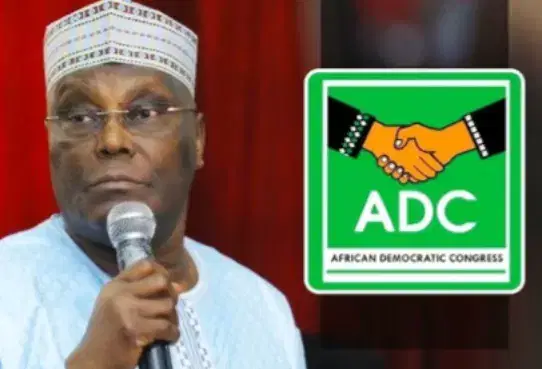
Former Vice President Atiku Abubakar has told President Bola Tinubu that his time in office is running out, declaring that “the era of political complacency, propaganda and governance by deception is drawing to a close” and that Nigerians are preparing to take back their country through the ballot box.
In a statement issued on Friday by his Senior Special Assistant on Public Communication, Phrank Shaibu, Atiku said Nigerians are becoming increasingly aware and will ultimately determine the country’s future through democratic means.

“Let no one be deceived. The era of complacency is over. The era of propaganda is ending. The era of taking Nigerians for granted is coming to a close. The people are awake. The people are watching. With the support of Nigerians, a new chapter of competence, prosperity, security, and genuine hope shall begin. And when the time comes, they will deliver their verdict through the ballot,” he said.
As the Tinubu administration marks its third year in office, Atiku argued that the true assessment of the government should not be based on promotional campaigns, media publicity, or official speeches, but on the realities facing Nigerians, including widespread hunger, youth unemployment, business closures, and the continued abduction of schoolchildren by criminal groups.
He maintained that while governments may have differing perspectives, they cannot alter facts.
“Three years ago, President Tinubu promised renewed hope. What Nigerians have received instead is renewed hardship, renewed insecurity, renewed poverty, and renewed hopelessness,” Atiku said.
According to him, soaring food prices have placed basic necessities beyond the reach of many households, inflation has deepened hardship for low-income earners, numerous small and medium-sized businesses have shut down, the naira has weakened significantly, and citizens’ purchasing power has eroded.
Atiku also criticised the government’s borrowing practices, pointing to reports indicating that the Federal Government borrowed about N11.9 trillion within a nine-month period, while only N3.1 trillion was reportedly allocated to capital projects.
“Nigerians are therefore entitled to ask a simple question: where did the rest of the money go?” he asked.
He further expressed concern over what he described as the concentration of major infrastructure contracts, noting that a large share of government spending appeared to be directed toward the Lagos-Calabar Coastal Highway and the Badagry-Sokoto Highway, both reportedly awarded to a company owned by a businessman whom Tinubu had publicly referred to as his “partner in daring.”
“This administration has created the disturbing perception that while ordinary Nigerians are being asked to endure sacrifice, the benefits of government spending are increasingly flowing towards a privileged circle of politically connected interests,” Atiku said.
The former Vice President described the resurgence of mass kidnappings as one of the strongest criticisms of the administration’s performance over the past three years.
He referenced the recent abduction of schoolchildren in Borno State and the kidnapping of pupils and teachers in Oriire Local Government Area of Oyo State as evidence of what he called a government disconnected from the realities facing citizens.
“The tragedy of Borno and Oyo is not merely a security failure. It is the inevitable consequence of a government that has become detached from reality and addicted to propaganda,” he added.
Atiku dismissed official claims of progress in the economy and security sector, describing them as carefully managed narratives aimed at projecting an image of success that does not reflect the situation on the ground.
He cautioned those in power against interpreting Nigerians’ patience as approval, stressing that there is a significant difference between endurance and acceptance.
The former Vice President also announced that the African Democratic Congress (ADC) would, in the coming weeks, unveil a detailed policy blueprint covering economic recovery, job creation, security reforms, fiscal discipline, healthcare expansion, and measures to restore public trust in government institutions.
