

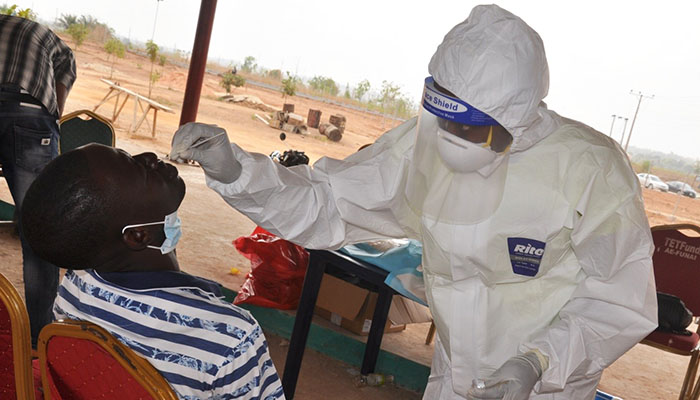
The Federal Government has intensified health screening at airports, seaports, and land borders, stating that travellers identified as high-risk or showing symptoms linked to Ebola and other viral haemorrhagic fevers will undergo secondary screening, isolation, and referral.
The move follows concerns over the ongoing outbreak of the Bundibugyo strain of Ebola virus disease in parts of East and Central Africa and forms part of Nigeria’s broader national preparedness strategy to prevent importation of the disease.

In a statement issued on Tuesday by the Federal Ministry of Health and Social Welfare, the government reassured the public that no confirmed Ebola case currently exists in Nigeria, while confirming that heightened preparedness measures have been activated nationwide.
The ministry stated that enhanced border surveillance is central to the response, with officials directed to strengthen screening and risk assessment for all incoming travellers.
Measures now in place include mandatory temperature checks using infrared scanners and handheld thermometers, health declaration forms, travel history checks, and intensified risk profiling at all points of entry.
Authorities also said secondary screening, isolation, and referral mechanisms have been activated for travellers showing symptoms consistent with viral haemorrhagic fevers.
The development marks a return to strict border vigilance similar to measures adopted during the 2014 Ebola outbreak and the COVID-19 pandemic.
Beyond border controls, the government said surveillance systems have been strengthened nationwide through the Integrated Disease Surveillance and Response (IDSR) framework, community-based monitoring, and real-time public health alerts.
Public Health Emergency Operations Centres have been activated, while Rapid Response Teams at national and sub-national levels have been placed on standby.
Healthcare facilities have also been directed to improve infection prevention and control, strengthen triage systems, and ensure prompt reporting and isolation of suspected cases.
The ministry urged Nigerians not to panic, stressing that the measures are preventive and aimed at maintaining national preparedness.
It also advised citizens to maintain good hygiene, avoid contact with bodily fluids of symptomatic individuals, avoid bushmeat from unknown sources, and report unusual illnesses or deaths promptly.
Nigeria previously recorded one of Africa’s most successful Ebola containment efforts during the 2014 outbreak, when the virus was swiftly controlled after arriving in Lagos through an infected traveller, resulting in 20 confirmed cases and eight deaths before the country was declared Ebola-free by the World Health Organisation.
The current concern involves the Bundibugyo ebolavirus strain, which can cause severe illness including fever, weakness, vomiting, diarrhoea, and in some cases bleeding, though it is less common than the Zaire strain responsible for major outbreaks in Africa.