

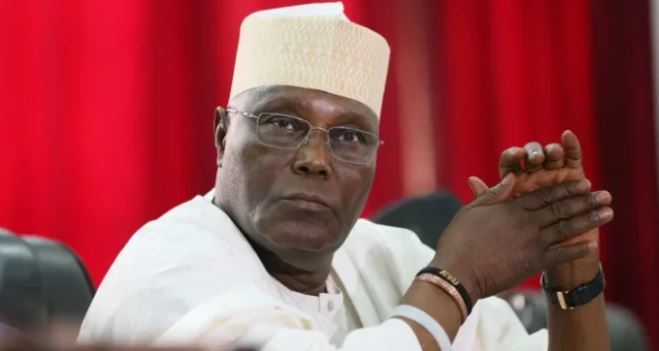
Former Vice President Atiku Abubakar has criticised President Bola Tinubu’s administration, accusing it of attempting to shift responsibility for Nigeria’s worsening insecurity and economic hardship onto the media and citizens.
The criticism followed comments by Bayo Onanuga, special adviser to the president on information and strategy, who argued that sections of the Nigerian media were creating a misleading impression that insecurity had overwhelmed the country. Speaking on Arise TV, Onanuga said media reports often portray insecurity as though every part of Nigeria has been overtaken by violence.

“The problem is that the media in Nigeria are even creating the problem. The way they’re reporting security is as if the entire country is consumed,” he said.
He added that while kidnappings and attacks remain a concern, many of the incidents occur at night despite repeated warnings from security agencies against travelling after dark.
“Any time I read about either kidnapping or an attack somewhere, sometimes I look at the time. I say, wow, it happened at 8 p.m, it happened at 9 p.m, sometimes 1 a.m. A long time ago, the police told people to stop travelling at night.”
Reacting through a statement issued by his senior special assistant on public communication, Phrank Shaibu, Atiku said the presidency’s remarks suggest Nigerians are only safe during limited hours of the day.
“Is the presidency admitting that Nigerians can only be safe for a few hours of the day? Is this an official declaration that Africa’s largest economy has been reduced to an eight-hour economy where citizens must shut down their businesses, abandon legitimate travel, and retreat indoors once the sun sets?” he asked.
Atiku stressed that the responsibility for protecting lives and property lies with the government and security agencies, not ordinary citizens.
“The primary duty of any government is the protection of lives and property. Citizens do not surrender their freedoms in exchange for curfews imposed by fear,” he said.
He argued that the country’s insecurity cannot be dismissed as media exaggeration, saying Nigerians experience the crisis daily.
“A trader travelling from Kano to Lagos, a businessman returning from Abuja to Kaduna, a farmer transporting produce to market, or a family embarking on a legitimate journey should not be blamed when criminals attack them. The blame belongs squarely where it should — on those charged with securing the country,” he said.
Atiku warned that normalising insecurity by advising people to avoid travel at certain hours could damage economic productivity.
“A nation cannot prosper when its people are told that safety ends at sunset. Economies grow because people can move freely, trade freely, and conduct lawful activities without fear,” he said.
On the economy, the former vice president said the Tinubu administration appears disconnected from the realities faced by Nigerians, pointing to rising food prices, inflation, unemployment and declining purchasing power.
“The father who goes to bed wondering how to provide the next meal for his family does not need a newspaper report to confirm hardship,” he said.
He also faulted attempts to blame the media for reporting insecurity and economic hardship, insisting journalists are only reflecting realities already felt by citizens.
“Blaming journalists for reporting insecurity and hardship is like blaming a thermometer for a fever,” Atiku said.
“Nigeria does not need explanations for suffering. Nigeria needs solutions. Nigeria does not need lectures about perception. Nigeria needs results.”