
“Nations do not become prosperous by making education more expensive,” Atiku knocks FG over proposed hike in WAEC, NECO fees

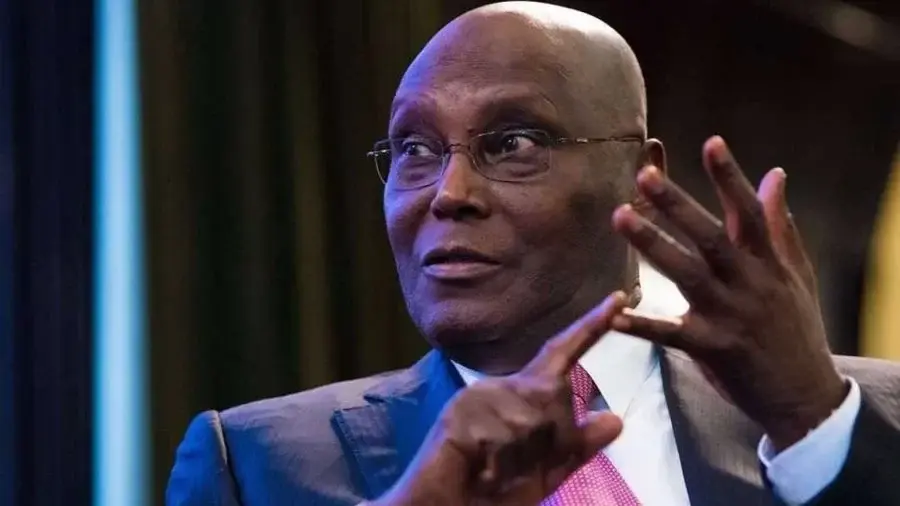
Former Vice President, Atiku Abubakar, has said the federal government’s proposed N50,000 fee for Senior Secondary Certificate Examination (SSCE) will deny children from poor and middle-income families access to education.
The presidential candidate of the African Democratic Congress (ADC), also criticised the recent increase in fees for federal unity colleges, describing the government’s education policies as “cruel”, economically insensitive and inconsistent with its constitutional responsibility to make education accessible.
On June 18, the Federal Government approved N50,000 as the new examination fee for the West African Examinations Council (WAEC) and the National Examinations Council (NECO) candidates from 2027.
The Ministry of Education said the approval followed a request by WAEC for an upward review of the SSCE fee, increasing the registration cost from N27,500 to N50,000.
The ministry said the decision followed a meeting between the minister of education and examination bodies, where WAEC and NECO were directed to adopt a uniform examination fee.
In a statement issued on Sunday by Phrank Shaibu, his senior special assistant on public communication, Atiku said the fee increase comes at a time when Nigerians are battling inflation, rising food prices, transportation costs, electricity tariffs and unemployment.
“A government that genuinely believes in the future of its people does not erect financial barriers between children and education. It removes them,” he said.
“Education is not a privilege reserved for the wealthy; it is the birthright of every Nigerian child and the foundation upon which prosperous nations are built.”
Atiku said Nigeria already has one of the largest populations of out-of-school children globally, warning that higher examination fees would deepen the crisis.
“Nigeria already bears the painful distinction of having one of the largest populations of out-of-school children in the world,” he said.
“Depending on the methodology and age group measured, between 10.5 million and about 15 million Nigerian children and young people are already outside the classroom.
“Any government confronted with such a national emergency should be investing aggressively to bring these children back into school. Instead, this administration is choosing policies that will inevitably swell those numbers.”
He said the increase would disproportionately affect poor and middle-income families.
“The consequences of these policies extend far beyond school gates. Every child priced out of education today becomes tomorrow’s victim of unemployment, poverty, child labour, criminal exploitation, drug abuse or insecurity,” he said.
“Nations do not become prosperous by making education more expensive; they prosper by making education more accessible.”
The former vice-president said the proposed N50,000 examination fee would prevent many qualified students from pursuing tertiary education.
He said the challenge is compounded by the limited admission capacity of Nigerian universities.
“It is a systemic filter that will inevitably restrict access to tertiary education for thousands of indigent but academically qualified Nigerian students,” Atiku said.
“For many children from low-income families, the journey to university does not end at the admission gate — it is terminated long before then by the inability to afford the qualifying examinations that determine their future.
“Today, Nigerian universities can admit only about 500,000 to 700,000 students annually, even though more than two million young Nigerians seek admission every year.
“The inevitable consequence is that well over one million qualified candidates are denied university admission annually — not because they lack the merit or the desire to learn —but because available spaces fall far below national demand.
“Rather than addressing this structural deficit by expanding infrastructure and increasing admission capacity, the government is effectively constricting access even further through higher Unity School fees and the proposed ₦50,000 WAEC and NECO examination fee.
“The result is a cruel double punishment: first, millions of qualified young Nigerians cannot secure admission because there are insufficient spaces; second, many will now be priced out of even competing for those limited spaces.
“That is not educational reform; it is the systematic rationing of opportunity and the gradual exclusion of the children of the poor from the promise of higher education.”
