

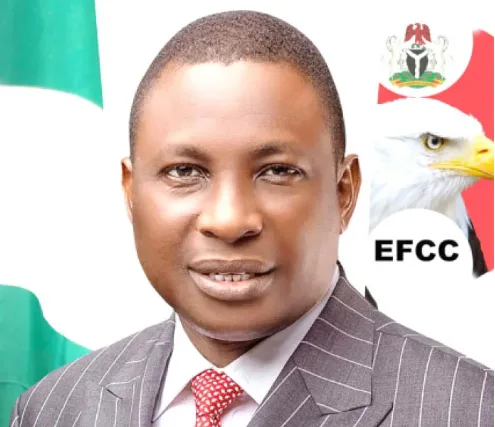
The Economic and Financial Crimes Commission is facing criticism from the Nigeria Association of Auctioneers over its decision to oversee the sale of seized vehicles through a platform it intends to operate, with the group warning that the arrangement could undermine transparency and public confidence.
The association argued that allowing the anti-graft agency to investigate cases, confiscate assets, retain custody of them and also supervise their disposal creates a conflict of interest that could weaken accountability in the asset recovery process.

Speaking in an interview with The PUNCH, the association’s President, Benjamin Isibor, said the commission has no legal backing to combine the roles of asset custodian and auctioneer. He noted that members of the association had successfully opposed a similar proposal during the tenure of former EFCC Chairman Ibrahim Magu.
“The EFCC is now trying to act as a custodian and seller of assets, which is totally unlawful. This same issue happened during former EFCC chairman Ibrahim Magu. Magu said he was going to bring in foreigners to sell these assets. But it was stopped after our outcry.
“Now, this same thing is about to happen in another way. Everyone is interested in what happens with crime agencies. The EFCC are the ones who prosecute, seize these assets, and now want to play as custodian of the assets. They have seized these items as proceeds of crime, and at the same time, you still want to be the one to set up these platforms that would sell off these assets.
“We are completely against this process, and it should not be done when there are reputable and certified auctioneers who are on the front line to do this job for you,” he said.
Isibor maintained that qualified auctioneers are better equipped to ensure an open and credible disposal process.
“This is exactly our position. We would stand in the gap for our government and the general public to ensure that the process is seamless and transparent,” he added.
The association said it had not confirmed the number of vehicles to be auctioned but pointed out that the EFCC recently recovered several luxury vehicles linked to businesswoman Aisha Achimugu during an ongoing investigation. It added that the commission has yet to disclose the value of the recovered vehicles or confirm whether they will all be included in the planned sale.
Isibor also questioned the commission’s decision to abandon auctioneers who had previously been contracted to build digital auction platforms for the agency.
“We don’t know the number of cars they want to auction, but we have done this process with them in the past where they engage the services of auctioneers. Actually, they have had a contractual agreement with some auctioneers in the past to build portals, and the auctioneers have spent lots of money to build portals and the system that would work.
“Which is then surprising that, having committed people to work and commit resources, the EFCC is now saying they want to do it by themselves. That is illegal,” he said.
He further argued that the commission’s proposal runs contrary to legal provisions guiding the disposal of forfeited assets.
“It is against the principles of even natural justice. It is against the law, the Due Process Act, and even the POCA law that was claimed by the EFCC.
“The POCA law doesn’t say the commission should sell by themselves. The Due Process Act and other laws do not say the commission should sell by themselves. So why would they want to sell by themselves? That is our challenge and question,” he stated.
The association also expressed concern over the apparent abandonment of previous agreements with auctioneers without any explanation.
“We are also saying that in a situation where you have already engaged auctioneers, you have a contractual agreement in the past. The commission made them commit hard-earned resources to build portals.
“They went around the country to make the process smooth in these hard times, and at the end of the day, you have inconclusive arrangements with previous auctioneers, and now you want to do it by yourself. There is no clarity for us as far as we are concerned.
“We saw the advert for the auction, and we are concerned as stakeholders that due process must be followed irrespective of whose ox is gored. And the agency that should protect the law shouldn’t be the one to go against it. That is our stand,” he said.
A former National President of the association, Alhaji Musa Kurra, also said concerns had been raised within the industry over the proposed auction.
“Yes, I have heard issues and complaints about the latest auction announced by the EFCC. In everything, you would always find people who are trying to circumvent these things for themselves,” he said.
The EFCC has traditionally disposed of forfeited assets, including vehicles, houses and vessels, through public auctions handled by licensed auctioneers after obtaining court orders.
The current disagreement centres on whether the anti-graft agency should directly oversee future auctions or continue to rely on independent professionals in line with existing procurement and asset disposal procedures.
As of the time this report was filed, the EFCC had not responded to the concerns. Its spokesperson, Dele Oyewale, did not reply to calls, text messages or WhatsApp messages seeking the commission’s reaction.
