
Fake agency scandal:‘I’m being made a scapegoat,’ Adeyemi demands opportunity to testify before House committee

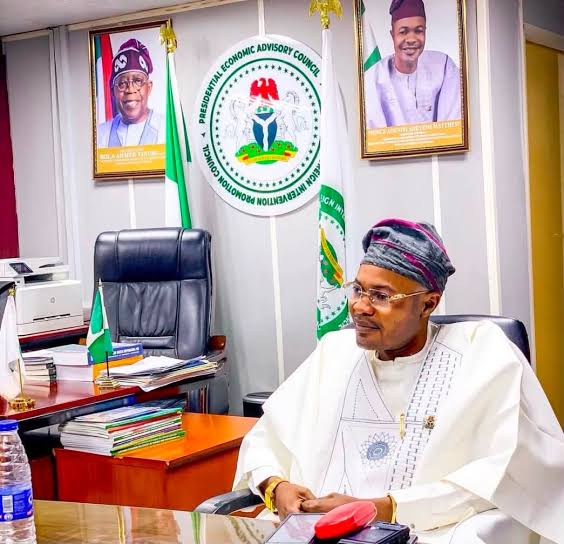
The director-general of the Presidential Foreign Investment Promotion Council (PFIPC), Adeniyi Adeyemi, has appealed to the House of Representatives to grant him administrative clearance to appear before the committee investigating the controversy surrounding the council.
Adeyemi, who is currently in custody, said through a statement issued by his legal team on Sunday that any report from the legislative investigation without his input would be “fundamentally flawed”.

His legal team, led by lawyer Festus Akhigbe, argued that denying him the opportunity to testify would undermine the credibility of the investigation.
Last week, some federal government officials appeared before the House of Representatives ad hoc committee probing the PFIPC controversy and the ₦1.3 billion allocated to the council in the 2026 Appropriation Act.
During the committee’s sitting last Wednesday, Inspector-General of Police (IGP) Tunji Disu declined to present Adeyemi before the panel, explaining that the PFIPC DG was being held in custody based on a court order.
The committee had earlier requested that the police chief produce Adeyemi before the lawmakers.
‘IT’S IMPOSSIBLE FOR A SINGLE CITIZEN TO MISLEAD MULTIPLE FG AGENCIES’
In their statement, Adeyemi’s lawyers argued that their client was being portrayed as an “isolated, master-mind impostor who single-handedly fabricated a federal government agency”.
They maintained that the administrative records surrounding the PFIPC suggest a different reality from the allegations being presented publicly.
According to the legal team, the House investigation should focus on the “undisputed institutional actions that created and validated” the PFIPC.
The lawyers cited several government institutions they claimed had interacted with or recognised the council, including the Office of the Secretary to the Government of the Federation (SGF), which they said acknowledged documents and facilitated office allocations within the Federal Secretariat Complex.
The statement added: “If these documents were crude forgeries, how did the central administrative engine of the Federal Government act upon them?”
The legal team also alleged that the Office of the Accountant-General of the Federation (OAGF) and the Central Bank of Nigeria (CBN) acted on official documents to issue administrative budget codes, grant self-accounting status, deploy federal civil service personnel to the council and open operational accounts.
They further claimed that the Office of the Head of the Civil Service of the Federation (OHCSF) approved the council’s structure and recruitment waivers that enabled the employment of 314 personnel.
The lawyers also pointed to the Budget Office of the Federation and the National Assembly, stating that documents linked to the council were processed and reviewed before a ₦1.302 billion allocation was included in the 2026 Appropriation Act, which was passed by both chambers of the National Assembly and signed into law by the President.
They added that security agencies and anti-graft bodies had also engaged with the council, claiming that heads of major security institutions attended programmes organised by PFIPC, while the Economic and Financial Crimes Commission (EFCC) allocated property to the council and recognised its leadership.
The legal team argued that it was an “administrative impossibility for an unassisted individual” to deceive multiple federal institutions.
They accused authorities of using Adeyemi as a scapegoat to conceal “deep-seated institutional lapses, procedural breakdowns, and internal approvals within the government structure”.
“In light of the ongoing proceedings by the House of Representatives Ad-hoc Committee chaired by Hon. Yusuf Gagdi, we formally request that the panel issue the necessary administrative clearance to allow our client, Prince Adeniyi Adeyemi Matthew, to appear in person and testify,” the statement read.
The lawyers added that any investigative conclusion reached without hearing from Adeyemi would be “fundamentally flawed, incomplete, and a breach of the constitutional right to a fair hearing (audi alteram partem).”
They urged the committee to consider testimony from both institutional witnesses and Adeyemi, whom they described as the central figure in the controversy.