

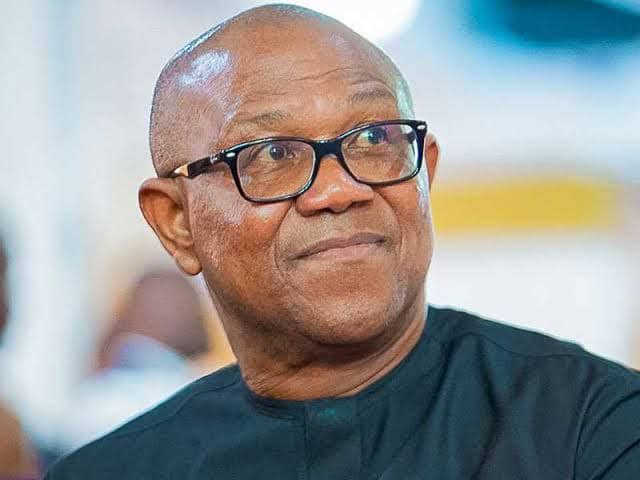
Peter Obi, the 2027 presidential candidate of the Nigerian Democratic Congress (NDC), has called on Nigerians to support his bid for the presidency and entrust him with their mandate.
Obi made the appeal on Friday at a press conference in Onitsha, Anambra State, where he announced the commencement of campaign activities ahead of the January 16 presidential and National Assembly elections.

He said Nigeria was confronted by numerous serious challenges, including some that threatened the country’s existence, but expressed confidence that the nation could overcome them.
“I consider myself quite privileged to be one of those seeking your mandate to deal with these challenges facing our country.
“Each year, millions of young people enter the labour market, yet too many struggle to find productive opportunities.
“Weak infrastructure, unreliable power, insecurity, and excessive cost of doing business continue to burden households and constrain enterprise.
“With your mandate, our economic agenda will put production, investment, enterprise, and human capital at the centre of how we lead,” he said.
Obi said his private-sector background, academic training in policy and business-related fields, and experience as Anambra State governor had prepared him for the presidency.
He also highlighted the experience of his running mate, Senator Rabiu Kwankwaso, saying his tenure as Kano State governor was marked by emphasis on education, technical training, scholarships, infrastructure and human-capital development.
According to Obi, Kwankwaso’s investments in education and skills reflected the understanding that human resources were central to the long-term development of any state.
Reflecting on his own record in Anambra, Obi said:
“In Anambra, I prioritised the foundations of long-term development: education, healthcare, infrastructure, fiscal discipline, and institutional capacity.
“Our experiences are different, but our conclusion is the same: Nigeria must invest in its people and manage public resources with discipline.
“Campaign moments gave Nigerians the opportunity to assess the records, ideas, and plans of those seeking their mandate to lead their country, especially at a time of grave uncertainty in a rapidly changing world.
“I urge Nigerians to examine each candidate’s record and proposals, ask tough questions, and demand evidence behind every promise.
“We should debate ideas without hatred, compete without violence, and disagree without weakening the bonds that unite us.
“When Nigerians make their choice, that choice must be respected,” he said.
Obi said an elected Obi-Kwankwaso administration would focus on improving agricultural productivity by securing farming communities, expanding irrigation, upgrading rural roads and storage facilities, and connecting farmers to financing and markets.
He also pledged to expand manufacturing and agro-processing, with the aim of increasing exports of finished products and enabling Nigeria to derive greater value from its natural resources.
“We will create a business environment where entrepreneurs can invest, hire, and grow without unnecessary regulatory or infrastructure barriers.
“We will manage public finances responsibly; every naira should have a clear purpose, and major public investments should have measurable outcomes.
“The goal is not growth for its own sake but an economy that produces more, employs more people, creates wealth, and improves living standards,” he said.
On security, Obi said his administration would strengthen intelligence gathering and improve coordination among security agencies while enhancing policing, border management and the use of technology.
He also promised to support lawful community-based mechanisms for early identification of threats and effective responses.
“The imperative of decentralizing security management, but with strong systems of coordination between the levels, is critical to our plans.
“Farmers cannot produce food if they cannot reach their farms safely, children lose the chance to learn when they cannot attend school safely, and businesses cannot create jobs when they cannot move goods securely,” he said.
