

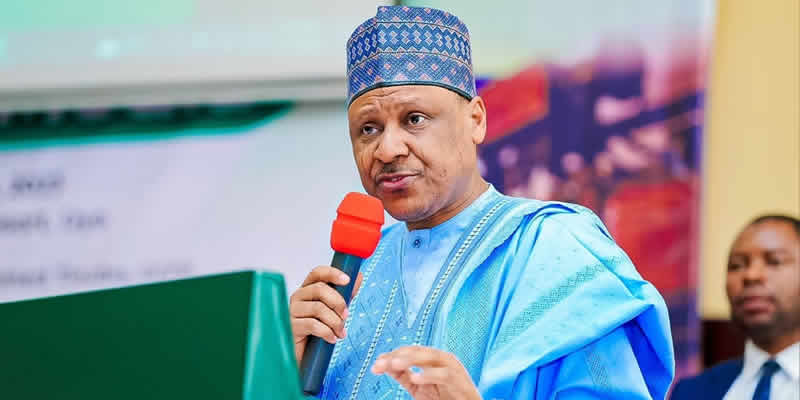
Minister of Information and National Orientation, Mohammed Idris, has warned against renewed calls for the reinstatement of petrol subsidy, arguing that such a move could weaken Nigeria’s fiscal position, discourage investors and roll back gains recorded under President Bola Tinubu’s economic reforms.
Idris made the position known in an Op-Ed published on Monday in national newspapers, titled “Restoring Fuel Subsidy Will Reverse Nigeria’s Economic Gains.” His Media Aide, Rabiu Ibrahim, disclosed this in a statement issued in Abuja.

The minister highlighted the financial benefits of subsidy removal while outlining the potential consequences of returning to the previous system.
“Restoring subsidy would almost instantly return Nigeria to the economic conditions of 2022, recreating the same fiscal pressures, distortions, scarcity and incentives for arbitrage that made the old system unsustainable,” Idris said.
He also challenged supporters of subsidy reinstatement to consider what government would have to sacrifice to finance it.
“Do we restore petrol subsidy, or sustain student loans and consumer credit for young Nigerians? Do we restore subsidy, or preserve higher allocations to states and local governments? Do we restore subsidy, or continue funding roads, rail, power and security?
“Do we restore subsidy, or strengthen the fiscal capacity required to expand healthcare, education and social protection for vulnerable Nigerians?” he asked.
Idris recalled that Nigeria spent approximately $10bn on petrol subsidies in 2022, at a time when oil production and government revenues were declining. He noted that the World Bank had warned that the subsidy was diverting funds that could otherwise have been invested in education, healthcare, infrastructure and social protection.
Referencing the Federal Government’s “Nigeria’s Reform Scorecard: The Benefits, Costs and Harms Prevented,” the minister said Finance Minister and Coordinating Minister of the Economy, Taiwo Oyedele, reported that savings from subsidy removal generated N15.8tn in resources for the Federation between June 2023 and December 2025.
The amount, he explained, comprised about N5.43tn for the Federal Government, N6.52tn for states and N3.88tn for local governments. He stressed that the N15.8tn did not represent a separate cash reserve but resources freed up within the broader fiscal system.
According to Idris, the additional fiscal space has helped states and local governments meet salary and pension obligations, fund essential services and support investments, while the Federal Government has channelled resources towards infrastructure, security, agriculture and human capital development.
“The Reform Scorecard recorded approximately N6.47 trillion in additional expenditure on strategic infrastructure, alongside more than N400 billion committed to major social investment initiatives, including NELFUND, MOFI Real Estate Investment Fund, MREIF and CREDICORP.
“In contrast, social transfers have reached more than 10 million Nigerian households.”
The minister further noted that the country already bore an electricity subsidy estimated at N3.14tn between June 2023 and December 2025, warning that restoring petrol subsidy would place additional pressure on public finances.
He said the Organised Private Sector and other stakeholders in the economy had similarly cautioned against reversing the reform.
“Nigeria cannot build tomorrow’s economy by returning to yesterday’s unsustainable subsidy regime. We have moved beyond that model,” he said.
Idris urged Nigerians to assess the reforms from the perspective of long-term economic stability, stressing the importance of building a stronger, more productive and financially sustainable economy.
