

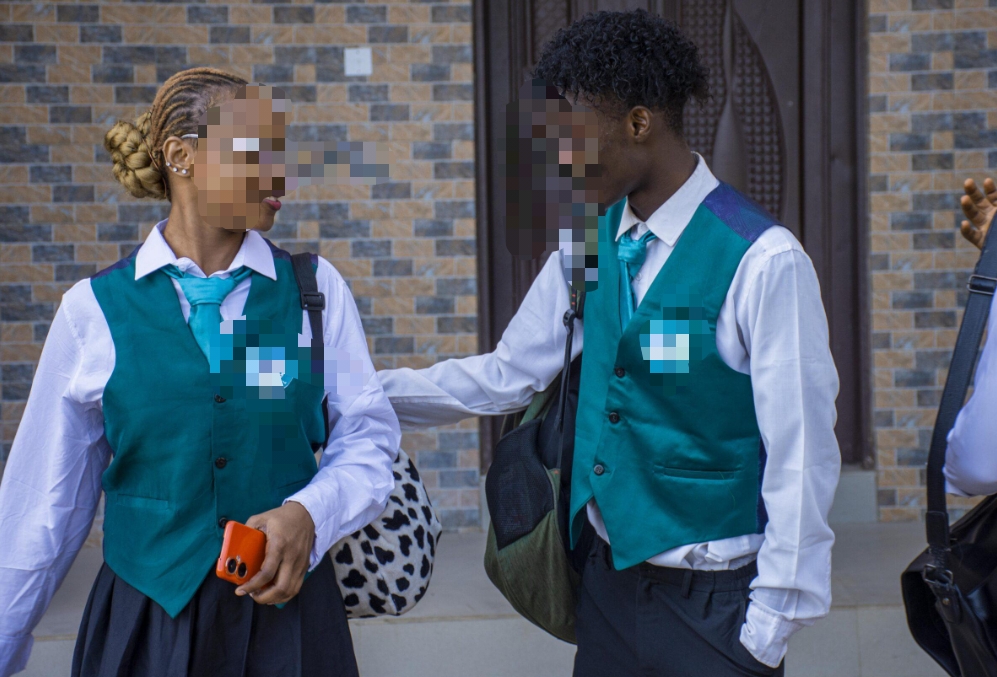
The conversation began casually at a supermarket, but what a schoolgirl said about relationships among her classmates quickly became a revealing account of how early romance is playing out in the lives of some school children.
I was at the supermarket with a senior colleague to get something when a student, returning home from school, stopped to visit her friend who works there. As the two friends chatted, the student began recounting some of the incidents she had witnessed among her classmates.

One of them immediately caught our attention.
“Do you know their two classmates were fighting because of a guy and their teacher caught them? Then they had to tell the teacher it was a friendship fight,” she said.
The comment initially sounded like an ordinary disagreement between schoolmates. But the conversation soon revealed that the incident was part of a wider pattern of relationships among pupils.
The student went on to tell us about another classmate who had reportedly left the school and transferred to another one because she was struggling to get over a boy she had been dating at her former school.
That revelation prompted an immediate question: How did she convince her parents to allow her to change schools because of a boy?
My colleague and I exchanged surprised glances.
Then came another claim from the student: the boy at the centre of the stories had allegedly dated almost everybody in the classroom. “What?”
The brief conversation raised a bigger question about school-age relationships: When does an innocent crush become a relationship capable of affecting a child’s education, friendships, emotions and behaviour?

When classmates become couples
For many children, attraction begins innocently.
A pupil may develop a crush on a classmate, spend more time with them during break or exchange phone numbers. Classmates may tease the pair about being in love, and eventually the two may begin describing themselves as boyfriend and girlfriend.
For some, it remains a harmless school-age crush.
But for others, the relationship can become an important part of their daily lives.
Messages become more frequent. Jealousy develops. Friends become involved. Arguments follow.
What begins as friendship can gradually become a source of emotional pressure and conflict.
The account shared by the student illustrates how quickly such situations can spill into school life.
Two pupils reportedly fighting over a boy. A teacher intervening. Another student allegedly changing schools to distance herself from a relationship.
These incidents raise questions about how much attention adults pay to the emotional lives of children outside the classroom.
When relationships become a source of conflict
School relationships can sometimes affect the way pupils interact with one another.
A child may become jealous when a partner speaks to another classmate. Friends may take sides during disagreements, turning a private issue into a wider classroom conflict.
In some cases, arguments can escalate into physical fights.
The student who spoke to us said the two classmates caught fighting had described the incident to their teacher as a “friendship fight”.
While the circumstances of that particular incident could not be independently verified, the account highlights a broader concern: children may be dealing with relationship conflicts that adults may not immediately recognise.
The student who changed schools
The claim about the student who reportedly transferred to another school because of a boy was even more striking.
According to the student, the girl had been dating the boy at her former school but eventually left because she was finding it difficult to move on from the relationship.
Changing schools is a major decision for any child. It means leaving familiar teachers, classmates and routines and adjusting to a new environment.
The account therefore raises questions about the extent to which school-age relationships can affect a child’s emotional wellbeing and family decisions.
It also highlights the need for parents to understand what their children are experiencing before problems become difficult to manage.
‘He has dated almost everybody’
The student further claimed that the boy involved had dated almost everybody in the classroom.
That claim could not be independently verified, and the meaning of “dating” among school children can vary considerably. For some pupils, it may simply mean having a crush or being particularly close to someone.
Nevertheless, the statement illustrates how relationships can become part of the social life of pupils.
A child may gain popularity because several classmates are interested in them, while another may become the subject of gossip because of who they are seen talking to.
Relationships can then become a source of attention, competition, jealousy and conflict.
The consequences beyond the classroom
The concern about school-age dating is not simply that children develop feelings for one another.
The greater concern is what can happen when those feelings begin to interfere with other areas of their lives.
Education
A child who spends hours communicating with a boyfriend or girlfriend may have less time for homework, revision and other school activities.
A disagreement can affect concentration, while a breakup may leave a pupil emotionally distracted during lessons or examinations.
Friendships
Relationships can also change friendships.
Some pupils may distance themselves from friends because of a partner, while others may become involved in arguments because of jealousy.
A breakup can leave a child isolated, particularly when the relationship has become their main source of emotional support.
Bullying and humiliation
A relationship that ends badly can create another problem.
Private conversations, photographs or messages may be shared with other pupils, turning a personal disagreement into school-wide gossip.
With smartphones and social media, such incidents can spread quickly beyond the school environment.
When gifts become a problem
Money and gifts can further complicate relationships among pupils.
A child may receive food, airtime, money, clothes or other items from someone they consider a boyfriend or girlfriend.
Although such gestures may appear innocent, they can create a sense of obligation.
The risk becomes more serious when the other person is significantly older.
A child may interpret attention, gifts or financial support as affection without fully understanding the power difference involved.
That can create opportunities for manipulation, exploitation and abuse.
Sexual pressure
Another concern is sexual pressure. Not every school-age relationship is sexual, and having a crush does not mean a child is sexually active.
However, some children may be pressured to engage in behaviour they are not emotionally or physically prepared for.
The consequences can include unintended pregnancy and sexually transmitted infections. Pregnancy can also interrupt a girl’s education and expose her to additional social and health challenges.
Boys can also face pressure to prove their masculinity or demonstrate their feelings in ways they may not fully understand.
This makes age-appropriate conversations about personal boundaries, safety, consent and healthy relationships important.
Social media has changed relationships
The school bell no longer necessarily ends the relationship for the day.
With smartphones and social media platforms such as WhatsApp, TikTok and Instagram, pupils can remain connected long after leaving school.
A disagreement that begins in the classroom can continue through messages late into the night.
Instead of sleeping, reading or preparing for the next day’s lessons, a child may spend hours communicating with a boyfriend or girlfriend.
Social media also exposes young people to large amounts of romantic content, potentially shaping their expectations of what relationships should look like.
Parents may be unaware
For many parents, the most difficult part may be discovering the relationship in the first place.
A child leaves home in a school uniform and returns later in the day. On the surface, everything appears normal.
But within the school environment, the child may be dealing with friendships, attraction, jealousy, arguments or pressure that the family knows nothing about.
Some children hide relationships because they fear punishment.
When parents eventually discover what is happening, anger may be their immediate response.
But harsh punishment can sometimes make a child more secretive.
Children need boundaries, but they also need trusted adults they can approach when they are confused, pressured or afraid.
The role of teachers
Teachers are also in a position to notice changes in pupils because they interact with them daily.
A child who suddenly becomes withdrawn, distracted or repeatedly involved in conflicts may need more than punishment.
When pupils fight, understanding what triggered the conflict can be important.
Schools can also provide safe channels for children to report bullying, pressure, harassment or inappropriate behaviour.
The objective should not be to encourage children to date, but to help them understand healthy friendships, personal boundaries and when to seek help.
What parents can do
Parents cannot prevent their children from experiencing every emotion associated with growing up, but they can help them understand those emotions.
Conversations about friendship, attraction, peer pressure, social media and personal boundaries should begin before a crisis occurs.
Parents can take an interest in their children’s friends and school experiences without turning every conversation into an interrogation.
They should also pay attention to significant changes in behaviour, including declining academic performance, unusual secrecy around phones, unexplained gifts, sudden mood changes, withdrawal from family or reluctance to attend school.
These signs do not automatically mean a child is dating, but they can provide an opportunity to check in.
When childhood meets adult expectations
The student’s conversation at the supermarket lasted only a few minutes.
She was simply sharing stories about what she had seen among her classmates.
But the account of two pupils fighting over a boy, another student reportedly changing schools because she could not move on from a relationship and a boy allegedly dating several girls in the same classroom offered a glimpse into a side of school life that adults may not always see.
For some pupils, school is no longer only about lessons, examinations and friendships.
There is also the pressure to fit in, have someone, maintain a relationship, deal with jealousy and cope with heartbreak.
The issue, therefore, is not simply whether children develop feelings for one another.
It is whether they have the guidance and support to understand those feelings without being pushed into situations they are not prepared to handle.
A school child may confidently say, “I have a boyfriend” or “I have a girlfriend.”
But saying it does not necessarily mean the child understands the emotional pressure, risks and responsibilities that may come with the relationship.
That is where parents, teachers and other trusted adults have a crucial role to play.
