

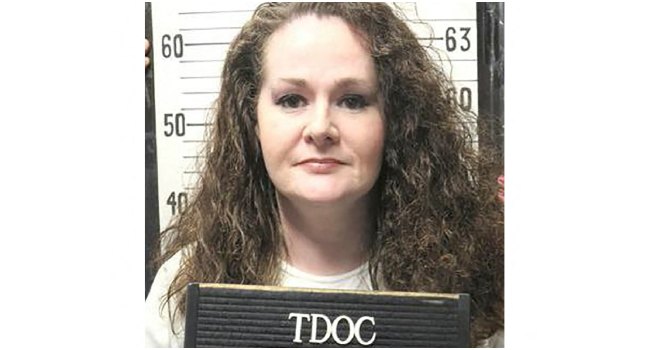
The commissioner of the Tennessee Department of Correction, Frank Strada, has resigned following the botched execution of convicted murderer Christa Pike, who survived two lethal injections.
Tennessee Governor Bill Lee announced on Saturday that Strada would leave his position later this month.

Pike, 50, survived two injections of pentobarbital, a drug used to suppress nervous system activity, during her scheduled execution on Wednesday.
Media witnesses reportedly heard Pike snoring for about an hour after she was administered the lethal doses and said she was still alive when they were escorted from the execution chamber viewing area at Riverbend Maximum Security Institution in Nashville.
Pike was subsequently taken to hospital, where her lawyers said she remained critically ill, unconscious and on a ventilator as medical staff worked to clear the drug from her system.
Lee thanked Strada for “his willingness to put the interests of Tennesseans first during this difficult moment”.
In a statement issued alongside the governor’s announcement, Strada said he continued to believe that the Department of Correction had carried out its responsibilities according to established procedures.
Lee has also halted further executions in Tennessee for the rest of the year pending a comprehensive review by an independent third party.
Concerns Over Execution Procedure
Pike’s lawyers had previously challenged the protocol for establishing an intravenous line, arguing that it could cause unnecessary suffering because of her small veins and a blood condition.
Her lawyer, Randy Spivey, said he witnessed seven needles being used in Pike’s left arm as execution staff attempted to establish an IV line.
He said one of the needles appeared to have been bent when it was removed after an unsuccessful attempt.
Another lawyer, Stephen Ferrell, said medical experts had warned that needles could become dislodged or pierce through the vein, potentially causing the lethal drugs to flow into surrounding tissue instead of the bloodstream.
A court filing described pentobarbital as a caustic substance capable of burning skin, tissue and veins.
According to the filing, both of Pike’s arms were swollen, burned and blistered when she arrived at hospital.
Media witnesses also reported that Pike told execution staff after receiving the injection that her arm felt as though it would “burst open”.
The Death Penalty Information Center said Pike was the first inmate known to have survived after being injected with lethal doses of execution drugs.
Pike’s 1995 Murder Conviction
Pike was sentenced to death for the 1995 murder of 19-year-old Colleen Slemmer.
She was 18 at the time of the killing and, according to court records cited by her lawyers, was involved in the attack alongside her boyfriend at a job training camp.
Slemmer’s body was later found with a pentagram carved into her chest, an element that attracted widespread attention to the case.
Pike’s lawyers had sought clemency, citing her age at the time of the crime, mental health difficulties and a history of childhood sexual assault and post-traumatic stress disorder.
Her execution had also drawn attention because she would have been the first woman executed by Tennessee in more than two centuries.
According to the Death Penalty Information Center, 18 women have been executed in the United States since 1976.