

The Nigerian Guild of Editors (NGE) has demanded an apology from The Nation newspaper over an editorial accusing the guild of “failing journalism” at its conference in Enugu.
The guild said the editorial, titled “Journalists Failed Journalism”, fell short of professional standards because it reached a conclusion about the 22nd All Nigeria Editors Conference (ANEC) without establishing the full facts surrounding the event.

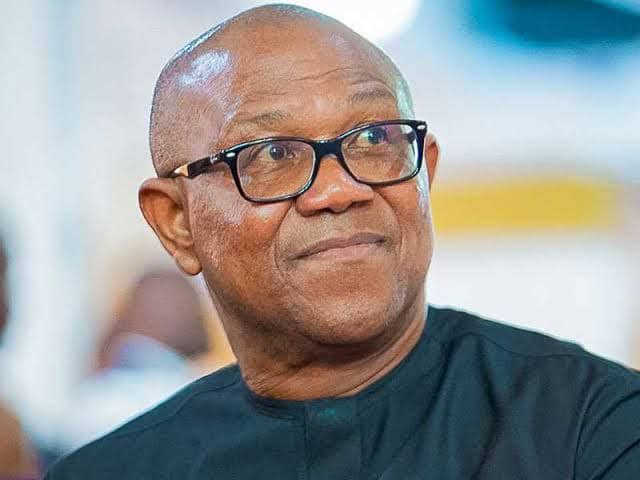
The Nation had criticised the NGE for allowing Peter Obi, presidential candidate of the Nigeria Democratic Congress (NDC), and Pat Utomi, a party chieftain, to participate in the conference.
The newspaper questioned why Obi, one of several presidential aspirants, was allowed to address editors when other candidates were not similarly represented.
It argued that his appearance could create the impression that the guild was aligned with a political party, particularly with the 2027 elections approaching.
The editorial also noted that Obi and Utomi’s appearance was not listed in the programme, describing it as an “ambush”.
It further argued that allowing Obi to speak amounted to giving him a campaign platform.
The newspaper also criticised the conduct of some attendees who, according to the editorial, “booed and shouted down” journalists who asked the presidential candidate questions.
Describing the incident as one in which “top journalists failed journalism”, The Nation said the NGE had neither publicly explained nor apologised for what it considered an inappropriate decision.
### NGE demands apology
However, in a statement issued on Thursday and signed by Eze Anaba, NGE president, and Onuoha Ukeh, the guild’s general secretary, the organisation rejected the newspaper’s characterisation of the conference and demanded an apology from its editorial board.
The NGE said the conference was designed as a professional forum for editors and stakeholders to discuss issues such as democracy, elections, journalism, artificial intelligence (AI), disinformation and Nigeria’s future.
It explained that the programme included an “executive session” on the second day, involving governors, political party chairmen, heads of government agencies and other stakeholders in the political and public space.
The guild maintained that Obi’s participation should be considered within the broader context of the conference rather than interpreted as an endorsement of the NDC or any political candidate.
The NGE said it invited representatives of major political parties, including Nentawe Yelwatda, chairman of the All Progressives Congress (APC); David Mark, chairman of the African Democratic Congress (ADC); and Cleopas Moses Zuwoghe, chairman of the NDC.
According to the guild, the invitations were followed by reminders and personal engagements by its leadership to encourage wider participation.
It said Anaba spoke with Yelwatda and Chibuike Amaechi, the ADC vice-presidential candidate, about participating in the conference.
The guild added that Ukeh also contacted Paul Ibe, media aide to Atiku Abubakar, the ADC presidential candidate, to encourage the participation of the party and its leaders.
The NGE questioned why it should be blamed when invited political parties or their representatives failed to attend.
It argued that preventing an available and willing political candidate from participating simply because other invited candidates or parties chose not to attend would have been inappropriate.
The guild also highlighted the participation of government officials and representatives at the conference.
It said Tunde Rahman, senior media assistant to President Bola Tinubu, addressed editors on the administration, while Mohammed Idris, minister of information and national orientation, was represented by Ali M. Ali, managing director of the News Agency of Nigeria (NAN).
The NGE added that Vice-President Kashim Shettima addressed the conference virtually from the United States.
It said the involvement of various political and government representatives demonstrated that the conference was intended as a broad platform for engagement, rather than an event designed to favour a particular party or candidate.
The guild consequently rejected The Nation’s description of Obi’s appearance as an “ambush”, insisting that he attended an open professional gathering involving editors, journalists and other stakeholders.
It maintained that providing a platform for political engagement was different from endorsing a political position.
The NGE also objected to the editorial’s reference to an “impunity of silence”, describing the characterisation as unfortunate.
“It is The Nation Newspaper’s Editorial Board that failed journalism,” the guild said.
It accused the newspaper’s editorial board of reaching “a sweeping conclusion without establishing the full facts” about the invitations extended to political parties and the efforts made to secure their participation.
The guild reaffirmed its commitment to accuracy, fairness, balance, objectivity, independence and accountability, which it described as fundamental principles of journalism.
It said it would continue to provide platforms for engagement among political actors, public officials, civil society organisations, electoral institutions and other stakeholders “without fear or favour”.
“That is not partisanship. That is journalism,” the guild said.
The NGE urged The Nation’s editorial board to acknowledge what it described as omissions in the editorial and apologise to the guild and its leadership.
“Now that the facts have been placed on record, the NGE expects The Nation newspaper’s Editorial Board, made up of responsible members of Nigeria’s media community, to acknowledge the omissions in its editorial and offer an apology to the guild and its leadership,” the guild said.