

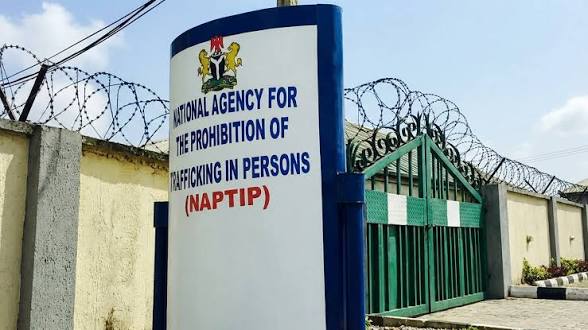
The Federal Government has taken receipt of 105 Nigerians rescued in an operation targeting cybercrime syndicates in Ghana.
The National Agency for the Prohibition of Trafficking in Persons (NAPTIP) announced this in a statement issued on Monday and signed by its Head of Press and Public Relations, Vincent Adekoye.

The agency said the operation was coordinated by the Office of the National Security Adviser (ONSA) following a report from Ghana’s Cyber Security Authority.
NAPTIP led the Nigerian security and law enforcement agencies that participated in the operation. Other agencies involved included the Nigeria Immigration Service, the Department of State Services, the National Intelligence Agency and the National Commission for Refugees, Migrants and Internally Displaced Persons.
Other participating bodies included the Nigerian High Commission in Ghana and the Federal Airports Authority of Nigeria.
According to NAPTIP, “The Ghanaian government rescued 119 Nigerians during the operation. Of that number, 105 have been repatriated to Nigeria, while efforts are ongoing to return the remaining 14.”
Receiving the returnees on behalf of the Federal Government, the Director-General of NAPTIP, Binta Lami Adamu Bello, welcomed them and assured them of their safety.
She urged them to remain calm while the government carried out profiling and reintegration procedures.
According to the agency, the process would help officials understand the circumstances of each returnee and identify the assistance, protection and support they might need.
NAPTIP commended the Ghanaian authorities, particularly the Cyber Security Authority of Ghana and the Ghana Immigration Service, for their roles in the operation.
The agency also acknowledged the support of the United Kingdom’s National Crime Agency, ONSA, Nigerian security agencies and other partners.
It reaffirmed its commitment to working with local and international partners to combat human trafficking and related forms of exploitation.
“Nigerians should be cautious of opportunities abroad that promise unrealistic benefits, have unclear job descriptions or involve questionable recruitment processes,” NAPTIP stated.
