

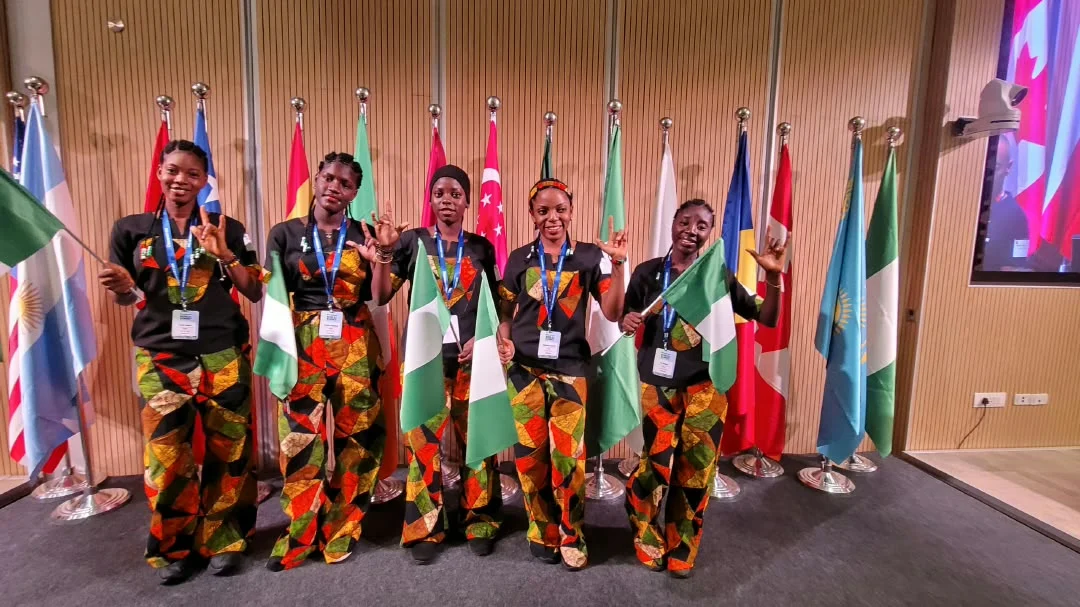
Five female students with hearing disabilities from Abuja have earned a place among the finalists at an international technology competition in India after developing an app aimed at helping girls access sanitary products.
The students, from Government Secondary School, Kuje, represented Nigeria at the 2026 Technovation Girls World Summit in Bengaluru, where their innovation competed against entries from more than 160 countries.

Their team, called STRIM Girls, created an artificial intelligence-powered application named Saving Pad to help girls find sanitary pad banks, request menstrual products and learn about menstrual health.
The Technology Beyond Disability Initiative, which mentored the students, announced their achievement in a statement on Monday.
The five team members are Adegbile Teniola Vivian, Sulaiman Maryam Adenike Isah, Moses Joy, Ukpapi Theresa Uzepi and Yusuf Ruth.
The idea behind Saving Pad was to make it easier for girls, particularly those who are deaf or living with disabilities, to obtain sanitary products without unnecessary difficulty.
Explaining the motivation behind their innovation, the girls said, “Because when a girl’s period starts, the question should never be: ‘What am I going to do?’ It should be: ‘I know where to go.’”
Beyond helping users locate sanitary pad banks, the app features a period tracker and educational materials to improve understanding of menstrual health. It also allows users to request products from available locations.
The platform has additional tools for coordinators to monitor supplies and receive alerts when stocks are running low, helping ensure that sanitary products are replenished when needed.
Through a partnership with the Deaf Women Aloud Initiative, the students have begun testing the application in three special schools in Abuja.
The project is expected to reach more communities, including primary healthcare centres and other underserved areas across the country.
Non-governmental organisations and donor agencies can also use the platform to monitor the distribution of sanitary products, identify areas of high demand and organise supplies more effectively.
During their presentation at the global summit, the students highlighted how accessible technology could help girls overcome barriers to menstrual health services while supporting international goals on healthcare, education and cooperation.
The team returned to Nigeria to a welcome at the airport, led by Dr Adedayo Benjamins-Laniyi, Director-General and Chief Executive Officer of the Maryam Babangida National Centre for Women Development, alongside members of her management team.
