

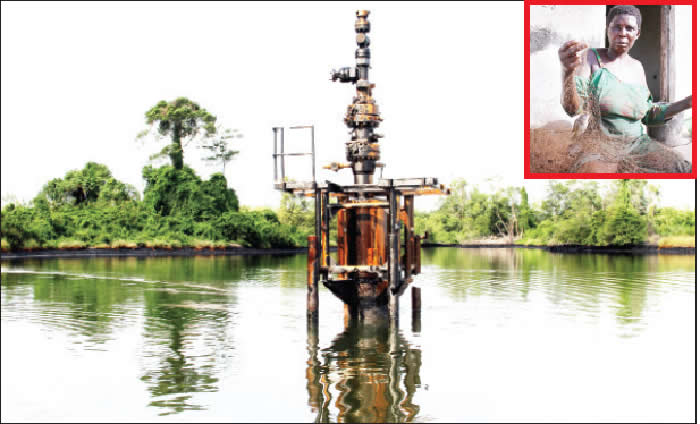
Communities across the Niger Delta have called for urgent intervention over persistent oil pollution and gas emissions, raising concerns about reported deaths and health problems among residents.
The concerns were raised by residents from Rivers, Bayelsa, Delta and Akwa Ibom states during the second edition of the People’s Environmental Assembly, known as Eco-Festival, held in Port Harcourt on Tuesday.

The programme, organised by environmental rights group We the People, focused on the effects of oil exploration on the environment and the lives of people living in oil-producing communities.
Under the theme “A Celebration of Culture, Resilience and Resistance,” participants described how years of pollution had affected their livelihoods, damaged farmlands and fishing grounds, and made access to clean water increasingly difficult.
They also called for investigations into reports of unusual deaths and illnesses, as well as measures to address the environmental damage.
Precious Ibegwura, a resident of Erema Community in Ogba/Egbema/Ndoni Local Government Area of Rivers State, said pollution had made life increasingly difficult for people in the area.
He blamed oil companies for the community’s environmental problems, saying residents were struggling with poor living conditions and health concerns.
“Our community today is nothing to write home about. Erema is now a community of tears. The oil companies have destroyed our land. They have left pollution everywhere.
“We have so many health challenges in our community now. Anyone we have that is 60 years, we call that person a living ancestor. It is the activities of the oil companies that have left us in this mess,” he stated.
He insisted that affected residents deserved compensation and justice, adding, “We are speaking for justice, and we must get it. They must be made to pay for their wrongs. We must get justice.”
In another account, Mitema Suoye George, from Otuabagi Community in Bayelsa State, said pollution had taken a toll on fishing, which was once an important source of livelihood for residents.
She recalled stories from her mother about a time when the community had plenty of fish before oil exploration began.
“My mother told me that before they started oil exploration in Otuabagi, they were enjoying life and catching big fishes.”
George also expressed concern over alleged reproductive health problems among women and cited findings from a study by the KATBETKACHE Women Development Centre, which she said reported cancer cases in the community.
“We have been suffering. Women who are 35 can no longer see their menstruation again. From the report, it was shown that many women are down with cancer too. We want justice, and we must get justice,” she said.
Warda Nebani Beryamon, a former youth leader in Ikarama Community, Bayelsa State, said repeated oil spills had left the community facing serious environmental challenges.
She also raised concerns about reported cancer cases and other illnesses, describing the pollution in the area as particularly severe.
“The level of pollution in Ikarama is bigger than what is happening in other communities. We have the issue of cancer in the community. We are the community with the highest number of oil spills in Nigeria,” she alleged.
Pastor Timothy Agumbiade, Executive Vice President of the Bille Kingdom Youth Federation in Degema Local Government Area of Rivers State, said residents were also worried about gas emissions and their possible effects on human health.
According to him, gas leaks had affected waterways in the kingdom since October last year, leading to repeated visits by government officials and media organisations.
He, however, said residents were yet to see meaningful action despite the visits and the collection of environmental samples.
He said, “There was a joint visit to our kingdom by several government agencies. They took samples. They visited over 16 times. Even media houses have visited too. Bille has become a place of continuous visits. We are only calling for these visits to translate into results that will save the lives of our people.”
Agumbiade also recounted an incident involving an explosion on July 3, claiming that a woman who was taken to a local hospital later died after allegedly failing to receive the necessary medical attention.
He said the situation had made life difficult for residents, including children. He also disclosed that he had experienced skin rashes and eye problems, which he attributed to the gas emissions.
The youth leader further alleged that seven people died in September and four others in October in Bille Kingdom, adding that most of the deceased were younger than 60.
He appealed to government agencies and other relevant stakeholders to investigate the situation and take steps to protect the community.
Speaking at the gathering, Ken Henshaw, convener of We the People, said decades of oil production had left the Niger Delta facing long-standing environmental problems.
He called for a detailed environmental assessment to establish the scale of the damage, determine responsibility and identify the actions required to clean up affected communities.
Henshaw said the Eco-Festival was designed to encourage residents and other stakeholders to work together towards tackling environmental destruction.
He added that the organisers wanted future editions to promote greater accountability and ensure oil companies addressed concerns about pollution linked to their operations.
He said the ultimate goal was “to secure justice for affected communities and restore the environment for present and future generations”.
