
₦4.65trn capital: Sanwo-Olu, CIBN set lending agenda for banks as Institute honours 755 professionals with fellowship award

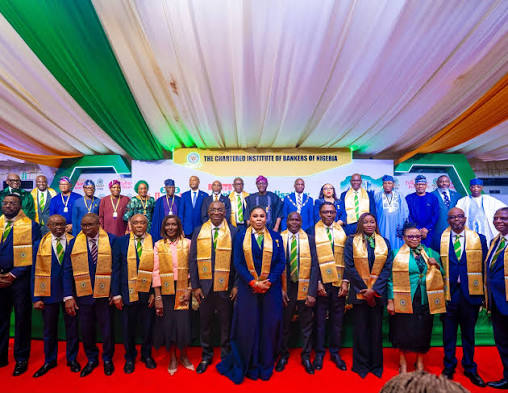
The Chartered Institute of Bankers of Nigeria (CIBN) has tasked Nigerian banks on productive lending to businesses sequel to the successful recapitalisation exercise championed by the Central Bank of Nigeria (CBN).
The Institute’s President and Chairman of Council, Dele Alabi gave the charge in his opening remarks at the 2026 Fellowship Investiture of the Institute, held in Victoria Island, Lagos, on Saturday, October 31.

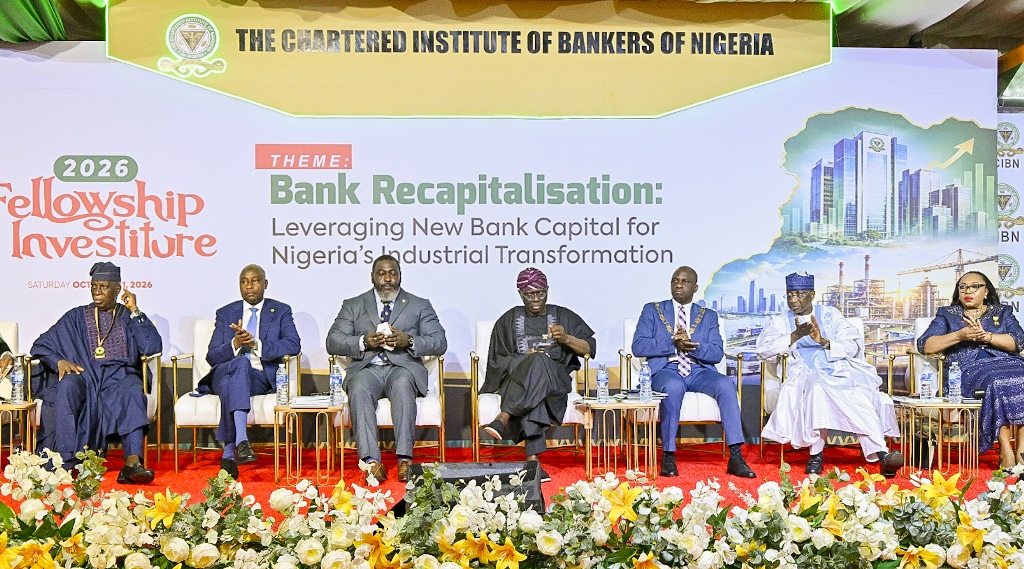
Themed “Bank Recapitalisation: Leveraging New Bank Capital for Nigeria’s Industrial Transformation”, the CIBN honoured a total of 755 professionals across the nation’s banking sector, government, private sector and academia.
The honourees comprised 18 honorary fellows, 460 elected fellows and 277 honorary senior members.
Alabi noted that while the banking industry now boasts of robust capital base, however, deployment to productive sectors of the economy is paramount.
He therefore urged banks to look beyond large corporations and expand financing to micro, small and medium-sized enterprises (MSMEs), which he described as critical to Nigeria’s economic growth and employment.
The CIBN said lending to MSMEs could be both secured and profitable if banks developed appropriate structures and infrastructure to manage the associated risks.
“Banks no longer have the luxury of focusing only on the top-tier sectors of the economy, on the Mobiles, on the Unilevers, on the Shells,” he said.
The CIBN President hinted that the Institute was planning its first MSME forum for 1 December, to advance practical solutions for improving access to finance and supporting enterprise growth.
Alabi further disclosed that the CIBN banking examinations were now conducted in 13 African countries: Sierra Leone, The Gambia, Liberia, Congo, Ghana, Botswana, Cameroon, Namibia, Zambia, Rwanda, Mali, Mozambique and Kenya.
He said Sierra Leone had the highest number of chartered bankers among the 13 countries, describing the institute’s growing international reach as evidence of its expanding relevance across Africa.
In a similar line of thought, the Host Governor Babajide Sanwo-Olu, said the real measure of the banking sector’s successful recapitalisation exercise would be the extent to which the additional capital supported productive businesses, industrial expansion and economic opportunities for Nigerians.
“One of the greatest challenges facing Nigerian businesses remains access to affordable, long-term financing. We’ve been hearing this for 20, 25 years. And so we need to do something about it. Manufacturers need capital to acquire machinery, expand production and compete in international markets. Agricultural processors need financing for storage, processing and distribution, while growing enterprises require credit that reflects their business realities. These investments take time to generate returns. Our recapitalized banks must therefore develop financing models that support long-term industrial growth without compromising prudent risk management,” he said.
He also highlighted opportunities in infrastructure and electricity, noting that Lagos State’s electricity law could attract investment into the power sector and support manufacturing, logistics and trade.
The governor said the Lagos State Employment Trust Fund had supported more than 40,000 small businesses through grants and single-digit loans.
According to him, the initiative had also helped create between 200,000 and 250,000 jobs across the state.
Sanwo-Olu noted that while his administration was doing it’s best for small businesses, however, the state cannot do it alone and needs inputs from the private sector while also promising that the necessary enabling environment will be provided.
“Lagos will continue to provide the infrastructure, policies and enabling environment that businesses require to thrive. But the scale of investment needed to transform our economy demands stronger collaboration between government, financial institutions and private investors. We must move from simply having more capital in our banks to putting more capital to work in our economy.”
In his keynote address, the Chief Executive Officer of the Nigerian Economic Summit Group (NESG), Tayo Aduloju, raised concerns over a one-third decline in bank credit to manufacturers since December 2024, urging lenders to channel more of their capital into productive sectors of the Nigerian economy.
Aduloju said credit to manufacturers had fallen from N8.5 trillion in December 2024 to N5.6 trillion, despite the successful completion of the banking sector recapitalisation exercise.
According to the NESG chief, the increase in banks’ capital had not translated into the scale of financing needed to support industrial growth, with lending still concentrated in sectors such as oil and gas, finance and insurance.
He said the two sectors accounted for about 46 per cent of bank credit, while manufacturing received only 8.7 per cent.
“Trade has overtaken manufacturing. So, ladies and gentlemen, we are financing import and distribution of goods more readily than their production in Nigeria,” he said.
Aduloju said the cost of borrowing, liquidity constraints, lending risks and the short duration of available financing were among the major obstacles preventing businesses from accessing credit.
He noted that lending rates ranged from 19 per cent for prime borrowers to 32.6 per cent for other borrowers, while treasury bills offered returns of about 15.5 per cent without credit risk.
He also expressed concern over the growth in government borrowing, saying credit to the government increased by 63 per cent in the year to September.
“When the sovereign borrows at this pace, it’s not a competition with business. It’s no competition. Government will win,” he said.
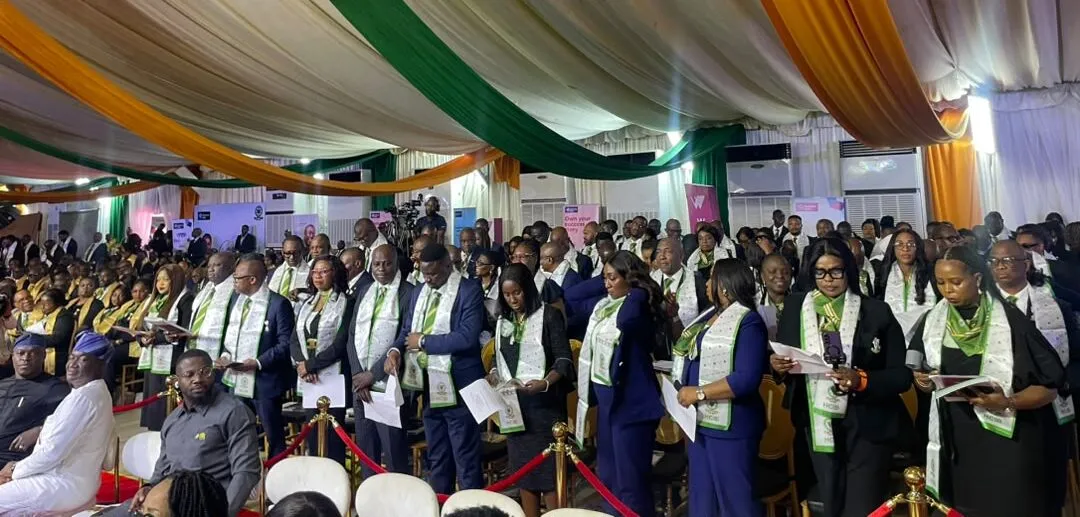
Highlight of the ceremony was the formal recognition and investiture of the 755 awardees. Among those honoured are Mr. Sam Egube, Deputy Chief of Staff, Lagos State; Mr. Thompson Oludare Sunday, Managing Director/Chief Executive Officer, Nigeria Deposit Insurance Corporation (NDIC); Dr. Ibrahim Stevens, Governor of the Bank of Sierra Leone; Apostle Chief (Mrs.) Folorunsho Alakija, Vice Chairman, Famfa Oil Limited; and Mrs. Olubunmi Kuku, Managing Director/Chief Executive, Federal Airports Authority of Nigeria (FAAN).
Others include Mr. Emmanuel Ikazoboh, Chairman of Dangote Cement Plc; Mr. Afolabi Olorode, Managing Director/Chief Executive Officer, Quest Merchant Bank; Mr. Tokunbo Talabi, Secretary to the Ogun State Government; and Dr. Siraju Salisu, Managing Director/Chief Executive Officer, Summit Bank Limited.
