

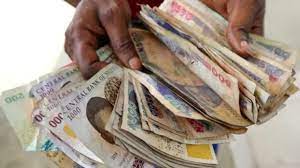
The dollar-to-naira exchange rate on Thursday, November 5, 2026, stands at approximately ₦1,348 at the official Nigerian Foreign Exchange Market (NFEM), while the dollar sells for about ₦1,390 on the parallel market, popularly known as the black market.
The naira has recorded little movement in recent days, leaving a difference of approximately ₦42 between the official and parallel market rates.

The official figure is based on Wednesday’s closing rate, as the Central Bank of Nigeria (CBN) had yet to publish Thursday’s trading session results when this report was prepared. Meanwhile, the parallel market rate reflects early-morning quotations from currency dealers.
Official NFEM and CBN exchange rate
The official foreign exchange market remained relatively stable throughout the week, with the naira fluctuating by only a few naira.
On Tuesday, November 3, the naira traded at ₦1,346.93 on the CBN platform before closing at ₦1,347.75. The currency weakened slightly on Wednesday, settling at ₦1,348.
The CBN’s reference rate is based on the NFEM’s volume-weighted average, meaning the official CBN and NFEM rates are closely related.
While the weighted average reflects the prices recorded during trading, the closing rate represents the value at the end of the session. The two figures may therefore differ slightly.
Despite the relatively stable exchange rate, interbank trading activity increased significantly. Vanguard reported that turnover in the interbank market rose by 445 per cent on Tuesday, even as the naira weakened to ₦1,347.75 from ₦1,346.01 recorded the previous day.
Black market dollar-to-naira rate today
On the parallel market, currency dealers quoted the dollar between ₦1,380 and ₦1,399, depending on the location, dealer and transaction volume.
In Lagos, Abuja, Kano and Port Harcourt, dealers reportedly bought dollars at rates ranging from ₦1,380 to ₦1,384 and sold them between ₦1,390 and ₦1,399.
According to Aboki FX, the dollar traded at ₦1,390 for buying and ₦1,395 for selling on Tuesday. By Wednesday, the tracker reported a Lagos rate of ₦1,390, with some dealers quoting as high as ₦1,395.
However, rates differ across sources. Another report quoted Bureau De Change operators at ₦1,377 on Tuesday, representing a one-naira decline from the previous day.
These variations mean that parallel market rates should be treated as indicative figures, as actual transactions depend on the dealer and location.
Why the naira has remained relatively stable
The naira has strengthened considerably compared with its position at the beginning of 2026.
The currency opened the year at approximately ₦1,446 per dollar, meaning its current official exchange rate represents an appreciation of nearly seven per cent.
For comparison, the naira traded at ₦1,446.90 on November 28, 2025.
The CBN had projected an average exchange rate of ₦1,400 per dollar for 2026, but the naira has traded below that level in recent weeks.
Nigeria’s foreign reserves have also provided support for the currency. The reserves increased to $52.02 billion on July 20, 2026, their highest level since January 2009, before rising further to $52.26 billion by mid-August.
However, reserves had declined earlier in the year, falling from $49.18 billion on April 1 to $48.33 billion by May 7.
The International Monetary Fund (IMF) has also noted that continued reserve accumulation could slow the naira’s adjustment towards its equilibrium exchange rate.
What the exchange rate gap means for Nigerians
The difference of approximately ₦42 between the official and parallel market rates is relatively narrow compared with the wider gaps recorded in previous years.
A smaller difference reduces the incentive for individuals and businesses to seek dollars outside the official market.
It also limits the additional cost faced by importers, students paying overseas tuition fees and travellers purchasing foreign currency for personal or business trips when they cannot access the official market.
For households, a relatively stable naira could help ease pressure on the prices of imported goods. However, it does not automatically guarantee lower prices, as the cost of fuel, food, electronics and other products also depends on supply chains, transportation and other operating expenses.
What to watch in the coming days
Market participants are expected to monitor three key developments:
- Official NFEM closing rate: Whether Thursday’s trading session moves the naira closer to ₦1,346 or pushes it beyond ₦1,350 per dollar.
- Parallel market premium: Whether the difference between the official and black market rates remains around ₦40 or widens as end-of-year demand increases.
- Foreign reserves and interbank turnover: Whether the recent increase in interbank trading activity continues and how movements in foreign reserves affect the currency.
Exchange rates fluctuate, so individuals and businesses are advised to confirm the prevailing rates with their banks or Bureau De Change operators before conducting transactions.