

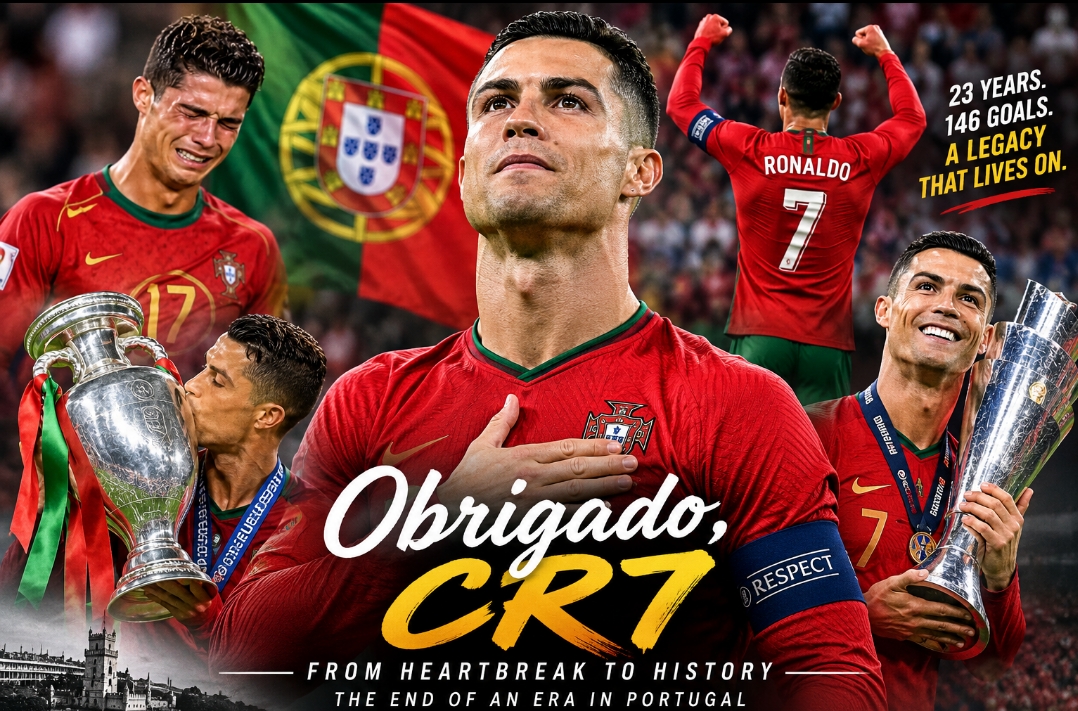
For Cristiano Ronaldo, playing for Portugal was never just about wearing the national team shirt.
It was about representing millions of people, carrying the hopes of a nation and proving that dreams could become reality through hard work, sacrifice and determination.

After 23 years on the international stage, the Portuguese superstar has brought his remarkable journey with the national team to an end, closing a chapter that has shaped both his career and the history of Portuguese football.
Ronaldo’s international story began in August 2003, when he made his senior debut against Kazakhstan. He was only 18, a talented young footballer with a bright future ahead of him. At that point, he was still finding his feet in international football, but his ambition and confidence were already clear.
His first major tournament with Portugal came at Euro 2004, hosted by his home country. It was an opportunity for a young Ronaldo to introduce himself to the world, but the tournament ended in disappointment.
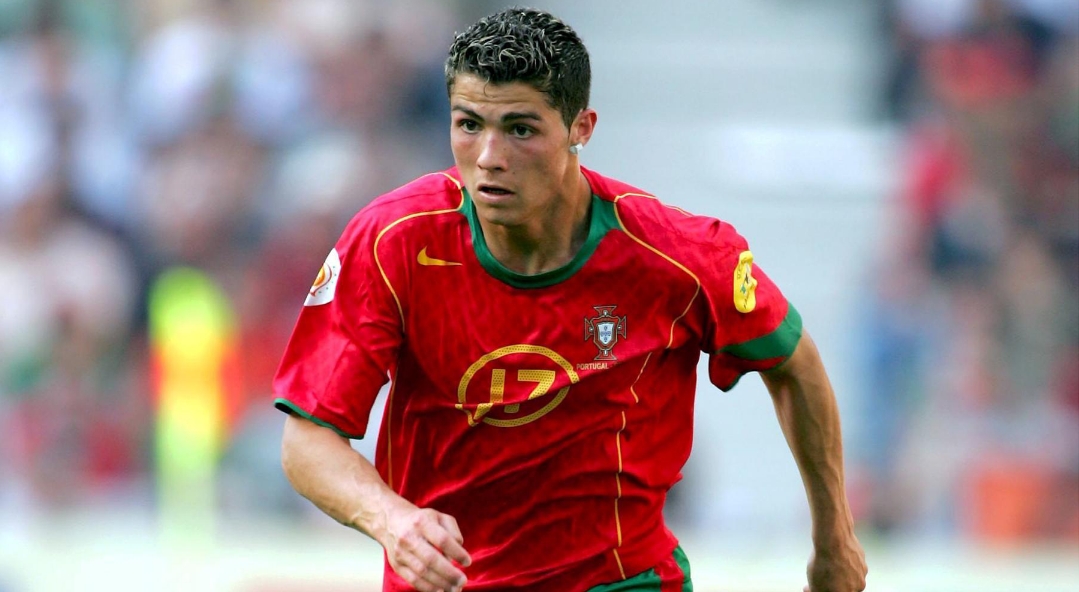
Portugal reached the final against Greece, hoping to win its first European Championship. However, an unexpected 1-0 defeat destroyed the country’s dream of celebrating on home soil.
Ronaldo, who was just 19 at the time, could not hide his emotions. Images of him crying after the final became one of the most memorable moments of the tournament. He had come so close to achieving something special, only to watch it slip away.
That defeat, however, would not define his international career.
Over the following years, Ronaldo became the face of Portuguese football. He played alongside different generations of players, captained the national team and carried enormous expectations whenever he stepped onto the pitch.
There were difficult moments, painful eliminations and several attempts to win a major international trophy. Despite his individual brilliance, the biggest prize continued to elude him.
Then came 2016, the year everything changed.
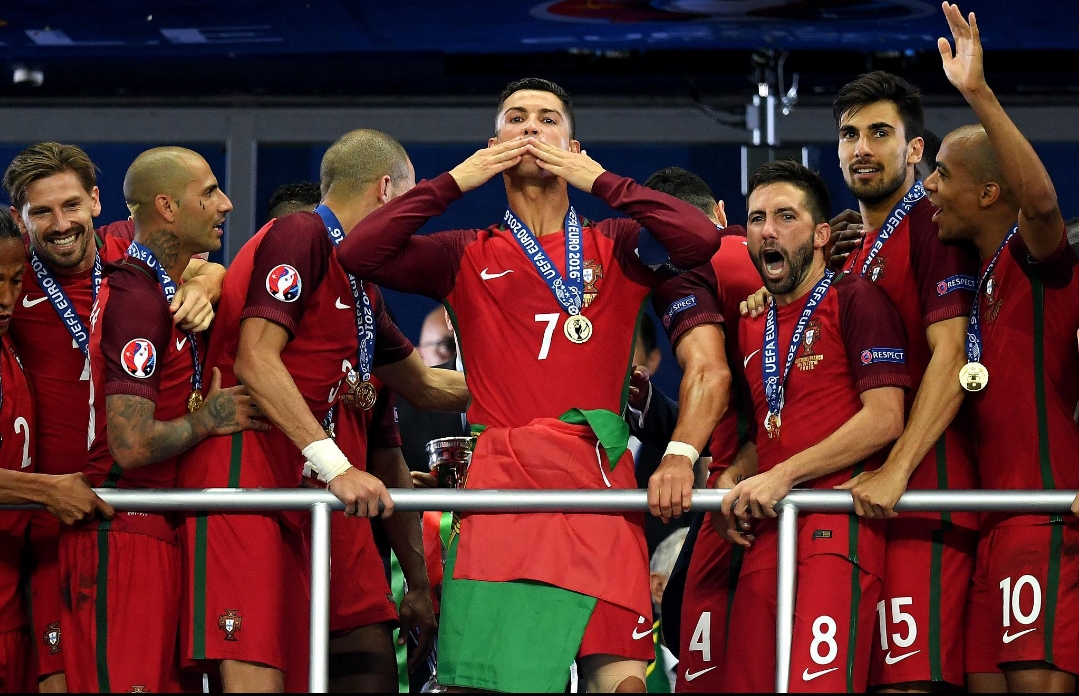
At the European Championship in France, Portugal once again found itself chasing continental glory. The team reached the final against the host nation, but Ronaldo’s evening took an unexpected turn when an injury forced him off the pitch in the first half.
For many players, that could have been the end of their involvement in such a crucial match. But Ronaldo remained on the sidelines, encouraging his teammates and urging them forward.
When Éder scored the decisive goal in extra time, Portugal defeated France 1-0 to win its first-ever European Championship.
It was an emotional victory that completed a journey which had started with heartbreak 12 years earlier. The teenager who cried after losing the Euro 2004 final was now celebrating as captain of the team that had finally brought the trophy home.
However, 2016 was not the end of Portugal’s success under Ronaldo’s leadership.
In 2019, Portugal won the inaugural UEFA Nations League, defeating the Netherlands 1-0 in the final on home soil. Ronaldo played a major role in the tournament, scoring a memorable hat-trick against Switzerland in the semi-final.
Six years later, Portugal returned to the top of the same competition. In 2025, they faced Spain in the final, with both sides playing out a 2-2 draw after extra time. Portugal eventually won 5-3 on penalties to claim its second Nations League title.
That victory made Ronaldo a central figure in three major international trophy-winning campaigns: Euro 2016 and the Nations League titles of 2019 and 2025.
While the trophies tell an important part of his story, his individual records are equally extraordinary.
Ronaldo leaves international football with 234 appearances and 146 goals for Portugal, making him the country’s most-capped player and highest goalscorer. He also holds the world records for the most appearances and goals in men’s international football.
He further made history as the first male player to score at six different FIFA World Cup tournaments, demonstrating an extraordinary ability to remain competitive across different generations of footballers.
But perhaps his greatest contribution goes beyond numbers and medals.
Ronaldo helped give Portuguese football a bigger presence on the world stage. His performances inspired countless young players to believe they could represent their country and compete against the best in the world.
He became more than a footballer. He was a national symbol, a leader and a source of pride for millions of Portuguese supporters.
His journey was not always smooth. He experienced criticism, missed opportunities, painful defeats and the enormous pressure of being one of the most recognised athletes in the world. Yet, he continued to answer the call whenever Portugal needed him.
Now, with his international career over, the responsibility passes to a new generation of Portuguese footballers.
Ronaldo’s departure will undoubtedly leave a huge gap, especially for a team that has depended on his leadership, experience and goals for more than two decades. However, the next generation will have the opportunity to build its own identity and create new memories.
His retirement from international football does not mean the end of his professional career. He will continue playing at club level with Al-Nassr in Saudi Arabia.
For Portugal, however, the end of his international journey marks the closing of an extraordinary era.
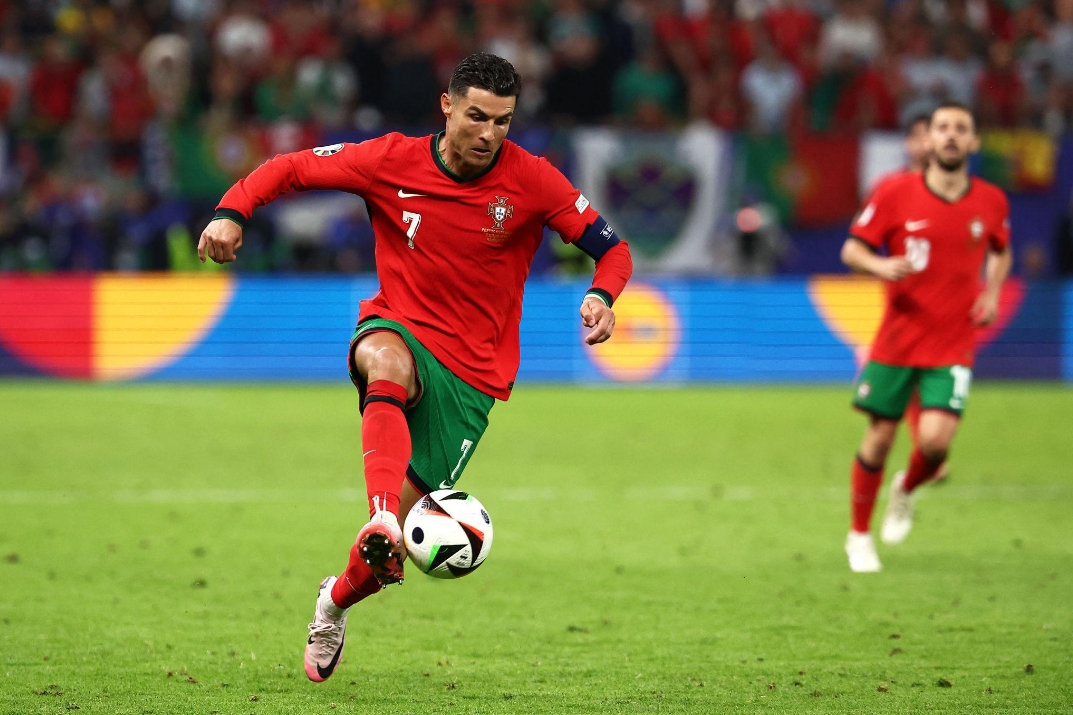
Think about the journey: a young boy making his debut in 2003, a teenager crying after a painful final in 2004, a captain lifting the European Championship in 2016 and celebrating two Nations League titles in 2019 and 2025.
He came into the national team as a promising youngster with everything to prove. He leaves as one of the most decorated and record-breaking players ever to represent his country.
Twenty-three years of service, 146 international goals, three major international trophies and memories that will last generations.
Football will produce new stars, Portugal will discover new leaders and the famous number seven shirt will eventually have another owner.
But there will never be another first Cristiano Ronaldo.
His goals may stop, his appearances may become history and another generation may take over, but the memories he created in Portuguese colours will remain.
From the heartbreak of 2004 to the glory of 2016, 2019 and 2025, Cristiano Ronaldo did not just play for Portugal. He helped change what Portuguese football could achieve. 🇵🇹🐐
