


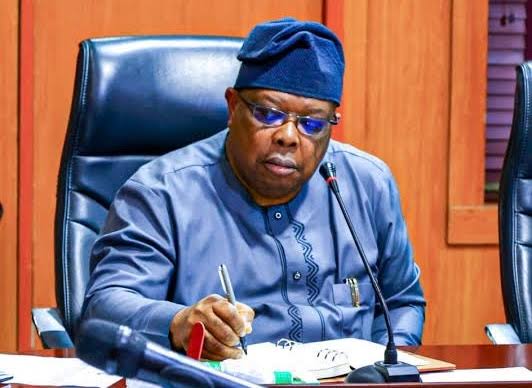
The Minister of Power, Joseph Tegbe, has assured Nigerians that electricity supply is expected to improve within the next 48 to 72 hours as the Federal Government takes steps to tackle generation and transmission challenges behind the recent outages across parts of the country.
Tegbe blamed the decline in power supply on scheduled maintenance work at Egbin Power Station in Lagos, described as Nigeria’s largest thermal power plant, which contributes approximately 16 per cent of the electricity available on the national grid.
The minister made this known in a statement titled ‘Update on Power Situation’, which he shared on his Facebook page on Friday.

“I am aware of the strain that the current outages have placed on households and businesses in four affected states, including Lagos and the Federal Capital Territory.
“Planned maintenance at Egbin Power Station and constraints in gas supply to some thermal power stations have reduced the amount of electricity available on the national grid. Grid operators have, therefore, implemented load shedding in some areas to manage the shortfall,” he said.
Tegbe added that the sabotage of critical transmission lines had restricted the use of alternative routes to supply electricity to some locations, particularly Lagos.

He said his ministry was working with relevant operators to restore affected generating units in phases, improve gas supply and accelerate repairs to damaged infrastructure.
It also maintained that the Nigerian Independent System Operator had not identified any failure of its transmission network as the cause of the outages.
TCN attributed 68 per cent of interruptions recorded on feeders supplying Ikeja Electric to frequency-control load shedding caused by low generation, while it blamed 26 per cent on Ikeja Electric’s alleged failure to comply with load allocations, as well as faults and maintenance on its distribution network.
The remaining six per cent, according to TCN, resulted from its planned maintenance, switching operations or line limitations.
The disagreement came after Ikeja Electric apologised to customers on some Band A feeders for failing to meet the minimum daily electricity supply requirement of 20 hours on November 3 and 4.
In an earlier statement on Thursday, Tengbe had also attributed the electricity disruptions to maintenance and operational challenges across the power sector, gas shortages at thermal power stations and reduced output from hydropower plants.
He said the Federal Government was working with TCN, NISO and electricity distribution companies to address the constraints and restore normal supply.
