

The Nigerian Government has set a 2027 deadline to settle its outstanding N3.3tn debt to power generation companies, while promising significant improvements in electricity supply within the next three to five years.
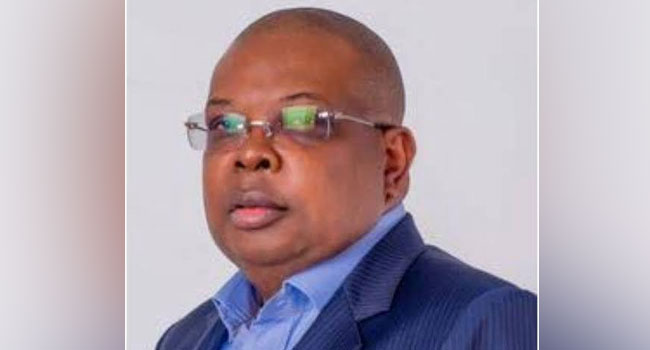
The Minister of Power, Joseph Tegbe, disclosed this during an interview on ARISE News on Monday, where he outlined the government’s plans to address the country’s electricity challenges, including infrastructure deficiencies and outstanding financial obligations.
Tegbe said the government had reduced its debt to generation companies from N6tn to N3.3tn and had already paid N1.23tn.
He added that the government was exploring different arrangements to clear the remaining debt by 2027.
“Today, we have paid 1.23 trillion. We’re speaking 1.23 trillion in this economy in a speed of about one and a half years.
“And we’re on track to finish paying the rest next year. Because we are looking at different ways to settle it,” he said.
The minister explained that the government was considering offsetting some of its outstanding obligations against royalties and corporate income tax to reduce the amount it needed to pay directly.
“We want a net of royalties against the debts we have. You can’t take money with one hand and give it with the other hand. So let’s net it off.
“Corporate income tax, we can net it off. We’re negotiating with them. They are in agreement that we can take that out as long as we go down,” he said.
Tegbe also disclosed that the government was engaging the Nigerian National Petroleum Company Limited to explore ways of reducing the cost of gas supplied to power generation companies.
According to him, lowering gas costs would help reduce the financial burden on generation companies and support efforts to improve electricity supply.
“We’re also sitting down with NNPC to say, gas for power. And we look at how we can cut down the cost to Gencos, to the gas suppliers. Because we own this gas.
“It’s a comparative advantage. And if we want to give power to Nigerians, let’s use what we have to get what we want,” he said.
On electricity supply, the minister assured Nigerians that they should expect significant improvements within the next three to five years.
However, he acknowledged that the challenges facing the sector, particularly its ageing infrastructure, were more extensive than initially anticipated.
He attributed the problems partly to decades of neglect and poor investment decisions, noting that successive administrations had funded projects without adequately considering how they connected to the wider electricity network.
“The bulk of the challenges is not in generation.
“I’ll tell you that, look, infrastructure decay is enormous. These things have happened over 50 years. Don’t expect us to fix it in two years,” he said.
Tegbe further identified poor planning and politically influenced investment decisions as factors affecting electricity delivery.
He said the ministry was reviewing ongoing projects to identify priority investments and determine how effectively they could contribute to improving power supply.
The minister added that the government was examining the relationship between different infrastructure projects to ensure that available resources were directed towards investments capable of delivering better electricity services to Nigerians.