

Nigeria’s electricity challenges are expected to continue into 2027, following the Federal Government’s decision to postpone the settlement of its N3.3 trillion debt owed to power generation companies, while major investments in metering and transmission infrastructure are also expected to extend beyond 2026.
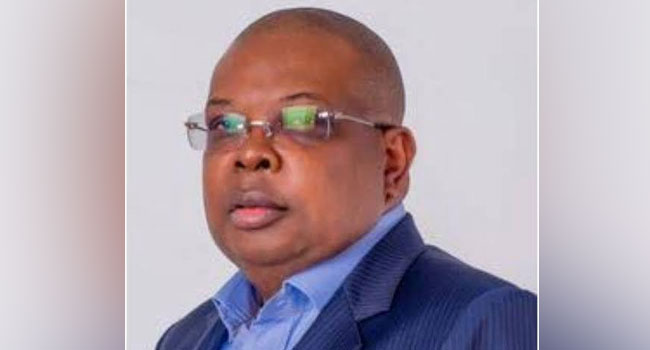
The Minister of Power, Joseph Tegbe, disclosed this during an interview with Arise News on Monday, revealing that the government had so far paid N1.23 trillion of the debt, which was reduced from an initial N6 trillion, while exploring alternative measures to clear the outstanding balance.
Among the options being considered are offsetting the obligations against royalties and corporate income tax, as well as working with the Nigerian National Petroleum Company Limited (NNPC) to lower gas prices for electricity generation companies.
“We’re on track to finish paying the rest next year. Because we are looking at different ways to settle it,” Tegbe said.
Explaining the proposed debt offsets, he added: “You can’t take money with one hand and give it with the other hand. So, let’s net it off.”
The minister attributed 80 per cent of the electricity sector’s problems to human and institutional shortcomings, while technical challenges account for the remaining 20 per cent.
“I said the problem in power sector is 20 per cent technical, 80 per cent human,” he said, citing poor collaboration, inadequate coordination among industry operators, financial constraints and governance failures as major factors undermining the sector.
Tegbe also faulted previous investment decisions, arguing that some projects were influenced by political considerations rather than sound planning and technical priorities.
“From a technical point of view, I will tell you the biggest issue: it is that we’ve been throwing money at wrong things,” he said.
He added that the ministry was reviewing existing projects to redirect resources towards investments capable of expanding electricity access and improving service delivery.
The minister had earlier estimated that achieving a stable electricity supply in Nigeria could take another three to five years. He also unveiled plans for a $2 billion East-West Super Grid project aimed at increasing the country’s transmission capacity from approximately 4,000MW to 19,000MW.
The proposed transmission network will connect Funtua, Gwagwalada, Ikot Ekpene, Benin, Epe and Ilorin. According to Tegbe, procurement activities are ongoing, with the project expected to be completed within two years.
Reacting to the development, Professor Emeritus of Petroleum Economics, Wumi Iledare, called for fundamental institutional reforms, warning that changing individuals in the power sector would not address its longstanding challenges.
“Darkness arising from persistent electricity failures in Nigeria is not fundamentally a consequence of individual ineptitude; it is a manifestation of institutional failure,” he said.
Iledare maintained that decentralising the electricity sector could promote competition, attract investments and strengthen participation by state governments. However, he stressed that such reforms must be supported by effective regulation, institutional capacity and accountability.
“Ultimately, Nigeria needs institutional reform, not merely a change of individuals. The real test of decentralisation must be measurable improvements in electricity availability, affordability, reliability and accessibility,” he said.
Meanwhile, checks by Energy Vanguard revealed that several households and businesses across different parts of the country had endured weeks of inconsistent electricity supply.
Industry figures also indicated that more than 3,000MW of electricity was available for distribution nationwide, highlighting the persistent gap between available power and the actual needs of consumers.
