

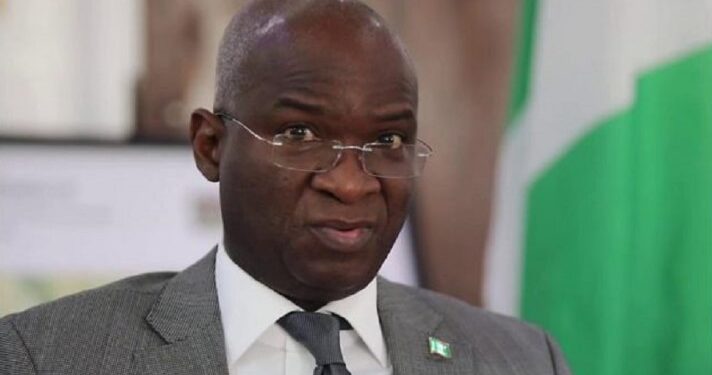
Former Lagos State Governor, Babatunde Fashola, has revealed how the 2006 murder of governorship aspirant, Funsho Williams, opened his eyes to the deadly risks of Nigerian politics.
Speaking during an interview with ARISE News anchor, Ojy Okpe, Fashola recalled how Williams’ killing made him realise that contesting for political office could cost him his life.
“It showed me that, for me, it was like, look, listen, if you’re doing this election thing, this is it. These are the odds. You can lose your life in the process,” he said.
Despite the shocking incident, Fashola said he was not discouraged from pursuing his political ambition, stressing that serving the country was a sacrifice he was willing to make.
“As I told friends of mine, for me, speaking for myself at the time, it was worth dying for, to serve the country,” he added.
He said the murder strengthened his determination to tackle political violence and restore law and order if elected governor.
“My resolve was to then, from there, enthrone law and order, remove violence from our country,” Fashola said.
The former governor also highlighted security reforms introduced during his administration, including improvements to the police Rapid Response Squad, support for the Lagos State Security Trust Fund and the provision of life insurance for security personnel.
On the failure to secure convictions in Williams’ murder case, Fashola stressed the need for credible investigations and stronger forensic capabilities, including DNA testing and fingerprint analysis.
He also condemned attacks on forensic facilities, warning that destroying such infrastructure could weaken criminal investigations and deny victims justice.
Williams, a former Peoples Democratic Party governorship candidate, was murdered at his residence in Dolphin Estate, Ikoyi, Lagos, on July 27, 2006, while preparing for the 2007 governorship election.
Six suspects were prosecuted but acquitted by a Lagos State High Court on June 30, 2014, after the prosecution failed to establish a prima facie case against them.
The killing remains unresolved, with repeated calls for authorities to reopen the investigation.
