

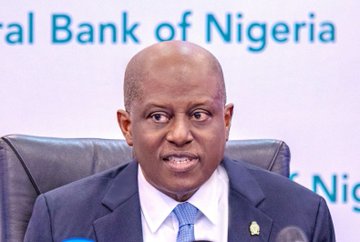
The Central Bank of Nigeria on Friday introduced the fourth edition of its Foreign Exchange Manual, with the updated framework set to become operational from June 1, 2026, as part of ongoing reforms targeted at improving transparency, liquidity, and confidence in Nigeria’s foreign exchange market.
Speaking during the launch of the revised manual in Abuja, the Governor of the Central Bank of Nigeria, Mr Olayemi Cardoso, said the initiative demonstrated the apex bank’s resolve to strengthen macroeconomic stability and modernise Nigeria’s foreign exchange administration.
“This unveiling reflects our collective commitment to strengthening Nigeria’s macroeconomic foundations, enhancing transparency, and reinforcing confidence in the foreign exchange market,” Cardoso said.
He explained that the revised manual became necessary due to changing global economic realities, domestic structural reforms, and ongoing adjustments within Nigeria’s foreign exchange market.
“Over the past decade, the global economy has become increasingly complex and uncertain, while the domestic economy has undergone structural adjustments, including efforts to diversify foreign exchange earnings and manage inflationary pressures,” he said.
Cardoso further stated, “This Fourth Edition is the result of extensive consultation and rigorous technical review, aligned with international best practices. It reflects our commitment to modernising foreign exchange administration to enhance clarity, consistency, and market efficiency. The Manual will take effect on June 1, 2026.”
The CBN governor stressed that effective implementation of the revised framework would require the collaboration of authorised dealer banks, corporates, regulators, ministries, departments and agencies, exporters, importers, and other stakeholders.
“Your adherence is essential, your cooperation indispensable, and your partnership remains central to the stability and credibility of the Nigerian foreign exchange market,” he stated.
He added that the apex bank would intensify monitoring measures to guarantee fairness, accountability, and compliance within the foreign exchange market.
“To support seamless adoption, the Manual will be readily available at no cost to Authorised Dealers, reflecting our priority on compliance over cost recovery,” Cardoso said.
Also speaking at the event, the Deputy Governor, Economic Policy Directorate of the Central Bank of Nigeria, Dr Muhammad Abdullahi, noted that the revised manual formed part of broader reforms introduced under Cardoso’s leadership to rebuild confidence, improve transparency, deepen liquidity, and enhance market efficiency.
According to him, the review was designed to align Nigeria’s foreign exchange framework with current market conditions and international standards.
“The revised Manual we are unveiling today is therefore not a standalone exercise, but part of a broader and deliberate institutional reform effort designed to strengthen the integrity, credibility, and effectiveness of Nigeria’s foreign exchange ecosystem,” Abdullahi said.
He disclosed that the revised manual emerged from extensive consultations involving authorised dealers, exporters, corporates, regulators, development partners, and other stakeholders across both the public and private sectors.
Abdullahi explained that the review process adopted an “Ease of Doing Business” strategy intended to reduce transaction delays, operational inefficiencies, and market uncertainties.
“Our goal is to reduce transaction frictions, improve processing timelines, deepen market confidence, encourage formal market participation, and create a more seamless and efficient experience for legitimate users of Nigeria’s foreign exchange market,” he said.
He further revealed that the revised manual introduced major changes, including the harmonisation of disbursement structures for the Personal Travel Allowance and Business Travel Allowance in line with the updated Bureau De Change guidelines.
Under the new arrangement, 75 per cent of PTA and BTA payments would be made electronically, while 25 per cent could be paid in cash.
Other notable adjustments include increasing the allowable advance payment for imports from 15 per cent to 30 per cent, free processing of Form NXP, and the inclusion of provisions covering service exports, PAPSS transactions, remittances by technology firms, and non-resident investment accounts.
The manual also introduced provisions permitting payments for services, fees, and charges in foreign currency where receipts are generated in foreign currency, alongside tuition fee payments for undergraduate and postgraduate studies, capped at $25,000 per semester.
The deputy governor added that the revised framework allowed unrestricted access for holders of export proceeds and ordinary domiciliary accounts, full repatriation of export proceeds for foreign companies operating in the extractive sector, and the removal of the compulsory Form A requirement for remittances conducted through ordinary domiciliary accounts.
“These reforms collectively seek to improve operational efficiency, deepen market confidence, reduce administrative bottlenecks, support legitimate business activities, strengthen compliance standards, and further modernise Nigeria’s foreign exchange framework,” he added.
Representing the Minister of Finance and Coordinating Minister of the Economy, Mr Taiwo Oyedele, the Permanent Secretary, Special Duties, Mr Mohammed Danjuma, described the revised manual as a strategic instrument aimed at enhancing transparency, operational efficiency, and investor confidence within Nigeria’s foreign exchange market.
“This initiative reflects our unwavering commitment to reforms that promote macroeconomic stability, accountability, and sustainable growth,” Danjuma said.
He added that the revised manual would improve regulatory compliance, minimise ambiguities in market practices, and support ease of doing business.
“I’m confident that this manual will significantly improve market discipline, support ease of doing business, and align our practices with international standards and global best practices,” he said.
In his goodwill message, the Chairman of the Body of Banks’ Chief Executive Officers and Group Managing Director of United Bank for Africa, Mr Oliver Alawuba, praised the apex bank for the reforms introduced in the foreign exchange market.
According to him, the revised manual strengthened the CBN’s policy direction on transparency, ethical conduct, improved oversight, and credible price discovery in the foreign exchange market.
“The table has been turned. There’s so much greater confidence in the Nigerian economy, thanks to the reform that has been conducted by the Central Bank of Nigeria,” Alawuba said.
He assured the apex bank that commercial banks would support the implementation of the revised manual and comply fully with its provisions.
