

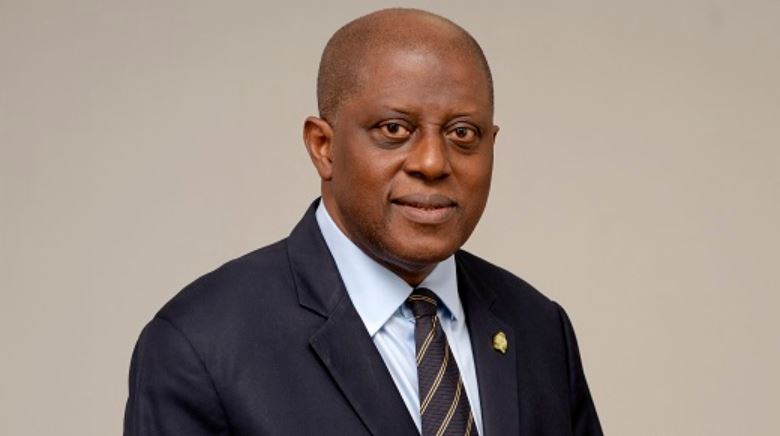
Governor of the Central Bank of Nigeria (CBN), Yemi Cardoso, says the country’s foreign exchange reserves have risen to $52.52 billion.
Cardoso disclosed this on Tuesday in Abuja while presenting the communiqué issued at the end of the 306th meeting of the apex bank’s Monetary Policy Committee (MPC).

The announcement came after the committee decided to retain the Monetary Policy Rate (MPR) at 26.5 per cent.
The MPC also retained the Standing Facilities Corridor around the MPR at +50/-450 basis points, while leaving the Cash Reserve Requirement (CRR) unchanged at 45.00 per cent for Deposit Money Banks, 16.00 per cent for Merchant Banks and 75.00 per cent for non-TSA public sector deposits.
According to Cardoso, the country’s gross external reserves increased from $50.47 billion at the end of May to $52.52 billion as of July 17.
He attributed the increase mainly to higher receipts from crude oil-related taxes and third-party inflows.
“This is sufficient to finance approximately 11 months of imports of goods and services, surpassing the international benchmark of three months cover,” he said.
Cardoso also said headline inflation eased slightly to 15.91 per cent in June from 15.93 per cent in May, ending three consecutive months of rising inflation.
He explained that the marginal decline was driven by lower non-food inflation, which offset an increase in food prices.
“Food inflation rose to 17.52 per cent in June, from 16.96 per cent in May, reflecting supply constraints.
“However, core inflation moderated to 15.92 per cent in June, from 16.82 per cent in May, largely on the back of exchange rate stability.
“Similarly, the 12-month average inflation rate sustained its decline to 17.63 per cent in June, from 18.36 per cent in May,” he said.
Cardoso noted that the 12-month average inflation rate had now declined for six consecutive months, indicating a slower pace of price increases over the medium term.
On a month-on-month basis, he said headline inflation fell to 1.66 per cent in June from 1.75 per cent in May, largely due to slower core inflation.
The CBN governor said Nigeria’s real Gross Domestic Product (GDP) expanded by 3.89 per cent in the first quarter of 2026, compared with 4.07 per cent in the previous quarter.
He attributed the growth to the resilience of the non-oil sector, which expanded by 3.94 per cent, supported by telecommunications, financial services, trade, transportation and other service sectors.
By contrast, the oil sector’s growth slowed to 2.57 per cent from 6.79 per cent in the fourth quarter of 2025 due to maintenance work on oil facilities.
Cardoso, however, said recent economic indicators pointed to improved activity, with the composite Purchasing Managers’ Index (PMI) rising to 50.1 points in June from 49.6 points in May.
He expressed optimism that economic growth would remain resilient through 2026, supported by increased crude oil production, improving business activity and ongoing policy reforms.
He added that inflation was expected to moderate further in the medium term due to continued foreign exchange stability, the delayed effects of previous monetary tightening and improved food supply as the harvest season approaches.
Cardoso, however, warned that a prolonged escalation of the conflict in the Middle East remained the biggest risk to the country’s economic outlook.
“In the light of these considerations, the MPC reaffirmed its commitment to preserve price and financial system stability.
“The committee remains prepared to take appropriate policy measures guided by evolving macroeconomic conditions,” he said.
