

The Academic Staff Union of Universities (ASUU) has strongly criticised the Federal Government over what it described as the flawed implementation of the 2025 FG-ASUU Agreement, warning that mounting dissatisfaction among lecturers could spark another round of industrial action in Nigerian universities.
The warning followed the union’s National Executive Council (NEC) meeting held at Modibbo Adama University, where ASUU accused both federal and state governments of failing to fulfil major aspects of the agreement signed in December 2025, despite assurances aimed at stabilising the tertiary education sector.

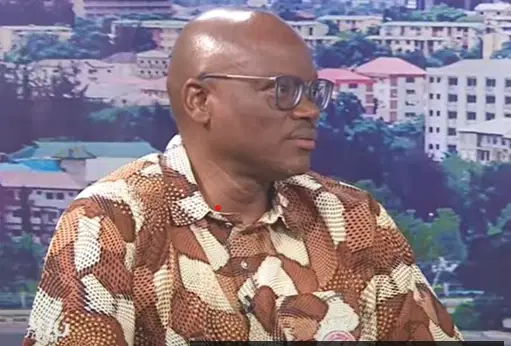
Speaking after the meeting, ASUU President Christopher Piwuna said the optimism created by the agreement was “fast waning” because authorities had allegedly failed to implement key welfare and funding provisions.
“The increasing frustration occasioned by the seeming government’s disinterestedness in the welfare of Nigerian academics is brewing a pent-up anger which could erupt into a new wave of industrial unrest if not addressed,” the union warned.
ASUU faulted the Federal Government for not inaugurating the Implementation Monitoring Committee (IMC), which it said was meant to ensure smooth execution of the agreement and prevent bureaucratic bottlenecks.
The union further alleged that federal universities were selectively implementing lecturers’ benefits, including Consolidated Academic Tool Allowances (CATA), Earned Academic Allowances (EAA), and Professorial Allowances (PA), while several state governments had allegedly ignored the agreement altogether.
“Vice-Chancellors are picking and choosing what to pay,” ASUU said, insisting that all allowances should have been incorporated into lecturers’ salary structures.
ASUU also decried unresolved welfare concerns such as outstanding arrears from the 25–35 per cent salary award, promotion arrears, salary shortfalls associated with the Integrated Payroll and Personnel Information System (IPPIS), unremitted third-party deductions, and the withheld three-and-a-half months’ salaries linked to the 2022 ASUU strike.
According to the union, continued neglect of lecturers’ welfare poses a threat to national development.
“No country can progress when the welfare issues of its academics are left unattended,” ASUU declared, accusing the government of treating scholars “like menial workers”.
The union also expressed concern over the condition of retired lecturers, alleging that many pensioners in state universities were still owed several years of pension arrears, while pension harmonisation efforts had allegedly stalled.
Beyond welfare issues, ASUU criticised several education policies introduced by the Federal Ministry of Education under Tunji Alausa.
The union rejected the proposed Transnational Education (TNE) framework that would allow a campus of Coventry University to operate in Nigeria, describing the initiative as “neo-colonial” and a step toward the recolonisation of Nigeria’s education sector.
“We are at a loss as to why the government cannot make its own universities globally competitive enough to attract foreign students and scholars,” ASUU stated.
ASUU also opposed the minister’s decision to reverse the mother-tongue policy in favour of English-language instruction at the early childhood level, arguing that the move contradicted international best practices and research findings.
The union further rejected the compulsory enrolment of academics into the Nigeria Education Repository Databank (NERD), warning that the policy could infringe on digital privacy and academic independence.
On proposals to scrap certain academic programmes considered “irrelevant,” especially in the humanities and social sciences, ASUU accused the government of oversimplifying the country’s unemployment problem.
“Every course in the university has its utilitarian values,” ASUU argued, maintaining that disciplines such as philosophy, linguistics, religious studies, and fine arts remain vital for creativity, critical thinking, and communication development.
The union vowed to resist any attempt to arbitrarily discontinue academic programmes in Nigerian universities.
ASUU also accused some university administrators and governing councils of financial misconduct, irregular appointments, and creating controversial positions such as “Professor of Practice” and “Diaspora Professors” to favour associates.
In addition, the union condemned the alleged attempt by the Niger State Government to reclaim the Bosso campus of the Federal University of Technology Minna decades after the land had been allocated to the institution. ASUU warned that such actions could undermine federal-state cooperation in higher education development.
The union also painted a bleak picture of Nigeria’s socio-economic situation, citing insecurity, inflation, poverty, and rising political tension ahead of the 2027 general elections as indicators of what it described as “a looming national crisis of monumental proportion”.
ASUU claimed that more than 133 million Nigerians were living in multidimensional poverty, while insecurity across several regions continued to disrupt livelihoods and education.
The union appealed to Bola Ahmed Tinubu and relevant stakeholders to urgently address the unresolved issues in order to preserve industrial harmony in universities and prevent another prolonged disruption of academic activities.
While reaffirming its readiness for dialogue, ASUU disclosed that its NEC had directed that an emergency meeting be held within weeks to reassess developments and determine its next course of action.
