

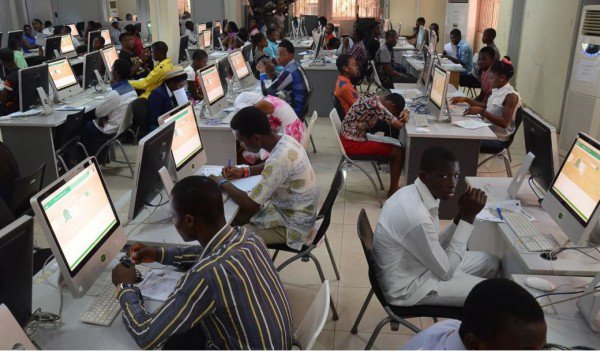
Only 108 out of approximately 39,000 underage candidates who sat the 2026 Unified Tertiary Matriculation Examination (UTME) have qualified for possible admission into tertiary institutions after undergoing the Federal Government’s rigorous screening process.
The candidates emerged from a multi-stage assessment designed to determine their academic excellence and psychological, emotional and intellectual readiness for university education.

Minister of Education, Dr Tunji Alausa, disclosed this on Wednesday in Abuja while receiving the two highest-scoring candidates and six other outstanding underage candidates in the 2026 UTME, presented by the Registrar of the Joint Admissions and Matriculation Board (JAMB), Prof. Segun Aina.
Alausa explained that the screening process was designed to ensure that exceptionally gifted children seeking admission before the minimum age requirement were adequately prepared for the demands of higher education.
According to the minister, 2,244,149 candidates registered for the 2026 UTME, while 2,174,396 sat for the examination. Approximately 39,000 of those who took the examination were below the stipulated minimum admission age of 16.
He said applicants seeking exemption from the age requirement were subjected to stringent conditions, including a minimum UTME score of 320 out of 400, equivalent to 80 per cent.
They were also required to score at least 80 per cent in their post-UTME examinations, meet the 80 per cent benchmark in the assessment of their O-level results and pass a screening exercise evaluating their psychological, emotional and intellectual preparedness for university education.
Alausa revealed that only 391 underage candidates scored at least 320 in the UTME, while subsequent assessments reduced the number eligible for possible admission to 108.
He described the successful candidates as exceptionally gifted, noting that they accounted for approximately 0.005 per cent of those who sat the examination.
“You are the geniuses in our society,” the minister told the students, adding that the government had a responsibility to identify and nurture exceptional talents into innovators capable of developing solutions to Nigeria’s challenges and those confronting the wider world.
The minister clarified that the minimum admission age of 16 was not intended to frustrate academically talented children or prevent them from advancing, but to ensure that younger applicants possessed the maturity necessary to cope with university life.
He said feedback from the screening exercise had been encouraging, particularly regarding the candidates’ confidence, intellectual abilities and responses to questions assessing their readiness for higher education.
According to Alausa, academic excellence alone was insufficient to justify early admission, as university education also required emotional stability and the ability to navigate social and intellectual challenges.
He urged the successful candidates to view their abilities as a responsibility to society rather than merely an opportunity to gain early admission and advance their personal ambitions.
“You are the ones that will change Nigeria and change the world with your innovations,” he said.
Alausa connected the recognition of exceptionally gifted young Nigerians to the country’s broader development goals, stressing that the nation’s youthful population represented a valuable resource that required proper education and development.
He estimated Nigeria’s population at 220 million, with an average age of 18.5 years, adding that approximately 70 per cent of the population was below 30.
The minister said the Federal Government’s education reforms were aimed at expanding opportunities for young Nigerians and strengthening the country’s ability to transform their potential into innovations and solutions that improve lives.
He congratulated the candidates on behalf of President Bola Tinubu and the Federal Ministry of Education, expressing optimism that their talents could produce breakthroughs capable of benefiting millions of people.
The eight recognised candidates, including the two highest scorers in the 2026 UTME, received plaques and certificates from the minister.
Owoeye Daniella Jesudunsin emerged as the highest-scoring candidate with 372 marks, while Enwere Kingsley Ikenna came second with 370.
