

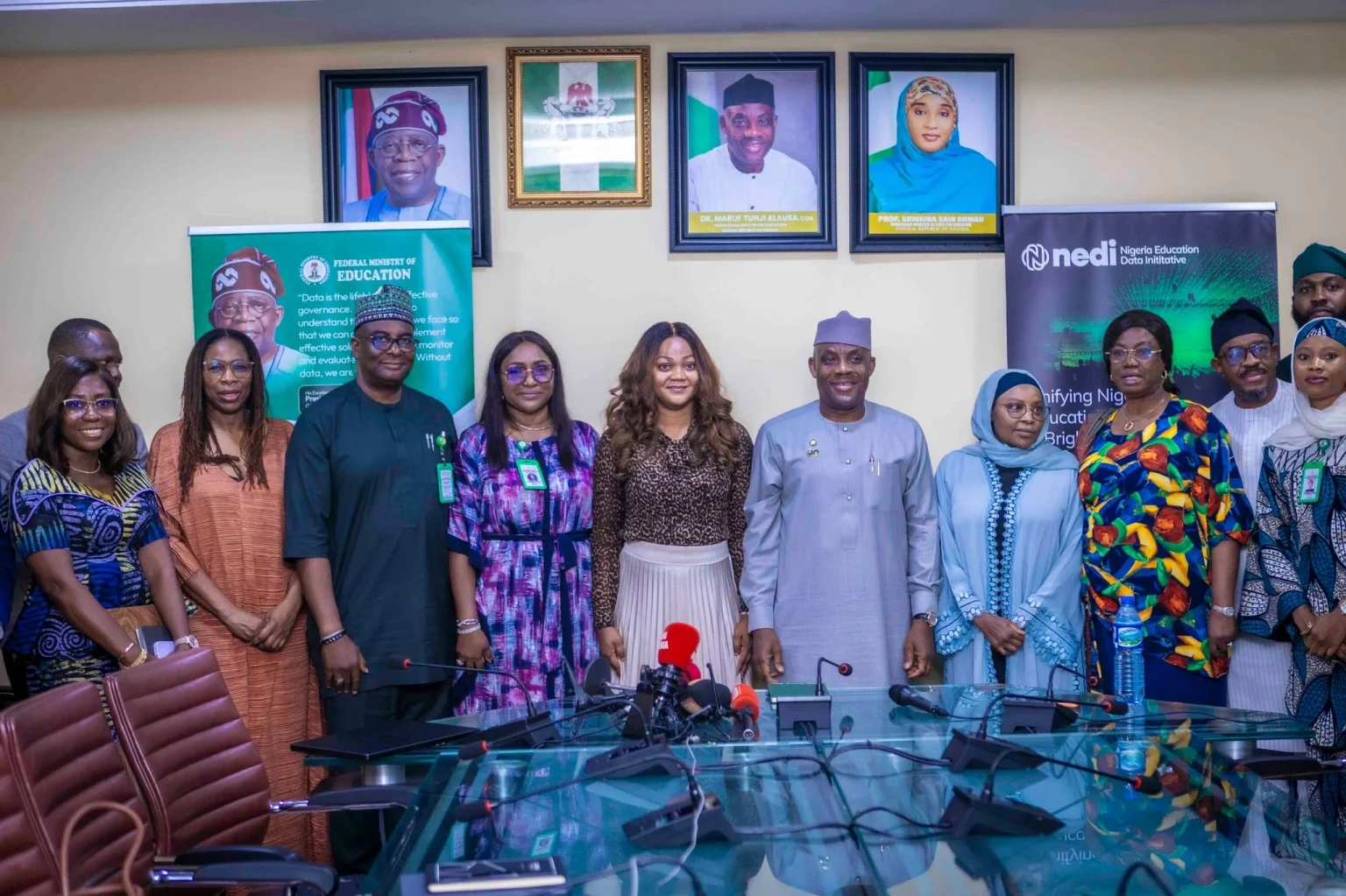
The Universal Basic Education Commission has thrown its weight behind efforts to create a unified learner identity system, saying the initiative will improve education planning, accountability and service delivery across the country.
UBEC Executive Secretary, Aisha Garba, made this known on Monday after a high-level meeting with the Minister of Education, Dr Maruf Alausa, and the Director-General of the National Identity Management Commission, Abisoye Coker-Odusote, on deepening digital reforms in Nigeria’s education sector.

She explained that the proposed framework will connect the National Learners’ Identification Number with the National Identification Number and the National Education Management Information System, giving every learner a single, verifiable identity.
Speaking after the meeting, Garba said the discussions focused on using digital identity tools to strengthen the management of the nation’s education system.
She said, **“I had the privilege of joining the Honourable Minister of Education, Dr Maruf Tunji Alausa, CON, and the Director-General/CEO of the National Identity Management Commission (NIMC), Engr. Abisoye Coker-Odusote, for a strategic meeting on strengthening learner identification and advancing digital transformation in Nigeria’s education sector.
“The discussions centred on aligning the National Learners’ Identification Number with the National Identification Number (NIN) and the National Education Management Information System (NEMIS) to establish a unified and reliable learner identity system.”**
Garba said harmonising learner records would improve the credibility of education data and help governments make better decisions on planning, funding and policy implementation.
She added, **“This initiative will enhance data integrity, strengthen planning, improve transparency, and support evidence-based decision-making across the education sector.
“At UBEC, we recognise that quality data is essential to effective planning and the delivery of inclusive, equitable, and quality basic education.”**
She reaffirmed UBEC’s commitment to working with the Federal Ministry of Education, NIMC and other partners to ensure the initiative succeeds.
She said, “We remain committed to working with the Federal Ministry of Education, NIMC, and other critical stakeholders to build a digitally enabled education system where every learner is counted, and every child has the opportunity to succeed. Together, we are laying the foundation for a smarter, more efficient, and future-ready education system for Nigeria.”
If implemented, the unified learner identity system is expected to make it easier to track learners throughout their education, improve the distribution of resources and support the government’s drive to modernise education through digital technology.
Experts have long argued that reliable education data is essential for effective planning, noting that incomplete or inconsistent records often affect enrolment tracking, funding decisions and policy execution. The Federal Government has, in recent years, expanded the use of digital platforms such as NEMIS and the NIN to strengthen data management across different sectors.
