


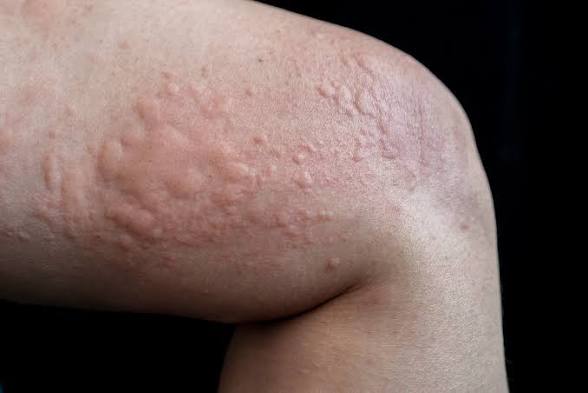
Chronic hives (urticaria) are itchy skin welts that persist for six weeks or longer. In many cases, they don’t have an obvious cause, which makes diagnosing them complex.
“Up to 90% of chronic hives cases don’t have a clear trigger, often leaving people without answers.”

Unlike many conditions, there isn’t a single test that confirms chronic hives. “Doctors use a process of elimination to diagnose chronic hives, rather than a single test.” This means physicians assess possible causes and gradually rule them out. “The diagnostic process involves determining how long the hives have lasted and whether they’re triggered by something specific.”
Acute hives—those lasting less than six weeks—are typically easier to trace, as they’re often linked to infections or allergic reactions to food or medication. Chronic hives, however, can continue for months or even years. Their symptoms—raised, shifting welts—can resemble other conditions like allergies or infections, making it harder to identify the exact cause.
Finding the Root Cause Can Be Difficult
There are two main types of chronic hives:
Inducible urticaria: Triggered by specific external factors such as sunlight, water, pressure, exercise, or temperature changes.

Spontaneous urticaria: Occurs without any clear external trigger. “Up to 90% of cases of chronic spontaneous hives have no identifiable cause, which makes it hard to get a diagnosis.”
Many spontaneous cases are believed to be autoimmune-related, where the body mistakenly attacks its own cells. Although the root cause is internal, factors like stress, NSAIDs (e.g., aspirin), and hormonal shifts can worsen symptoms.
Doctors may ask patients to track their symptoms over time to identify patterns. If a consistent trigger is found, the condition is likely inducible. If not, it’s usually classified as chronic spontaneous urticaria.
How Doctors Diagnose Chronic Hives
Healthcare providers—such as primary care physicians, allergists, immunologists, or dermatologists—generally follow a step-by-step approach:
Determine duration: If hives occur almost daily for six weeks or more, they are considered chronic. Doctors also check for signs of allergies or infections that might indicate acute hives instead.
Identify triggers: For chronic cases, doctors assess whether symptoms are linked to specific exposures or activities.
Rule out other conditions: If no trigger is found, tests may be done to exclude underlying issues like infections, inflammation, or thyroid disorders. If nothing is identified, the diagnosis is usually chronic spontaneous urticaria.
Extensive lab testing is not always recommended for spontaneous cases, as it can be costly and may not improve outcomes.
Getting Treatment
Although diagnosing chronic hives can take time, treatment options are available once identified.
For inducible hives, avoiding known triggers is key. Medications such as antihistamines can also help manage symptoms.
For chronic spontaneous hives, treatment typically starts with antihistamines. If symptoms persist, stronger options like omalizumab or dupilumab may be prescribed to regulate immune responses and reduce inflammation.
There is currently no cure for chronic hives, but most cases improve or resolve on their own within five years.
