

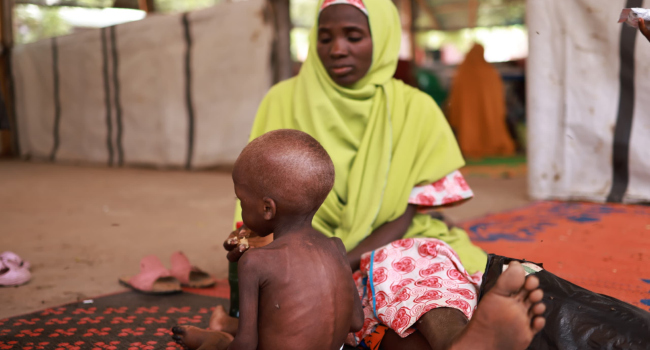
The National Association of Resident Doctors (NARD) has revealed that more than 35 per cent of Nigerian children under five suffer from malnutrition, calling it a critical public health emergency.

In a post on X on Thursday, the association stated that malnutrition significantly contributes to child mortality, while also impairing cognitive development, increasing vulnerability to disease, and reducing national productivity.
NARD highlighted ongoing interventions, including the distribution of Ready-to-Use Therapeutic Food (RUTF), community-based management of acute malnutrition (CMAM), and Infant and Young Child Feeding (IYCF) counselling. Research shows these strategies significantly improve recovery rates and child survival, it added.
The association noted that its members are at the forefront of delivering and studying malnutrition interventions across the country, and it called for stronger support for sustainable nutritional programmes to safeguard children’s health nationwide.
In August, the Federal Government described Nigeria’s malnutrition situation as “a national emergency”, with annual economic losses exceeding $1.5 billion, according to Special Assistant to the President on Public Health, Uju Rochas-Anwuka. She warned that the crisis continues to erode human capital and hinder national development.
Earlier in July, Vice President Kashim Shettima cautioned that malnutrition deprives nearly 40 per cent of children under five, describing the situation as “a national crisis” at the National Summit on Nutrition and Food Security in Abuja.
He stressed that food insecurity is not merely about hunger but also concerns whether people can afford, access, and accept nutritious food, linking it directly to education and human capital development.
In a further alarming development, Doctors Without Borders (MSF) reported that over 600 malnourished children died in northern Nigeria within six months. The organisation recorded a 208 per cent increase in the most severe malnutrition cases between January and June compared with the same period last year.
MSF attributed the worsening crisis to reduced foreign aid, soaring living costs, and insurgency-related disruptions.