

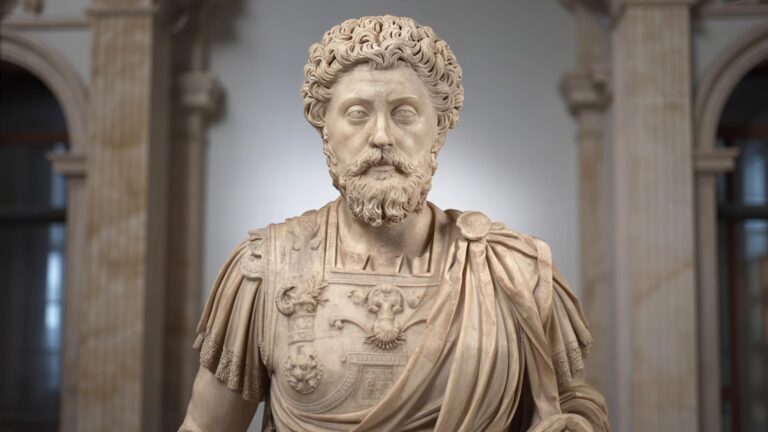
Roman Emperor Marcus Aurelius governed the empire while fighting prolonged wars along its northern frontier and dealing with a plague that spread across its provinces. During the quiet moments he could find, he wrote personal reflections in Greek.
These writings later became known as Meditations. He never intended them for public consumption, which may explain their candid and personal tone.

His reflections reveal a man who viewed mental weakness as something people often bring upon themselves by surrendering their reasoning to the chaos around them.
For the Stoics, strength was measured by self-mastery. Here are five habits Marcus Aurelius warned against, using quotations translated by George Long, alongside practical ways to overcome them.
### 1\. Surrendering control to external circumstances
A traffic jam, unexpected rain on the day of an outdoor gathering or a colleague responding to a lengthy email with a single word can ruin an entire day for someone who struggles to manage their reactions. Instead of examining their response, they blame the situation.
Marcus Aurelius believed this approach was misguided. In Book 4 of Meditations, he wrote that “our perturbations come only from the opinion which is within.”
He returned to the subject in Book 8, offering a more personal explanation: “If thou art pained by any external thing, it is not this thing that disturbs thee, but thine own judgment about it. And it is in thy power to wipe out this judgment now.”
A popular modern quote attributed to him states, “You have power over your mind, not outside events.” Although this captures the general idea behind his philosophy, those exact words do not appear in any translation of Meditations.
The practical lesson is to distinguish between what you can control and what you cannot. Identify the aspects of a problem you can influence, direct your efforts towards them and avoid wasting energy on circumstances beyond your control.
### 2\. Complaining and playing the victim
Some people interpret every difficulty as a personal attack. They repeatedly recount their hardships to anyone willing to listen, believing that expressing their frustrations is helping them make progress.
However, constantly describing a problem can consume the time and energy needed to find a solution.
In Book 10, Marcus addressed this attitude with a straightforward argument: “If then it happens to thee in such a way as thou art formed by nature to bear it, do not complain, but bear it as thou art formed by nature to bear it.”
In Book 4, he also examined how complaints can shape a person’s perception of an experience. He wrote: “Take away thy opinion, and then there is taken away the complaint, ‘I have been harmed.’ Take away the complaint, ‘I have been harmed,’ and the harm is taken away.”
The philosopher Friedrich Nietzsche later popularised the concept of amor fati, meaning love of fate. Although Marcus did not use that particular expression, his philosophy reflected a similar attitude towards accepting life’s circumstances and finding ways to grow through difficulties.
In Book 5, he wrote that “that which is an obstacle on the road helps us on this road.”
The lesson is not that people should ignore genuine injustice or pretend that pain does not exist. Rather, it is to avoid allowing complaints to become a permanent identity. Acknowledge the difficulty, consider what it can teach you and focus on the next constructive step.
### 3\. Seeking external validation and obsessing over other people’s opinions
Constantly checking how many people have liked a social media post or replaying a stranger’s criticism late at night can indicate a dependence on external approval.
When your emotional well-being depends on other people’s opinions, you give them considerable influence over your peace of mind. Marcus Aurelius questioned why people allowed this to happen.
In Book 12, he observed: “I have often wondered how it is that every man loves himself more than all the rest of men, but yet sets less value on his own opinion of himself than on the opinion of others.”
His advice was to look inward for a reliable standard of goodness. In Book 7, he wrote: “Look within. Within is the fountain of good, and it will ever bubble up, if thou wilt ever dig.”
French scholar Pierre Hadot described this aspect of Marcus’s philosophy through the idea of an “inner citadel”. The concept represents an inner space where a person’s values, judgement and character remain grounded, even when confronted with praise or criticism.
The practical lesson is to measure yourself by your values and conduct rather than by public approval. Feedback can help you improve, but it should not determine your worth.
### 4\. Allowing uncontrolled emotions to dictate actions
Anger can lead people to make decisions before considering the consequences. A harsh response to a minor insult or a resignation letter written in a moment of fury may cause more damage than the original situation.
Marcus understood the importance of controlling such reactions. Following the revolt of one of his generals, Avidius Cassius, in AD 175, the emperor continued to reflect on human behaviour and the consequences of emotional decisions.
In Book 11 of Meditations, he wrote: “How much more grievous are the consequences of anger than the causes of it.”
Stoic philosophy teaches that destructive emotions are often intensified by the judgements people make about events. Pausing to examine those judgements can help prevent impulsive reactions.
In practical terms, create a gap between what happens and how you respond. Count to five before speaking when angry. If you are about to send an emotional email or message, wait and read it again when you are calmer.
You may discover that a response you initially considered necessary is better left unsent.
### 5\. Resisting the present moment and avoiding responsibility
Procrastination can appear harmless, as can spending too much time longing for the past or worrying about the future. Yet these habits can distract people from the responsibilities they can address today.
Marcus Aurelius struggled with this tendency himself. At the beginning of Book 5, he wrote as though he were encouraging himself to leave his bed and fulfil his duties.
“In the morning, when thou risest unwillingly, let this thought be present: I am rising to the work of a human being.”
A few lines later, he challenged himself further: “Or have I been made for this, to lie in the bedclothes and keep myself warm?”
In Book 2, he also observed that “the present is the only thing of which a man can be deprived.”
The past has already happened, while the future has not yet arrived. The present moment, therefore, offers the opportunity to take meaningful action.
The practical lesson is to stop waiting for perfect conditions before beginning important tasks. Whether you need to study, work, exercise or fulfil a personal commitment, start with what you can reasonably do now.
### Conclusion
Marcus Aurelius held enormous authority as the Roman emperor, yet his private writings focused heavily on correcting his own mistakes, managing his temper, questioning his judgements and overcoming the temptation to avoid difficult responsibilities.
His reflections suggest that mental weakness is not necessarily a permanent character trait. It can also emerge through habits that people repeatedly practise without examining them.
Rather than attempting to change everything at once, choose one of these five habits to work on this week. Learn to manage your reactions, reduce unproductive complaining, become less dependent on approval, control impulsive emotions and fulfil your responsibilities in the present.
The goal is not to eliminate every difficult emotion or become unaffected by life’s challenges. It is to develop the self-awareness and discipline needed to respond to them wisely.