

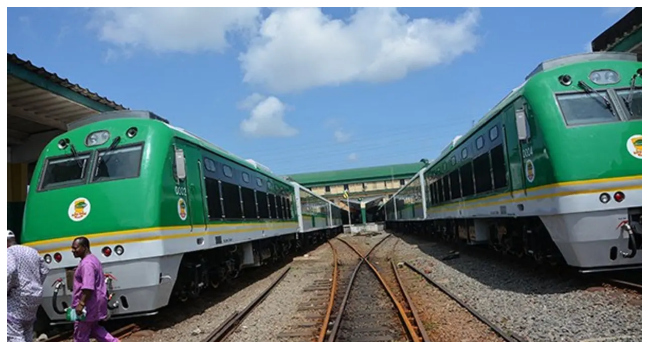
The Nigerian Railway Corporation (NRC) has announced that the Abuja–Kaduna passenger train service will resume operations next week.
The corporation confirmed this in a statement on Saturday by its Chief Public Relations Officer, Callistus Unyimadu, following the successful repair and safety inspection of the damaged section of track at Asham.

The NRC stated that it would release the exact date and schedule of the service’s resumption in the coming days.
Since suspending the service after a derailment on August 26, 2025, the corporation has worked tirelessly to restore both the track and rolling stock to the highest safety standards in accordance with global best practices.
As part of its commitment to passenger welfare, the NRC has refunded 512 of the 583 passengers on board the affected train and is continuing efforts to contact and process refunds for the remaining passengers.
“The NRC appreciates the patience and understanding of our valued passengers and assures the public that their safety, comfort, and satisfaction remain our top priority. We also acknowledge the crucial support of the Federal Ministry of Transportation, security agencies, the media, and all stakeholders during this recovery period,” the statement added.
The derailment occurred along the Kaduna corridor shortly after the train departed Abuja at around 11 a.m. A passenger described the scene as chaotic, with people scrambling for safety.
Following the incident, the NRC immediately suspended operations on the Abuja–Kaduna route.
During an interview on Channels Television’s The Morning Brief on August 27, the NRC’s Managing Director, Kayode Opeifa, accepted full responsibility for the derailment and confirmed that four passengers sustained serious injuries.
On September 24, the Nigerian Safety Investigation Bureau (NSIB) revealed that poor maintenance and a defective track switch were major contributors to the accident. Preliminary findings showed that several sleepers damaged in a previous incident had only been patched rather than properly repaired.
Investigators also discovered that the automatic switch mechanism at the station’s crossing point was out of service at the time, marking the second derailment at the same location within 13 months. The switch had to be manually operated and secured with a point clip, which was later found to be broken — compromising the track alignment and causing the derailment.
The report further highlighted that NRC personnel had only received initial training with no formal refresher courses, raising concerns about safety standards and readiness. Additionally, operational and maintenance tools, including spare parts from the Original Equipment Manufacturer (OEM), were largely unavailable at the time of the incident.