

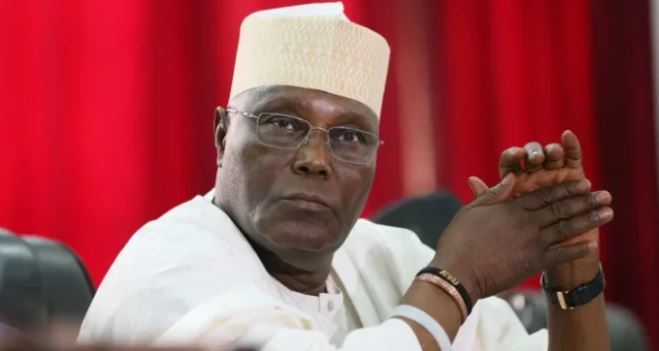
Former Vice President Atiku Abubakar has criticised President Bola Tinubu’s administration over reports that it is seeking a new $1.25bn loan from the World Bank, warning that Nigeria is accumulating unsustainable debt without corresponding benefits for citizens.
In a statement released on Sunday through his media aide, Olusola Sanni, Atiku described the proposed borrowing as further evidence of what he called the government’s “reckless” and “habitual” reliance on loans, despite worsening economic hardship in the country.

He expressed concern that an administration elected on promises of economic improvement has become associated with what he termed “industrial-scale borrowing” at a time when Nigerians are facing rising inflation, high energy costs, food shortages, and declining purchasing power.
Atiku said, “This borrowing binge is becoming reckless, opaque, and dangerously habitual.
“The loans are coming with a burden of weight too heavy for Nigerians to bear. Nigerians were told these loans were for infrastructure, power, and economic recovery. Yet the average citizen still lives in darkness, roads remain death traps, businesses are collapsing under crushing energy costs, and hunger has become a national epidemic,” Atiku said.
He further urged the World Bank and other international lenders to impose stricter conditions on future loans to Nigeria and ensure greater transparency and accountability in their use.
“At this point it has become necessary to demand that the World Bank and, indeed, other creditors apply more prudent measures in ensuring significant compliance to the terms and conditions of these loans,” he added.
Atiku questioned the justification for continued borrowing despite government claims that reforms such as fuel subsidy removal, foreign exchange liberalisation, and improved revenue generation have strengthened the economy.
He stated, “The IDA loans are facilities granted to extremely poor countries and currently shares the same spot with Bangladesh and Pakistan as top countries in world with highest loan exposure to the World Bank.
“This data is diametrically opposed to claims by the Tinubu administration that the government had increased its revenue generation drive.”
He also warned that Nigeria risks returning to a debt crisis similar to the one it exited in 2005–2006 under the Olusegun Obasanjo administration after the Paris Club debt relief.
Atiku said, “It is deeply ironic that the same nation which painstakingly exited the Paris Club debt trap through the fiscal discipline, diplomatic credibility, and reform-driven leadership of the Obasanjo-Atiku administration in 2005–2006 is now being dragged back into a fresh era of debt dependency.
“Between May 2023 and now, the Tinubu administration has obtained record massive loans from the World Bank under the titles of objectives that are difficult to verify its implementation.
“The historic debt relief of 2006 was not accidental. It was earned through tough negotiations, prudent management, and international goodwill. Today, that legacy is being squandered with alarming irresponsibility,” he stated.
He accused the administration of treating borrowing as a substitute for governance.
“This administration appears to believe that borrowing is governance. It is not. Loans are not achievements. Debt is not development. And mortgaging the future of unborn Nigerians to fund present incompetence is not economic management—it is economic vandalism.
“We must begin to ask difficult questions, not just of the borrowers, but also of the lenders.”
Atiku also called on international financial institutions to insist on measurable outcomes before approving additional credit facilities for Nigeria.
He said, “International financial institutions and credit agencies must exercise greater caution and insist on strict transparency, accountability, and measurable impact before continuing to extend credit facilities to an administration that has shown little evidence of efficient utilisation.
“No responsible lender should ignore the warning signs. A government that keeps borrowing while citizens see no tangible improvement in electricity supply, healthcare, education, or infrastructure raises legitimate concerns about fiscal credibility and governance discipline,” he said.
He warned that continued reliance on loans could further weaken Nigeria’s economy and burden future generations.
Atiku said, “Nigeria cannot continue down this dangerous path where every economic challenge is answered with another loan request. At some point, creditors must ask themselves whether they are funding development or enabling dysfunction.
“The Tinubu administration must understand that a nation cannot borrow its way out of incompetence. Governance requires vision, discipline, productivity, and trust—not endless promissory notes signed against the future of a suffering people.”
He also urged the Federal Government to publish full details of all loans obtained since President Tinubu assumed office, including terms and project allocations.
Since May 2023, the administration has relied heavily on both domestic and external borrowing to finance budget deficits and support economic reforms.
Data from the Debt Management Office indicates that Nigeria’s public debt has risen significantly following currency devaluation and new borrowing by federal and state governments.
The government has defended the borrowing, saying the loans are concessional and targeted at infrastructure, social welfare, and economic stabilisation programmes.
Officials argue that the administration inherited a weak economy and that borrowing is necessary to prevent fiscal collapse.
However, critics maintain that rising debt levels, inflation, and currency depreciation have worsened living conditions and raised concerns about long-term debt sustainability.
The Presidency and the Ministry of Finance had not officially responded to Atiku’s comments at the time of filing this report.
