

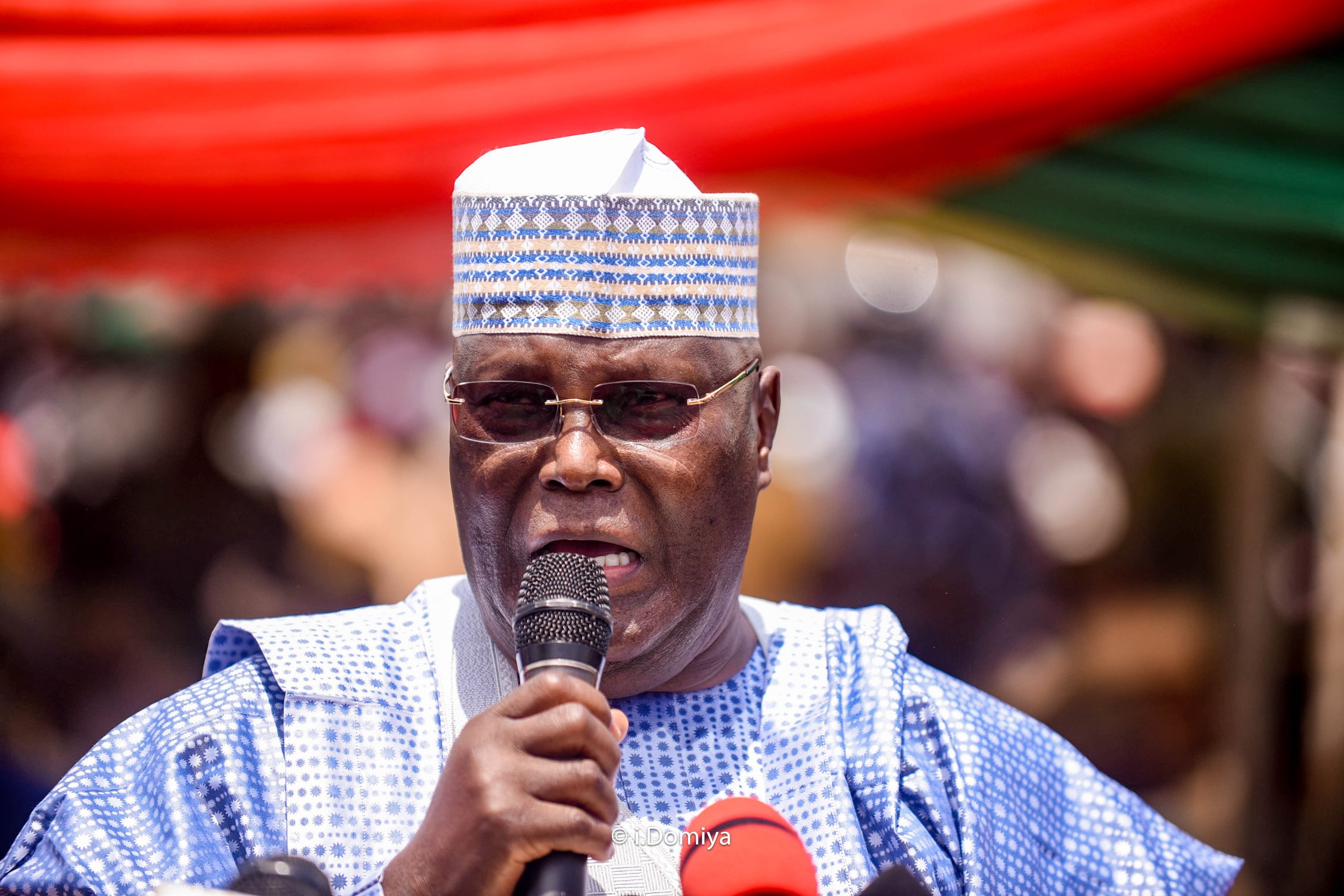
Former Vice President Atiku Abubakar has challenged delegates of the African Democratic Congress (ADC) to place competence and national appeal above sentiment and social media popularity as the party moves toward selecting its presidential candidate for the 2027 general election.
Atiku dismissed online popularity as an inadequate measure of presidential capability, stressing that the party must present its strongest candidate to unseat President Bola Tinubu.

In a statement issued by his Senior Special Assistant on Public Communication, Phrank Shaibu, the former vice president maintained that with Nigeria facing economic difficulties, rising debt, insecurity, and institutional decline, the ADC cannot risk presenting an inexperienced candidate.
“This is not a season for political experimentation. Nigeria cannot afford a learning-on-the-job presidency,” he stated.
Without directly mentioning any contender, Atiku appeared to criticise the growing excitement around some aspirants, insisting that presidential elections are won through political structures, strategy, and governance experience — not online hype.
“Elections are not won on social media enthusiasm alone. Governance is not performance art. The presidency is not a platform for improvisation. The ADC must present to Nigerians its strongest, most credible, most prepared candidate — not merely its loudest,” he said.
Atiku described the decision before ADC delegates as one of historic significance, considering the magnitude of Nigeria’s current challenges.
“At a time when Nigeria is bleeding from every pore — crippled by economic hardship, insecurity, rising debt, institutional failure, and deepening hopelessness — the question before the ADC is simple: who has the capacity not merely to campaign, but to govern effectively from day one?” he asked.
He argued that the country requires a leader who has “negotiated globally, created jobs through enterprise, managed national crises, built coalitions, and consistently articulated a practical roadmap for economic recovery and national renewal.”
Referring to his own experience, Atiku highlighted the economic reforms carried out during the Obasanjo-Atiku administration as proof of his preparedness, including privatisation policies that liberalised major sectors, fiscal discipline that aided debt relief, and wider governance reforms.
“The economic reforms that helped reposition Nigeria, the privatization drive that opened sectors, the fiscal discipline that contributed to debt relief, and the governance reforms of that era were not accidents. They were products of leadership, competence, and courage,” he said.
Posing what he called a critical question to delegates, Atiku contrasted symbolism with electoral strength.
“ADC delegates must ask themselves: do we want to make a statement, or do we want to make a president?”
He stressed that defeating an incumbent government in 2027 would require more than emotional support, urging the party to focus on the candidate capable of building a broad coalition across Nigeria’s regions, religions, and demographics.
“The ADC must think beyond sentiment. It must think about victory. It must think about governance. It must think about Nigeria. This is a defining election. The party needs a candidate with national acceptability, political resilience, tested structures, and the capacity to unify disparate interests into one winning coalition,” he said.
Atiku also urged delegates to set aside narrow political interests and embrace what he described as a defining national moment.
“History will remember this moment. The choice before ADC delegates is not merely about ambition. It is about destiny. Nigeria deserves rescue, not rhetoric”, he declared.
