

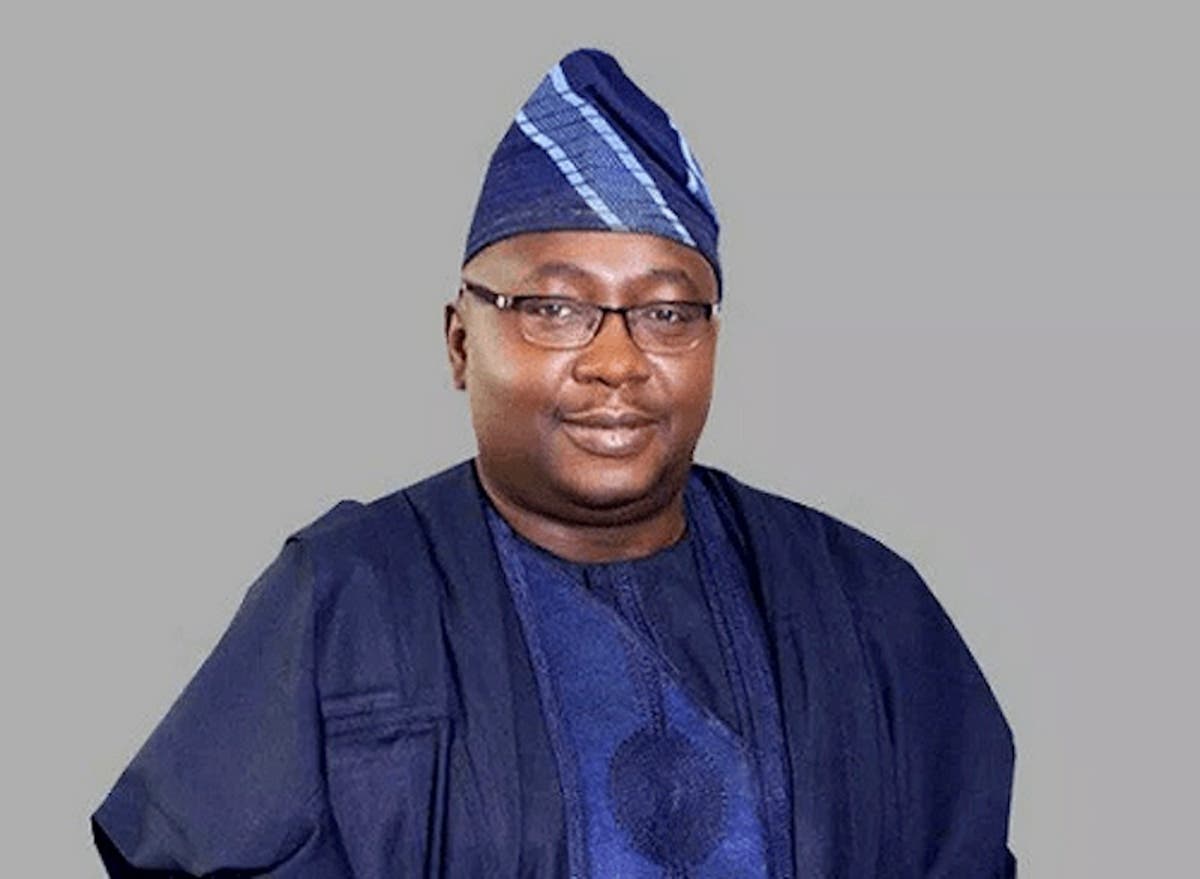
The minister of power, Adebayo Adelabu, has stepped down from his role as minister of power, suggesting the establishment of a coordinating minister for energy to strengthen reforms across Nigeria’s electricity and gas sectors.
In a letter dated April 22 and addressed to President Bola Tinubu, Adelabu stated that his resignation will take effect on April 30, as he prepares to pursue his governorship ambition in Oyo state.

His special adviser on strategic communications and media relations, Tunji Bolaji, had earlier indicated that the minister would resign.
Although Adelabu had previously avoided commenting on his political plans, he explained in the letter that his decision aligns with the provisions of the amended Electoral Act.
“My decision to step down is guided by my desire to fully comply with the provisions of the Electoral Act and to focus on my governorship aspiration in Oyo State,” he said.
He also expressed gratitude to the president for the opportunity to serve.
Adelabu stressed the need for stronger coordination within the energy sector to sustain ongoing reforms.
“Sustaining and consolidating the gains recorded in the power sector requires stronger coordination at the highest level, including the appointment of a central authority to harmonise policy direction and execution,” he said.
Highlighting achievements during his tenure, the minister said key reforms were implemented, including the Electricity Act 2023, which decentralised the power market.
“Peak power generation rose to over 6,000 megawatts, driven by the integration of the Zungeru hydropower plant and the rehabilitation of thermal power plants,” he said.
He also pointed to improvements in electricity distribution, metering, and sector revenue.
“Tariff reforms and a N4 trillion debt restructuring programme increased market revenues from N1 trillion in 2023 to N2.3 trillion in 2025, restoring investor confidence and placing the sector on a path to sustainability,” Adelabu said.
Despite these gains, he acknowledged ongoing structural challenges, including gas supply issues, infrastructure vandalism, and the need for full commercialisation of the electricity value chain.
“There is still a need for stronger institutional coordination to address gas supply constraints, infrastructure vandalism, and the full commercialisation of the electricity value chain,” he said.
Adelabu proposed that creating a coordinating minister for energy would improve policy alignment across sectors.
“The creation of a coordinating minister for energy will provide strategic oversight and ensure synergy across power, gas, water resources, and environmental sectors,” he said.
He added that he would ensure a smooth transition process before leaving office.